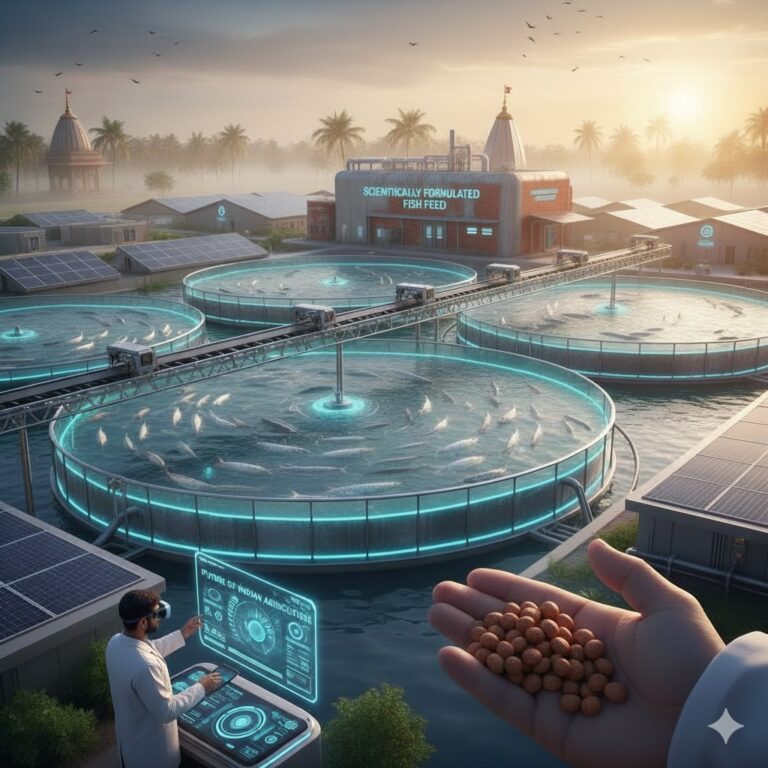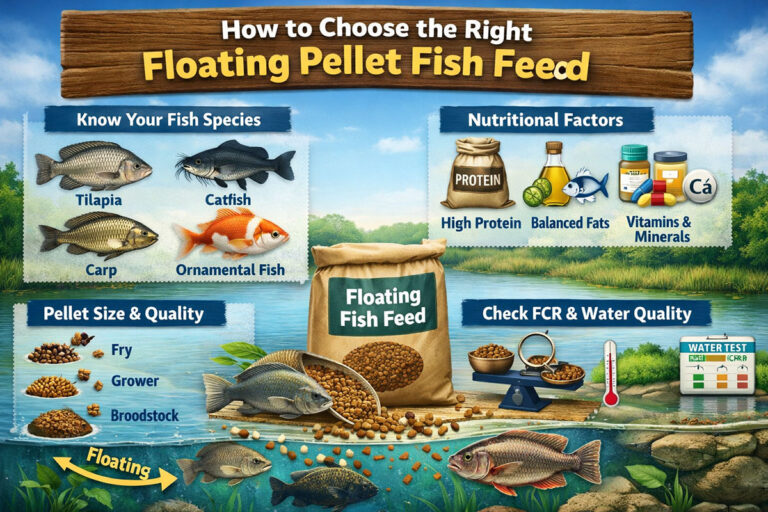

Fish feed is a vital component of the aquaculture industry, which is still one of the fastest-growing food-producing sectors in the world. The pressure on feed producers to innovate, scale effectively, and provide high-quality nutrition has increased as the world’s demand for seafood rises. This is where the fish feed industry is changing due to contract production.
Once seen only as an outsourcing solution, contract manufacturing is increasingly becoming recognized as a strategic partnership model that enables aquafeed brands to concentrate on marketing, innovation, and farm assistance while assigning production to specialized manufacturers. The global production of fish feed is changing as a result of this change.
In this blog, we examine the major developments influencing contract manufacturing for fish feed in the future and how they are boosting productivity, sustainability, and profitability in the aquaculture sector.
1. Rising Demand for Customized and Species-Specific Feed
The growing need for species-specific and life-stage-specific feeds is one of the biggest developments influencing contract manufacturing. Fish farmers today raise species like tilapia, pangasius, carp, catfish, prawns, and even ornamental fish that have particular nutritional needs as aquaculture diversifies.
Contract manufacturers facilitate customization by providing:
- Customized ratios of protein to energy
- Formulations of nutrients for particular stages of growth
- Feeds to boost immunity and prevent sickness
- Specialty goods like floating/sinking pellets, bloodstock diets, and larval diets
Contract manufacturers assist feed brands in maintaining their competitiveness without making significant investments in research infrastructure by utilizing cutting-edge R&D and adaptable production lines.
2. Sustainability and Alternative Protein Sources Take Center Stage
The global movement towards sustainability is inextricably linked to the future of fish feed. Resources for traditional fishmeal and fish oil are scarce and becoming costlier. Consequently, contract manufacturers are using cutting-edge raw ingredients to produce economical, environmentally friendly feeds.
Important new elements consist of:
- Meal for insects (from larvae of black army flies)
- Seaweed- and algae-based proteins
- Fermentation-produced single-cell proteins
- Plant-based proteins like lupin, pea protein, and soy concentrates
Due to their large-scale operations, contract manufacturers are able to economically incorporate these sustainable components, assisting feed companies in introducing high-performing products that have less of an impact on the environment.
3. Precision Nutrition Powered by Data & Technology
Fish feed production is changing along with modern aquaculture, which is becoming more data-driven. To improve feed performance, top contract manufacturers increasingly employ precision extrusion technology, sophisticated nutrient modelling, and AI-powered formulation tools.
Precision nutrition is being driven by advanced technologies:
- AI and machine learning to improve formulations for digestion, growth, and FCR
- Nutrigenomics to comprehend the impact of feed on fish genetics
- IoT-enabled aquaculture equipment that offer feeding behavior data in real time
- Intelligent pellets with regulated nutrition release
With the use of these instruments, producers may reliably create feeds that increase immunity, decrease waste, and accelerate growth rates—all of which increase farming’s profitability.
4. Automation and Smart Manufacturing Improve Efficiency
Automation is another significant development influencing contract manufacturing’s future. To improve accuracy and productivity, modern feed facilities are incorporating robotics, Internet of Things sensors, and digital monitoring systems.
Examples consist of:
- Systems for automated batching
- Digital controls for extrusion and mixing
- Palletizing and packing robotics
- Systems for checking quality in real time
- Astute logistics and inventory control
Contract manufacturers are able to achieve strict deadlines and high order volumes because automation guarantees consistent pellet quality, lowers human error, and speeds up production. This is particularly crucial for expanding aquafeed markets in South America, Asia, and Africa.
5. Increasing Popularity of Private Label Fish Feed Brands
A growing number of aquaculture companies are starting their own feed brands without having a production plant. This is made possible by contract manufacturing.
Among the advantages of private labelling are:
- Rapid market entry
- Total command over marketing, packaging, and branding
- Availability of high-quality formulations without investing in R&D
- Reduced capital expenditure and risk
Farmers and wholesalers demand feeds tailored to their local requirements as competition grows, and private branding through contract manufacture offers an ideal option.
Private label fish feed brands are expected to increase dramatically in the near future, particularly in growing aquaculture regions.
6. Higher Standards in Quality Assurance and Certifications
Fish health, survival rates, and profitability are all directly impacted by feed quality. Consequently, contract manufacturers are making significant investments in international certifications and strict quality control systems.
Top producers now concentrate on:
- Compliance with ISO, HACCP, and GMP+
- Advanced laboratory testing for infections, intestinal health, and amino acids
- Anti-fungal therapies and mycotoxin screening
- Systems of traceability for each batch
- Nutrient analysis with state-of-the-art laboratory equipment
Without having to maintain an internal lab or certification system, brands that use contract manufacturing can take advantage of premium-quality production.
7. Localized Micro-Manufacturing for Faster Delivery
The emergence of regional micro-plants is another encouraging development for the future. These more compact, well-located production facilities provide:
- Quicker delivery to farmers
- Lower transportation expenses
- Reduced emissions of carbon
- High-quality, fresh feed
- Tailored recipes for regional species and circumstances
Localized production will be essential to guaranteeing a timely and economical supply as the aquaculture sector grows.

8. Collaboration with Universities and Biotech Companies
Collaboration will shape the fish feed of the future. Contract manufacturers are collaborating with:
- Universities of aquaculture
- Innovators in biotech
- Suppliers of ingredients
- Institutions for marine research
- Smart agricultural technology firms
New developments in gut health, disease control, feed efficiency, and sustainable ingredients are made possible by these collaborations.
For instance, commercial diets increasingly include probiotics, prebiotics, and symbiotic to enhance digestion and immunity. Flexible contract manufacturing arrangements facilitate the adoption of such innovations.
9. Focus on Health-Boosting Additives and Functional Feeds
Fish producers are calling for functional feeds that promote immunity and stress tolerance since disease outbreaks continue to be one of the largest risks to aquaculture. In response, contract manufacturers are including compounds like
- Prebiotics and probiotics
- Amino acids and enzymes
- Blends of vitamins and minerals
- Extracts from plants
- Immune-stimulating agents
These value-added feeds are crucial for contemporary aquaculture because they increase weight gain, increase survival rates, and lower the requirement for antibiotics.
10. The Future: Smart, Sustainable, and Scalable
Three key pillars—smart technology, sustainability, and scalability—will influence fish feed manufacturing over the next ten years. Contract manufacturing will keep feed brands empowered by:
- Availability of cutting-edge technology
- Production that is economical
- Flexible manufacturing capabilities
- Potential for international exports
- Product innovation supported by research
Contract manufacturing will be essential in assisting farmers and feed companies in their transition to a more sustainable and efficient future as the demand for ethical aquaculture increases.
Conclusion
Fish feed has a bright, exciting, and innovative future. Contract manufacturing is revolutionizing the production and distribution of fish feed through the use of alternative proteins, precision nutrition, automated manufacturing, and private label options. Businesses that embrace these new trends will be in a better position to satisfy consumer demand, increase profitability, and support a sustainable seafood future as aquaculture grows internationally.
Thank you for reading 🙂