
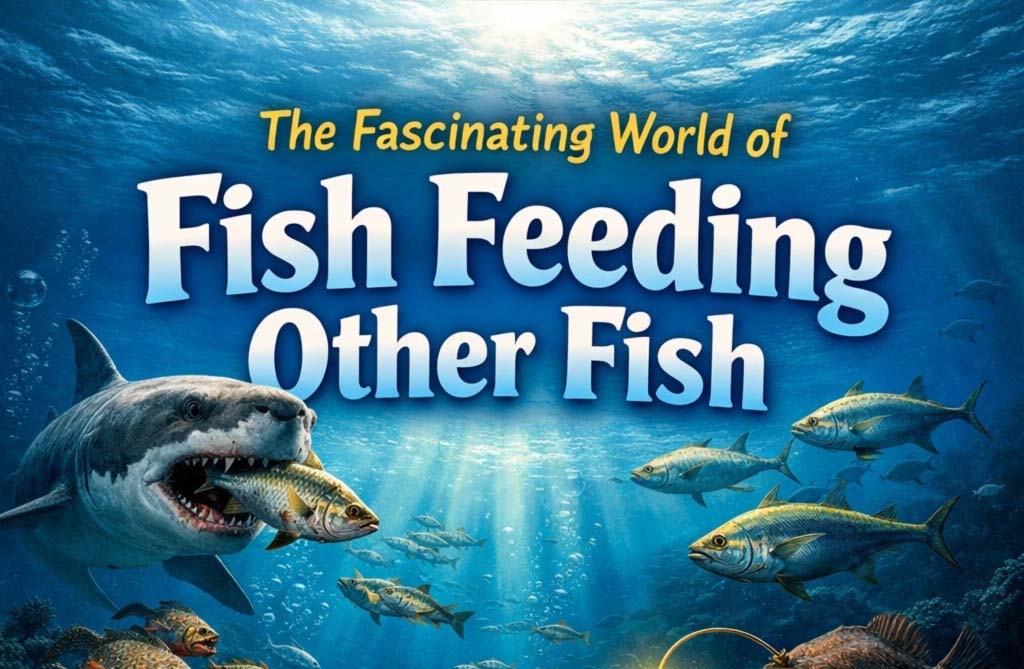
Amazing behaviours, intricate relationships, and survival techniques abound in the undersea environment, which rivals anything on land. One of the most fascinating of these is the natural phenomenon of fish feeding on fish, in which fish eat other fish to survive.
At first glance, this behaviour may seem straightforward or even cruel, but it is essential to preserving the equilibrium of aquatic ecosystems. Fish feeding fish is a fundamental aspect of aquatic life in lakes, rivers, coral reefs, and oceans.
Fish feeding other fish is a natural behaviour that is vital to the health of aquatic environments. In this blog, we will examine the science behind it, its types, ecological significance, and fascinating examples of this behaviour.
Understanding Fish Feeding Fish
Piscivory, the feeding behaviour in which one species of fish preys on another, is referred to as “fish feeding fish”. This interaction, involving predators, prey, and intricate food chains, occurs in both freshwater and marine habitats. Fish feeding is a regulated biological process shaped by evolution, habitat, and survival needs, rather than sporadic acts of violence.
While some fish eat only other fish, others eat fish along with other aquatic organisms such as insects, plankton, or plants. For some species, these feeding habits help control population levels and prevent overpopulation.
Why Do Fish Eat Other Fish?
The main reasons why fish feed other fish are for survival and energy efficiency. Because of their high protein and fat content, fish are a perfect food source for predators. Larger fish frequently find that eating smaller fish uses less energy than hunting a variety of little invertebrates.
Among the main causes are:
- High-protein diets are necessary for predatory fish to survive and flourish.
- Controlling the population stops prey species from growing out of control.
Natural selection increases genetic variety by ensuring that only the swiftest and strongest fish survive.
Types of Fish That Feed on Other Fish
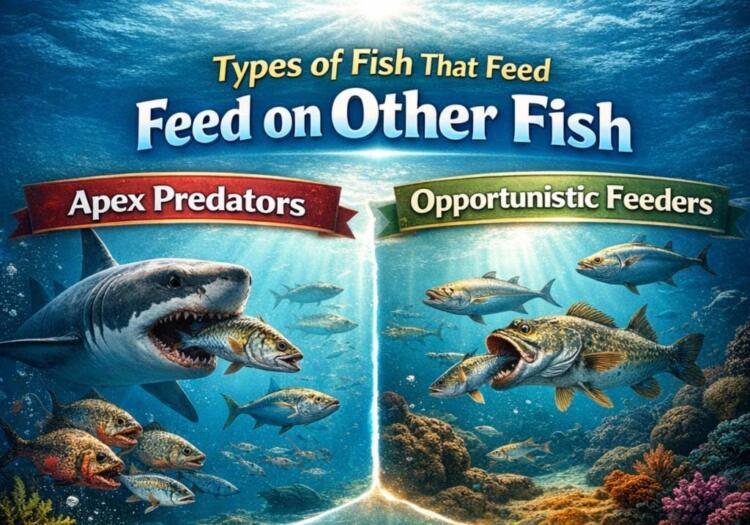
1. Apex Predators
These fish sit at the top of the food chain and have few or no natural predators.
Examples:
- Sharks
- Tuna
- Barracuda
These species rely heavily on fish feeding fish behaviour to maintain their size and dominance.
2. Opportunistic Feeders
These fish eat other fish when the opportunity arises, but may also consume other food sources.
Examples:
- Catfish
- Bass
- Pike
They adapt their feeding habits based on availability.
3. Ambush Predators
These fish use camouflage or sudden bursts of speed to catch prey.
Examples:
- Anglerfish
- Groupers
- Frogfish
Their hunting style makes fish feeding fish an impressive spectacle of patience and precision.
Fish Feeding Fish in Marine Ecosystems
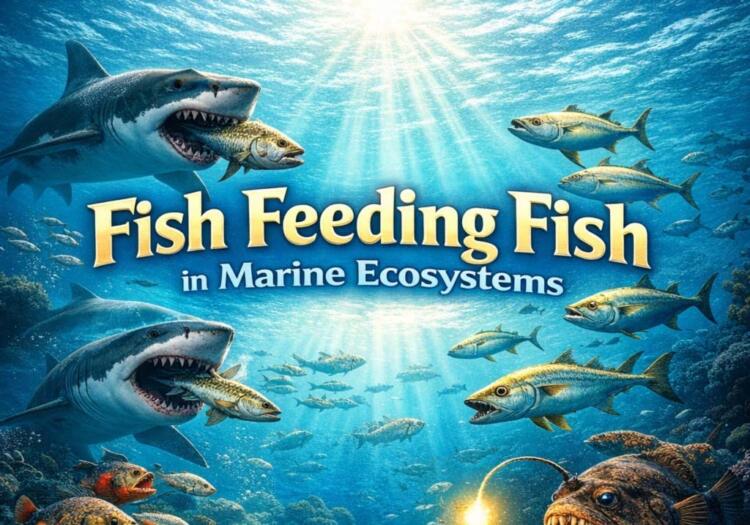
One of the main drivers of marine food webs in oceans is fish feeding on fish. This connection is particularly evident in coral reefs. Small reef fish consume plankton; medium-sized fish eat smaller ones, and larger predators hunt all.
This structure guarantees:
- Stable fish populations
- thriving coral environments
- Regulated growth of algae
Reef degradation and algae overgrowth may result from a drop in herbivorous fish populations in the absence of predatory fish.
Fish Feeding Fish in Freshwater Ecosystems
Fish feeding on fish is also essential to the equilibrium of rivers, lakes, and ponds. Smaller fish populations, such as minnows and fry, are regulated by species like bass, trout, and pike.
In systems of freshwater:
- Predators prevent overcrowding.
- The amount of oxygen stays constant.
- There is less spread of disease.
Both human-managed fisheries and natural environments depend on this equilibrium.
Cannibalism: When Fish Feed on Their Own Species
Cannibalism is among the most unexpected ways that fish can consume other fish. Adult fish in several species eat their own juveniles. Despite being startling, this behaviour has evolutionary benefits:
- lessens the competition for food
- guarantees that only robust progeny endure
- keeps the population in balance.
This behaviour is characteristic of species such as cichlids, pike, and some sharks.
The Role of Fish Feeding Fish in Aquaculture
It is crucial to comprehend fish feeding behaviour in aquaculture and fish farming. If not effectively handled, unchecked cannibalism or predation might result in losses.
Farmers employ tactics like:
- Fish size grading
- supplying enough feed
- Keeping hostile species apart
Simultaneously, controlled fish feeding techniques are occasionally employed to enhance growth rates in predatory species and replicate natural diets.
Fascinating Examples of Fish Feeding Fish
• The Great White Shark
A master predator, the great white relies heavily on fish feeding on fish during its early life stages before moving on to larger prey.
• Piranhas
Often misunderstood, piranhas mainly feed on smaller fish and scavenged remains, playing an important cleanup role in rivers.
• Anglerfish
Using a glowing lure, anglerfish attract prey directly into their mouths—one of the most dramatic examples of fish feeding on fish in the deep sea.
Human Impact on Fish Feeding Fish
The interactions between fish and their food sources can be upset by human activities, including pollution, overfishing, and climate change. When apex predators are eliminated, prey populations may skyrocket, resulting in the collapse of an ecosystem.
Predatory fish protection is crucial for:
- Sustainable fisheries
- Ocean health
- Conservation of biodiversity
These natural feeding cycles are preserved in part by marine reserves and ethical fishing methods.
Why Fish Feeding Fish Matters
Fish feeding other fish is important for ecosystem health, balance, and adaptation in addition to survival. Each exchange leads to:
- Cycling of nutrients
- Diversity of species
- Stability of the environment
Aquatic habitats would immediately become unstable in the absence of this natural mechanism.
Conclusion
The amazing realm of fish feeding fish demonstrates the true interconnectedness of life below the water’s surface. Every species, from enormous sharks to small minnows, contributes to the balance of nature.
Fish feeding fish is an essential and highly efficient mechanism that has evolved over millions of years, despite its brutal appearance.
We can better safeguard aquatic ecosystems and ensure that rivers, lakes, and oceans remain healthy for future generations if we recognise and honour this natural behaviour.
You can explore reliable options at Happy Feeds: https://www.happyfeeds.co.in/
Thanks for reading
Click here to read this: How to Choose the Right Floating Fish Feed