
Aquaculture is booming in India, and today’s fish farmers are on the lookout for dependable, high-performance feed to promote healthy growth, improve survival rates, and boost profitability. Selecting the right Floating Fish Feed is crucial in fish farming, since nutrition plays a direct role in fish size, immunity, and overall yield.
Modern aquaculture requires scientifically formulated floating fish feed that not only enhances fish growth but also helps maintain water quality. Brands that prioritise quality production, species-specific nutrition, and support for farmers are truly revolutionising the fish farming landscape.
Let’s dive into what makes high-quality floating fish feed a game-changer for aquaculture.
Specialised Manufacturer of High-Quality Floating Fish Feed Pellets
Floating fish feed is crafted to stay on the water’s surface, allowing farmers to observe feeding behaviour and minimise waste. A specialised manufacturer produces pellets that retain their shape, float longer, and dissolve slowly, helping prevent water contamination.
These feeds are produced using cutting-edge extrusion technology, enhancing digestibility and ensuring that fish get the most nutrition from every bite. High-quality floating pellets also:
Reduce feed wastage
Improve feed conversion ratio (FCR)
Help farmers monitor fish appetite and health
Maintain cleaner pond water
Since floating pellets don’t sink immediately, farmers can easily observe feeding patterns and adjust the amounts they provide. This not only leads to cost savings but also promotes healthier fish growth.
Scientifically Formulated, Nutrient-Rich Feed for Better Fish Growth and Health
When it comes to fish farming, a well-rounded diet is just as crucial for fish as it is for any livestock. That’s where scientifically formulated feed comes into play, packed with the perfect mix of:
– Proteins to help build muscle
– Fats for that much-needed energy
– Vitamins to boost immunity
– Minerals for strong bones
– Amino acids to support metabolic functions
This nutrient-rich feed not only promotes quicker weight gain but also strengthens immunity and improves survival rates, especially during seasonal shifts or stressful conditions.
A balanced diet for fish also leads to:
– Better disease resistance
– More uniform sizes
– Enhanced reproduction
– Superior flesh quality
This means fish farmers can enjoy higher market values for their catch while minimising losses from diseases or slow growth.
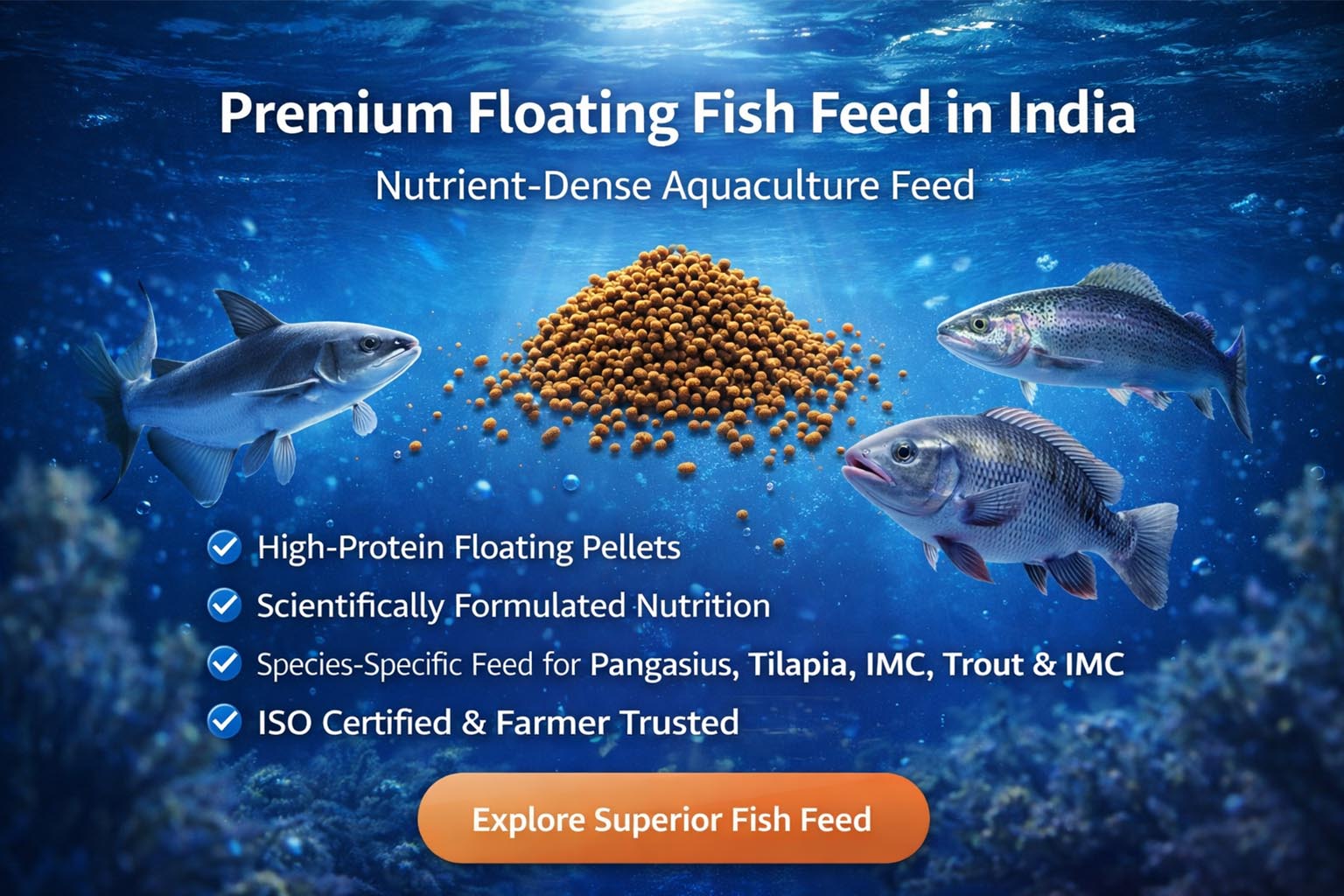
Tailored Feed Options for Different Fish Species: Pangasius, Tilapia, IMC, and Trout
Not every fish species has the same dietary needs. That’s why we offer species-specific feed designed to cater to the unique nutritional requirements of various fish types.
🐟 Pangasius Feed
Pangasius thrives on high-protein feed that supports rapid growth and efficient weight gain. Our special pellets are crafted to promote faster development and a better body structure.
🐟 Tilapia Feed
Tilapia flourishes with a balanced mix of protein and energy. Our tailored feed enhances growth rates and survival, even in fluctuating water conditions.
🐟 Indian Major Carps (IMC) Feed
Carps like Rohu, Catla, and Mrigal benefit from nutritionally rich feed that boosts immunity and promotes uniform size. Our specialised carp feed aids in healthy digestion and weight gain.
🐟 Trout Feed
Trout farming requires high-protein, high-energy diets since these fish are fast swimmers and need extra energy. Our species-specific trout feed ensures they perform optimally in cold-water environments.
By using targeted feed for each species, farmers can improve feed efficiency, accelerate growth, and reduce time spent on farming.
ISO 22000 Certified Production with Strict Quality Control Standards
The quality of feed plays a crucial role in fish health and farmers’ income. Manufacturers certified to the ISO 22000 Food Safety Management System (FSMS) adhere to rigorous hygiene and quality standards throughout their production processes.
This certification guarantees:
– Safe sourcing of raw materials
– Controlled manufacturing processes
– Regular quality testing
– Contamination-free production
– Consistent pellet size and nutrient value
Farmers can have confidence in certified feed, knowing it meets international food safety standards, which minimises the risk of harmful additives or subpar ingredients.
Consistent quality leads to predictable fish growth and improved farming results.
Farmer Support and Distributor Partnership Opportunities
Top fish feed brands do more than just sell their products; they actively support farmers by providing:
– Technical guidance on feeding practices
– Advice on pond management
– Tips to enhance feed conversion ratios
– Support for disease prevention
This expertise empowers farmers to boost productivity and minimise losses.
Additionally, distributor partnership programs are designed to improve access to high-quality feed in rural and remote areas. This not only strengthens the aquaculture network but also creates business opportunities for local entrepreneurs.
Why Quality Fish Feed Matters in Aquaculture
Choosing high-quality floating fish feed comes with a host of advantages:
✔ Accelerated fish growth
✔ Less feed waste
✔ Improved water quality
✔ Increased farm profitability
✔ Reduced risk of disease
✔ Consistent production outcomes
Investing in top-notch feed isn’t just an expense; it’s a smart, long-term strategy for fish farmers looking to boost their profits.
Frequently Asked Questions (FAQs)
1. Why is floating fish feed better than sinking feed?
Floating feed lets farmers monitor how fish feed, minimises waste, and helps maintain better water quality.
2. How does nutrient-rich feed enhance fish growth?
A balanced diet rich in protein, vitamins, and minerals is essential for muscle development, immune function, and overall growth.
3. Can the same feed be used for all fish species?
Not at all. Different species have unique nutritional needs. Using species-specific feed ensures optimal growth and feed efficiency.
4. What does ISO 22000 certification mean for fish feed?
It guarantees that the feed is produced in accordance with strict food safety and quality management standards.
5. How does quality feed boost farm profitability?
Better feed translates to quicker growth, lower mortality rates, and improved feed conversion, leading to higher profits.
6. Is high-protein feed always the best option?
Not necessarily. The protein content should align with the specific species and their growth stage.
7. How often should fish be fed?
Feeding frequency varies by species, size, and water temperature, but generally 2–3 times a day is recommended.
8. Does floating feed cause less water pollution?
Absolutely. Since it’s consumed more efficiently, there’s less feed that sinks and decomposes in the pond.
Conclusion
The future of modern aquaculture hinges on top-notch, scientifically crafted floating fish feed. With a focus on species-specific nutrition, ISO-certified production, and robust support for farmers, dependable feed manufacturers are essential for boosting fish growth, enhancing farm productivity, and increasing profitability.
By opting for nutritionally balanced and rigorously tested feed, farmers can promote healthier fish, cleaner ponds, and improved financial outcomes. In the fiercely competitive world of aquaculture, high-quality fish feed serves as the cornerstone of sustainable and profitable fish farming.
You can explore reliable options at Happy Feeds: https://www.happyfeeds.co.in/
Thanks for reading 🙂
Click here to read this: How to Choose the Right Floating Fish Feed