
Maintaining an aquarium involves more than just filling a tank with water and fish; it also entails building a balanced, healthy ecology. Selecting the appropriate fish feed is crucial to preserving fish health, colour, growth, and longevity. It might be difficult to choose the finest food for your aquarium fish because there are so many options on the market.
This article will assist you in selecting popular fish feed options that are suitable for various fish species, as well as how to choose the best fish feed for your aquarium and what nutrients to look for.
Why Choosing the Right Fish Feed Matters
The health of your aquarium is directly impacted by fish feed. Inadequate or improper food can result in:
- Slow expansion
- Dimmed hues
- Low immunity
- Pollution of water
- Digestive issues
Conversely, energetic behaviour, vivid colours, robust immunity, and clean water conditions are all encouraged by high-quality and nutritionally balanced feed.
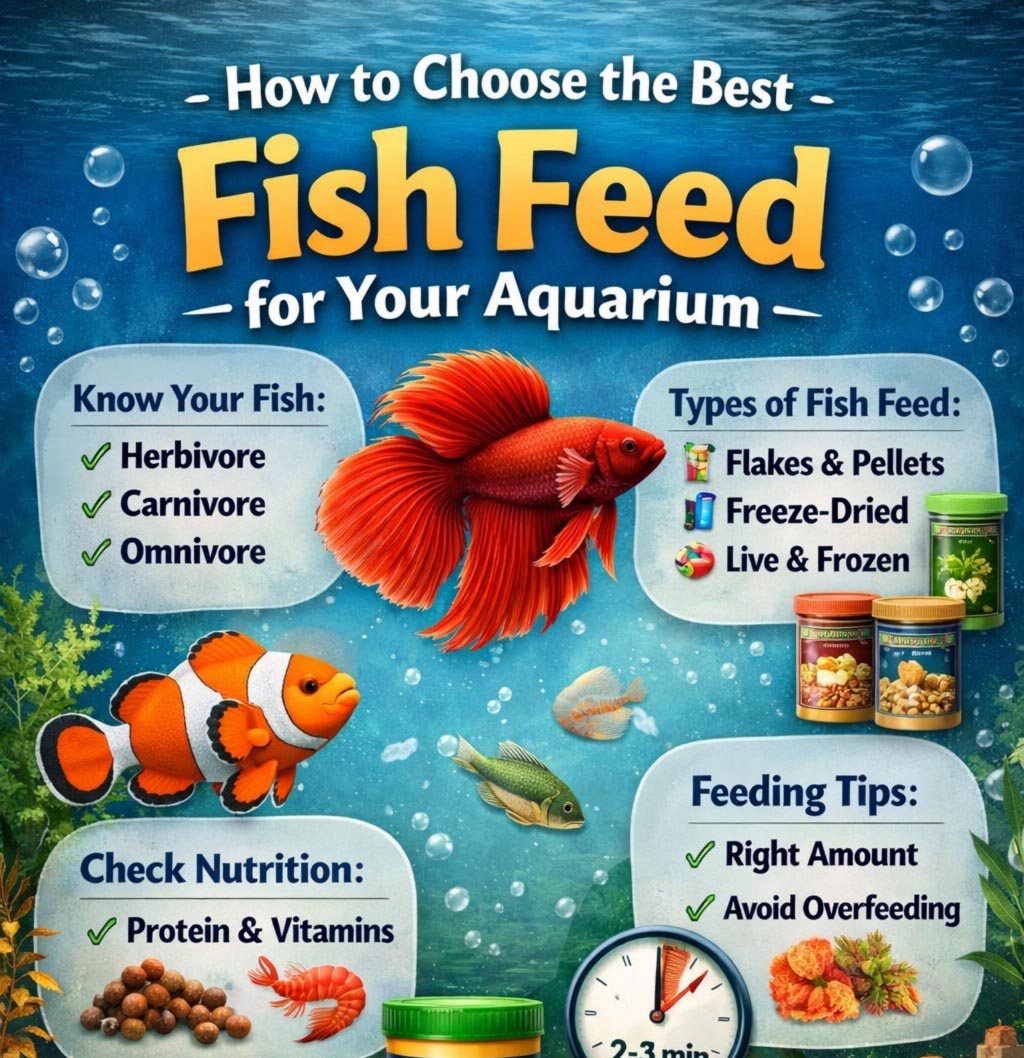
Understand Your Fish Species First
Knowing what kind of fish you have is essential before purchasing any fish feed. The food requirements of various species vary.
1. Fish that eat plants
These fish mostly consume plant-based foods.
- For instance, Silver Dollars, Plecos, and Mollies
- The best feed is vegetable-based pellets, spirulina flakes, and algae wafers.
2. Fish that are carnivorous
Diets high in protein are necessary for these fish.
- For instance, Oscar, Betta, and Arowana
- High-protein pellets, freeze-dried worms, and shrimp-based diets are the best options.
3. Fish that are omnivores
This includes the majority of aquarium fish.
- Examples include goldfish, tetras, and guppies.
- The best feed is balanced pellets or flakes that include both plant and animal protein.
Better digestion and nutrition are guaranteed when you select a popular fish feed made especially for your fish species.
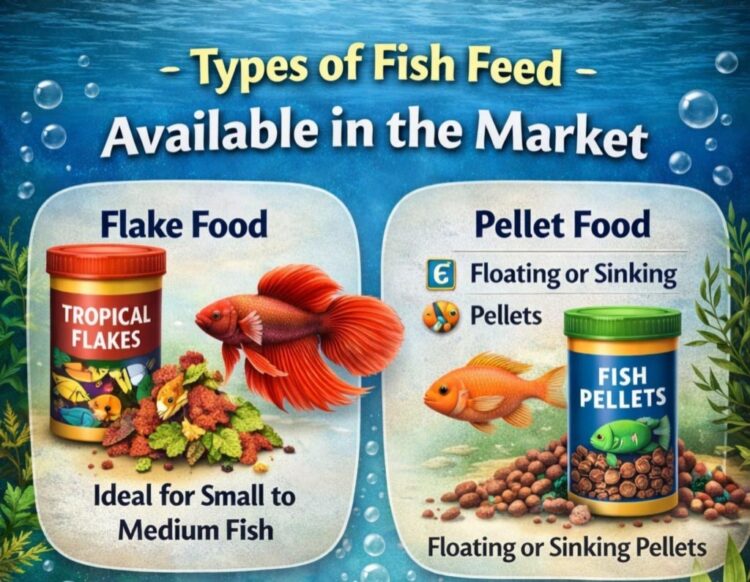
Types of Fish Feed Available in the Market
You can make better decisions if you are aware of feed types.
1. Fake Food
- Perfect for fish that are little to medium in size
- Floats on the surface
- Simple to digest
- Often seen in community tanks
One of the most common fish feed choices for novices is flakes.
2. Food Pellets
- They come in slow-sinking, sinking, and floating varieties.
- Ideal for medium-sized to giant fish
- Water contamination is lower than that of flakes
Pellets’ regulated portion sizes make them ideal for long-term feeding.
3. Food that has been freeze-dried
- comprises daphnia, brine shrimp, and bloodworms.
- high level of protein
- Ideal as a supplement rather than a daily meal
4. Live Cuisine
- improves the way that people naturally hunt
- enhances reproduction and development
- needs to be handled carefully.
5. Speciality Foods and Gel
- created to meet particular requirements (disease healing, growth, colour improvement)
- Advanced hobbyists frequently employ
Nutritional Content to Look For
Before purchasing fish feed, always read the label. A high-quality feed should include:
1. Protein
- vital for tissue repair and growth
- Fish that are carnivorous need more protein (40–50%).
- Fish that are omnivores thrive on 30–40% protein.
2. Fats
- Give energy
- should be found in proportionate proportions (5–10%).
3. Minerals and Vitamins
- Vitamin C strengthens defences.
- Bone health is supported by calcium and phosphorus.
4. Fibre
- facilitates digestion
- Particularly crucial for fish that eat plants
Selection is made simpler by the unambiguous declaration of nutritional percentages in many well-known fish feed brands.
Match Feed Size With Fish Mouth Size
Feeding pellets or flakes that are too big or too small is a common error made by aquarium owners.
- Crushed flakes or micro pellets for little fish
- Standard pellets or flakes for medium-sized fish
- Big fish → Jumbo sticks or pellets
Choking, waste, or uneven feeding can result from an incorrect size.
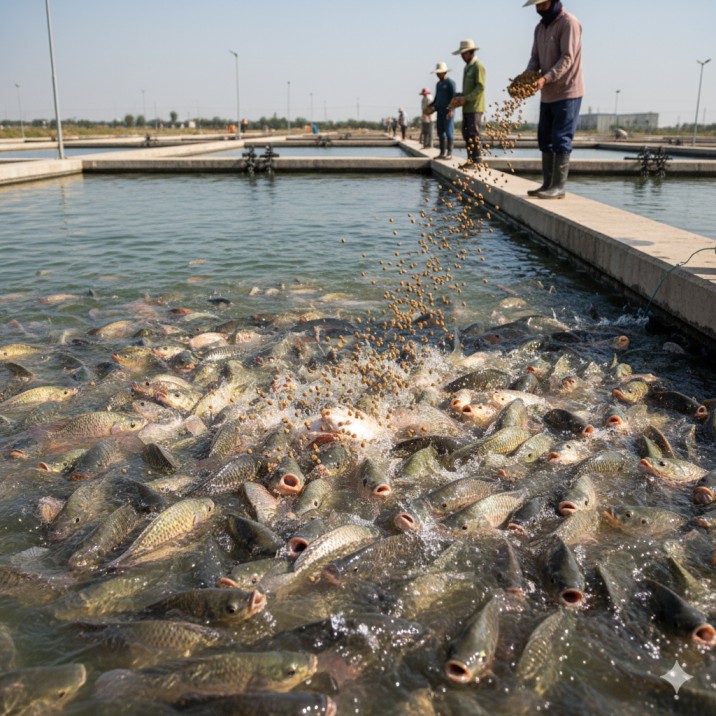
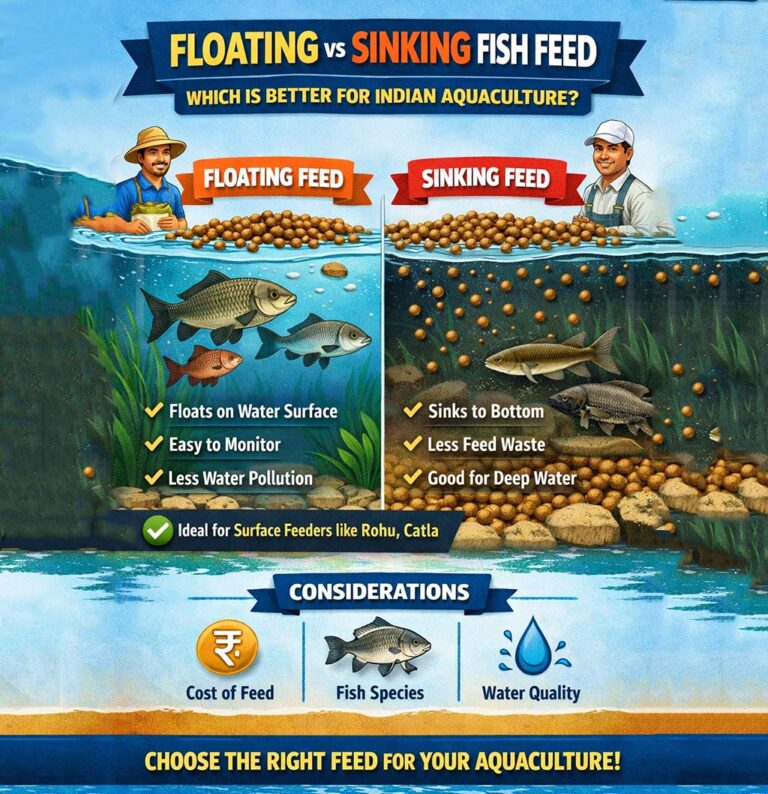
Floating vs Sinking Feed
Selecting the appropriate feeding level is crucial.
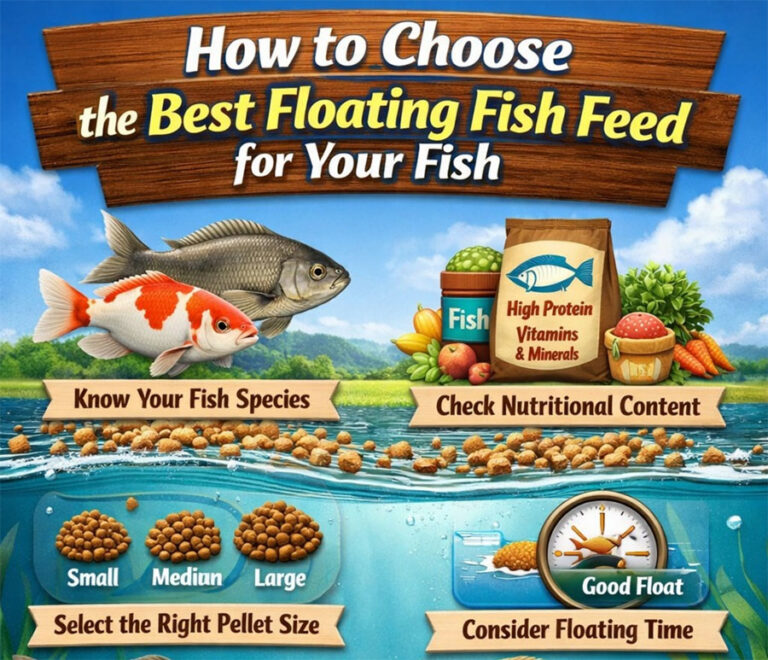
- Flakes or pellets floating on the surface (Betta, Guppy)
- Pellets that sink slowly in mid-level feeders (Tetras)
- Sinking pellets or wafers for bottom feeders (catfish, loaches)
The majority of widely used fish food alternatives indicate whether they float or sink.
Avoid Overfeeding at All Costs
One of the main causes of aquarium issues is overfeeding.
Issues brought on by overfeeding:
- Hazy water
- Algae development
- Spikes in ammonia
- Bloating fish
The best method:
Once or twice a day, feed your fish only what it can consume in two to three minutes.
Overuse of even the greatest and most well-liked fish feed can lead to problems.
Look for Trusted and Popular Fish Feed Brands
Brand reputation is important while selecting fish feed. Prominent brands typically make investments in safe manufacturing procedures, high-quality ingredients, and research.
Advantages of using well-known fish feed brands:
- Reliability in quality
- A healthy diet
- Reduced pollution of water
- Increased acceptance of fish
Steer clear of very inexpensive, unbranded feeds because they frequently include fillers rather than nutrients.
Special Fish Feed Requirements
Certain fish require specific diets:
1. Feed that enhances colour
- Carotenoids are present.
- enhances yellows, oranges, and reds
2. Feed for Breeding
- Elevated protein
- increases fry survival and egg output
3. Feed for Disease Recovery
- Rich in vitamins
- increases immunity
Numerous well-liked fish feed solutions are made to meet these particular requirements.
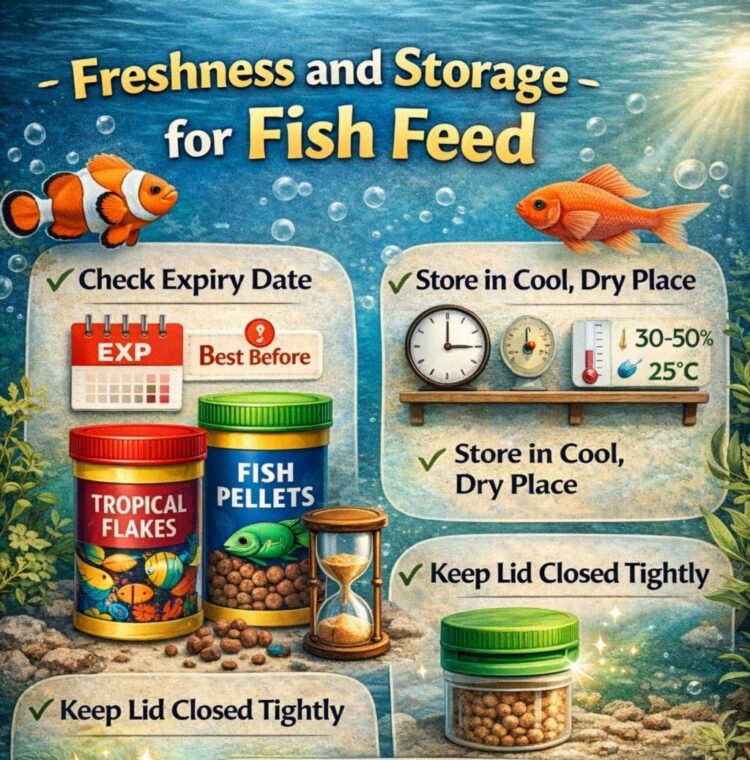
Freshness and Storage Matter
Over time, the nutritional value of fish feed decreases.
Advice:
- Verify the expiration date before purchasing.
- Keep in a dry, cool location.
- Keep the lid firmly shut.
- Steer clear of the sun.
For your fish, fresh feed guarantees improved nutrition and flavour.
Read Reviews and Observe Fish Response
Not every aquarium will benefit from the most widely used fish feed.
Following the introduction of the new feed:
- Watch how people eat.
- Verify the clarity of the water.
- Observe the colour and activity of the fish.
Fish in good health will be colourful, energetic, and ready to eat.
Conclusion
Maintaining a bright and healthy aquatic environment requires selecting the best fish feed for your aquarium. You may greatly enhance the quality of life for your fish by being aware of their species, choosing the appropriate feed type, examining the nutritional content, and avoiding overfeeding.
Always choose popular, high-quality fish feed that meets the requirements of your aquarium. Recall that a healthy diet not only keeps fish alive but also promotes their growth.
Every aquarium owner’s ultimate desire is for their fish to be healthy, colourful, and content when they are well-fed. “🐟✨
Thanks for reading
Click here to read this: How to Choose the Right Floating Fish Feed