
One of the most crucial choices in aquaculture is selecting the appropriate floating fish feed. Fish growth, health, water quality, and overall farm profitability are all directly impacted by feed quality.
Many fish farmers now favour floating pellet fish feed over other feed kinds because of its effectiveness, simplicity of monitoring, and decreased waste. But not every floating feed is created equal. Knowing your fish species, dietary requirements, and farming circumstances will help you choose the best one.
When selecting the best floating pellet fish feed for your aquaculture business, this information will help you make an informed choice.
Understanding Floating Pellet Fish Feed
Fish feed made of floating pellets is designed to remain on the water’s surface for a set period before gradually dissolving or sinking. This enables farmers to keep an eye on fish consumption and feeding habits while allowing fish to feed naturally at the surface.
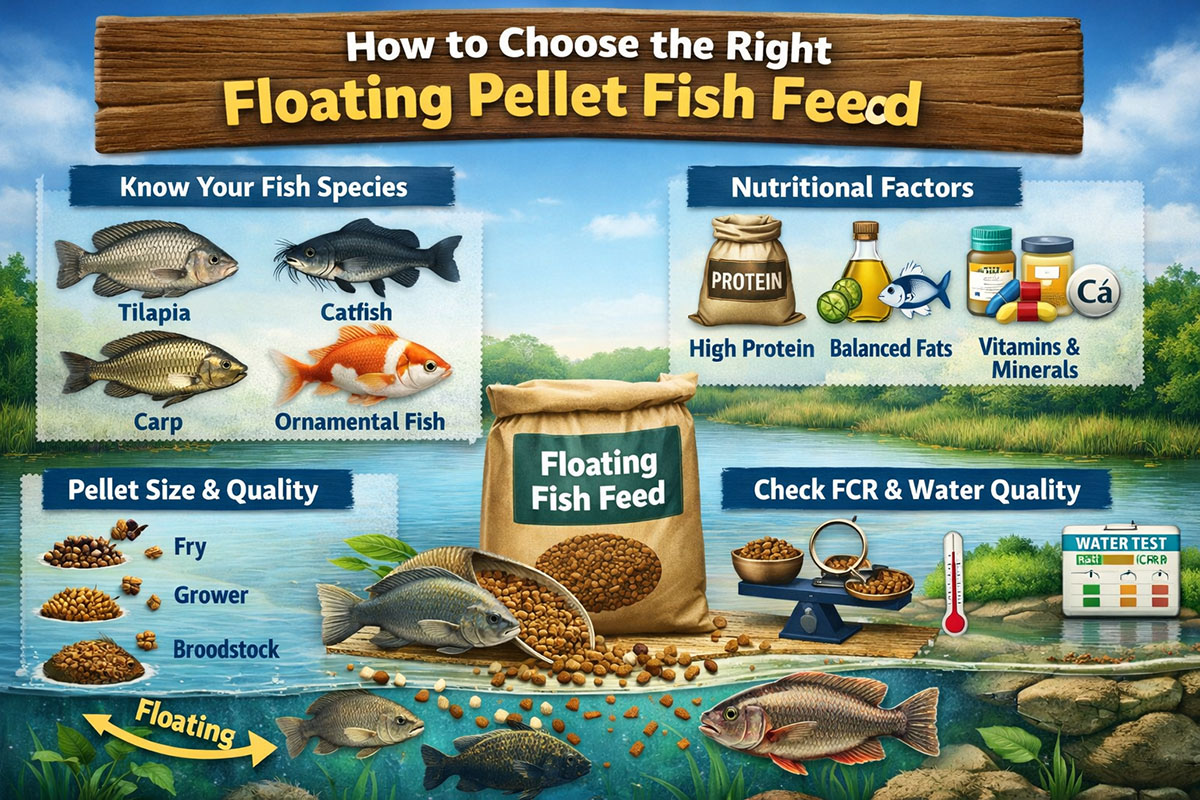
Floating pellets minimise feed loss and improve water quality, unlike sinking feed. Species such as tilapia, carp, catfish, and ornamental fish are frequently utilised in freshwater aquaculture.
Why Floating Pellet Fish Feed Is Important
There are various benefits to using the proper floating pellet fish feed:
- Increased use of feed
- Decreased waste of feed
- Improved growth performance
- Simple fish health monitoring
- Reduced contamination of water
- Economical management of feeding
Choosing high-quality feed is essential to long-term profitability, as it accounts for 60–70% of overall agricultural expenses.
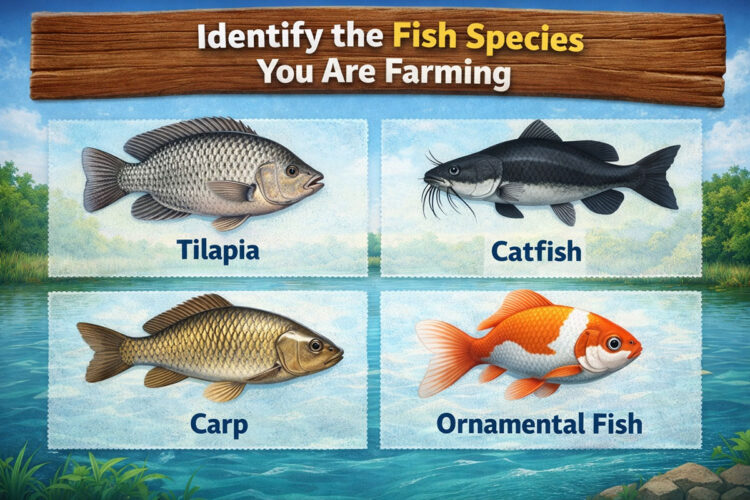
Identify the Fish Species You Are Farming
Fish species differ in their dietary needs, digestive systems, and eating behaviours. Determine your target species before selecting floating pellet fish feed.
- Needs a diet heavy in calories and moderate in protein.
- Carp: Requires plant-based proteins and a balanced diet.
- Catfish: Needs a lot of fat and protein.
- A colour-enhancing, vitamin-rich diet is essential for ornamental fish.
Nutrient shortages are avoided, and ideal growth is ensured by using species-specific floating pellets.
Consider the Nutritional Composition
One of the most important selection criteria for floating pellet fish feed is its nutritional value. Always look for the following elements on the feed label:
Content of Protein
For muscles to grow and expand, protein is necessary.
- 35–45% protein in fry
- 30–35% protein in fingerlings
- Adult fish: 25–30% protein
Fish meal, soybean meal, or plant protein blends are examples of easily digested protein sources that should be used in high-quality floating pellet fish feed.
Oils and Fats
Fats improve feed conversion efficiency and provide energy. Depending on the species and water temperature, the ideal fat concentration is between 5 and 10%.
Minerals and Vitamins
Important minerals (calcium, phosphorus, and zinc) and vitamins (A, D, E, and C) support bone growth, immunity, and stress tolerance.
Choose the Right Pellet Size
The size of the pellet must correspond to the fish’s age and mouth size. While very few pellets might not satisfy nutritional needs, feeding pellets that are too big can result in waste.
- Fry: 0.2–0.8 mm
- Fingerlings: 1-2 mm
- Fish growth: 3–5 mm
- Broodstock: at least 6 mm
Better growth performance and effective feeding are ensured by choosing the right pellet size.
Check Floating Stability and Durability
Fish feed made of floating pellets should remain buoyant long enough for fish to eat without disintegrating prematurely.
Among the important quality markers are:
- A minimum of five to ten minutes of floating
- Minimal formation of powder
- Resistance to rapid disintegration
- uniform shape of the pellet
Stable floating pellets help preserve water purity and lessen nutrient leaching.
Evaluate Digestibility and Feed Conversion Ratio (FCR)
Highly digestible feed improves nutrient absorption and reduces waste. A low Feed Conversion Ratio (FCR), which indicates that less feed is needed to create more fish weight, is a sign of a high-quality floating pellet fish feed.
Benefits of lower FCR include:
- Lower feed expenses
- Quicker cycles of growth
- A more pristine pond ecosystem
Before making a purchase, request FCR information or farmer endorsements from suppliers.
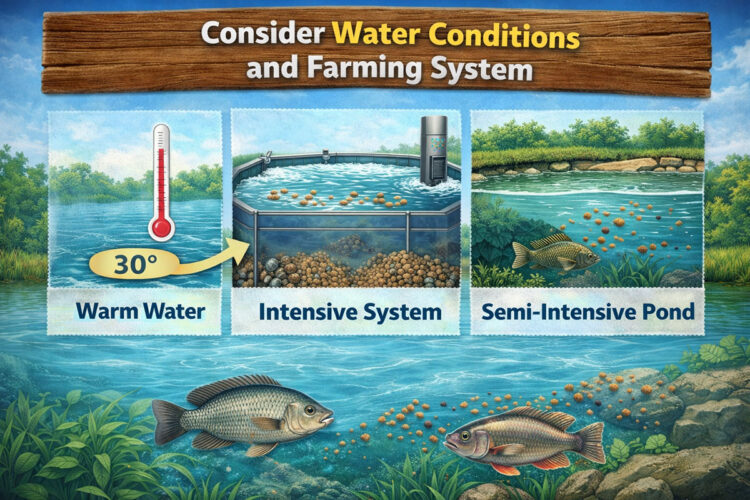
Consider Water Conditions and Farming System
Feed performance is influenced by temperature, agricultural intensity, and water quality.
- Fish metabolism rises in warm water, necessitating a higher-energy diet.
- It is advised to use premium floating pellet fish feed in intensive systems.
- A balanced diet with a reasonable protein content is effective in semi-intensive ponds.
Choosing feed appropriate for your environment ensures steady growth and minimal stress.
Check the Manufacturing Quality and Brand Reputation
Selecting floating pellet fish feed from reputable producers with established quality standards is always advised. Reputable companies make investments in cutting-edge extrusion technology, high-quality raw materials, and research.
Search for:
- ISO or quality certificates
- Clear labelling of ingredients
- Positive evaluations from farmers
- The supplier’s technical assistance
Consistent feed quality is offered by reputable producers in every batch.
Avoid Overfeeding and Monitor Feeding Behaviour
If overfed, even the greatest floating pellet fish feed can lead to issues. Every day, keep an eye on the fish’s feeding habits.
Indications of appropriate feeding:
- Fish aggressively eat their food in a few minutes.
- Very few pellets are left over
- Healthy levels of activity and colouration
To prevent contaminating the water, uneaten feed should be removed right away.
Conclusion
A key component of creating a successful and long-lasting aquaculture business is selecting the appropriate floating pellet fish feed. You can choose feed that encourages healthy growth, lowers waste, and enhances water quality by being aware of your fish species, nutritional requirements, pellet size, and farming circumstances.
Purchasing premium floating pellet fish feed not only improves fish performance but also reduces operating expenses and promotes long-term company success. In today’s cutthroat aquaculture sector, fish growers can increase yields and improve profitability by selecting the right feed and using appropriate feeding techniques.