
Maintaining an aquarium is a fulfilling pastime that infuses your house with beauty, tranquillity, and a little bit of nature. However, your fish’s longevity and general health are mostly dependent on one important factor: their nutrition. Selecting the appropriate fish feed takes knowledge of your fish species, their nutritional requirements, and the quality of materials used. It’s not just about picking a vibrant box off a pet store shelf. This advice will assist you in making an informed choice and guarantee that your aquatic pets receive high-quality fish feed.
Why Choosing the Right Fish Feed Matters
Like all living things, fish require a balanced diet to develop, remain active, and fend against illness. Slow development, faded colours, digestive problems, contaminated water, and even early death might result from poor-quality nutrition. However, providing premium fish feed encourages:
- Improved development and growth
- Improved hue
- More robust immune systems
- Enhanced performance in breeding
- Cleaner aquarium water
Purchasing the proper feed is an investment in the general well-being of your aquarium.
Understand Your Fish Species First
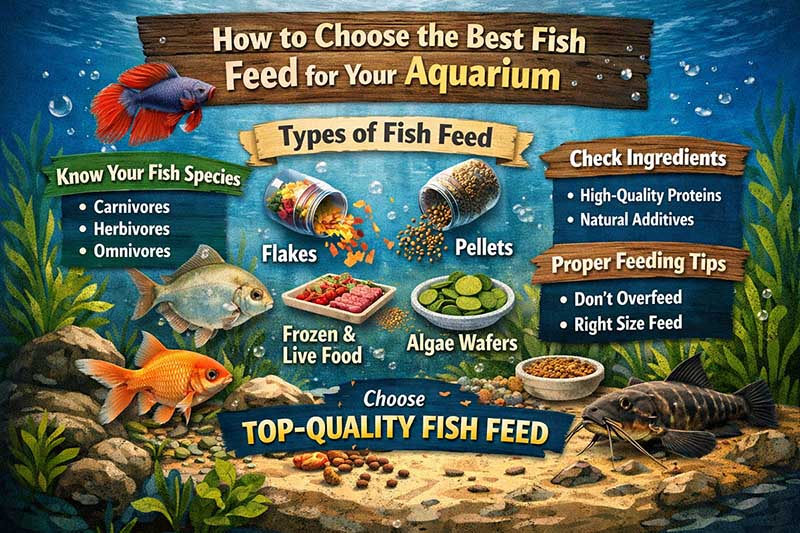
Determining the species you keep is the first step in selecting the best fish feed. The dietary needs of different fish vary.
1. Fish that consume meat
These fish consume meat-based foods like other fish, insects, and tiny crustaceans. They need a lot of protein.
For instance, Oscar, Betta, and Arowana
The best feed is shrimp-based formulations, frozen or live meals, and high-protein pellets.
2. Fish that eat plants
Fish that consume plants are dependent on algae and plant materials.
For instance, Silver Dollars, Mollies, and Plecos
The best feed is vegetable-based pellets, spirulina flakes, and algae wafers.
3. Fish that are omnivores
This group includes the majority of aquarium fish, which consume both plant and animal matter.
Examples include goldfish, tetras, and guppies.
The ideal feed is balanced pellets or flakes with a variety of ingredients.
Knowing the type of fish you have will help you choose premium feed that complements their natural diet.
Choose the Right Type of Fish Feed
There are several types of fish feed, and each offers benefits of its own.
1. Flakes
For fish that feed on the surface, flake food is one of the most popular choices.
- Advantages
- Simple to use
- Ideal for little fish
- Widely accessible
Cons:
- If overfed, can it cloud the water?
- quickly loses nutrients after being opened.
2. Pellets
Compared to flakes, pellets are more nutrient-rich and dense.
- Advantages
- Reduced waste
- Improved retention of nutrients
- Both floating and sinking types are available.
Cons:
- The right pellet size must be selected.
For long-term feeding, high-grade pellets are frequently regarded as premium fish feed.
3. Granules
Granules are appropriate for mid-water feeders because they are smaller than pellets.
- Advantages
- Slowly sinking
- Perfect for community tanks
4. Live and Frozen Food
- comprises daphnia, brine shrimp, and bloodworms.
- Advantages
- Extremely nourishing
- promotes instinctive eating habits
Cons:
- Increased price
- Disease risk if improperly sourced
Check the Ingredient List Carefully
The actual quality of fish feed may be seen in the component list. Before making a purchase, always read the label.
What to Search for:
- Fish meal or whole fish as the initial ingredient
- For protein, try prawns, krill or squid.
- Algae or spirulina for herbivorous requirements
- Minerals and vitamins (A, D, E, and C)
Things Not to Do:
- Overuse of fillers such as maize or wheat
- Preservatives and artificial colours
- “Animal by-products” without a name
Natural, digestible ingredients that closely resemble what fish consume in the wild are used in the best, highest-quality fish feed.
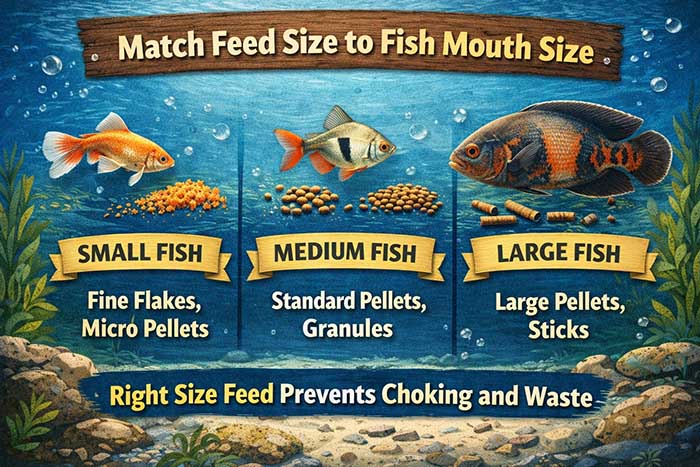
Match Feed Size to Fish Mouth Size
If your fish is unable to properly consume the meal, it won’t matter how nutritious it is. Overfeeding might result in waste accumulation or choking.
- Small fish -> Micro pellets or fine flakes
- Standard pellets or granules for medium-sized fish
- Big fish → Big pellets or sticks
Appropriate sizing guarantees effective feeding and maintains the aquarium’s cleanliness.
Consider Feeding Behaviour and Tank Level
Your fish’s diet should reflect their natural feeding habits:
- Surface feeders: Pellets or flakes that float
- Granules that sink slowly are mid-level feeders.
- Algae wafers or sinking pellets are bottom dwellers.
All of the fish in the tank will have better access to premium fish feed when the proper feeding level is chosen.
Avoid Overfeeding at All Costs
One of the most frequent errors made by aquarium owners is overfeeding. Food waste sinks to the bottom, decomposes, and contaminates the water.
Top Techniques:
- Feed once or twice per day.
- Give the fish only what it can consume in two to three minutes.
- Take out any leftover food.
If used excessively, even the best, premium fish feed might damage your aquarium.
Specialised Fish Feeds for Specific Needs
Certain fish have unique nutritional needs.
1. Feeds that Enhance Colour
Include natural pigments to enhance colour, such as astaxanthin.
2. Feeds for Growth
foods high in protein for fish breeding or frying.
3. Feeds to Prevent Disease
enhanced with immune-stimulating agents or garlic.
Fish vitality and attractiveness can be greatly enhanced by using specialised, premium fish feed.
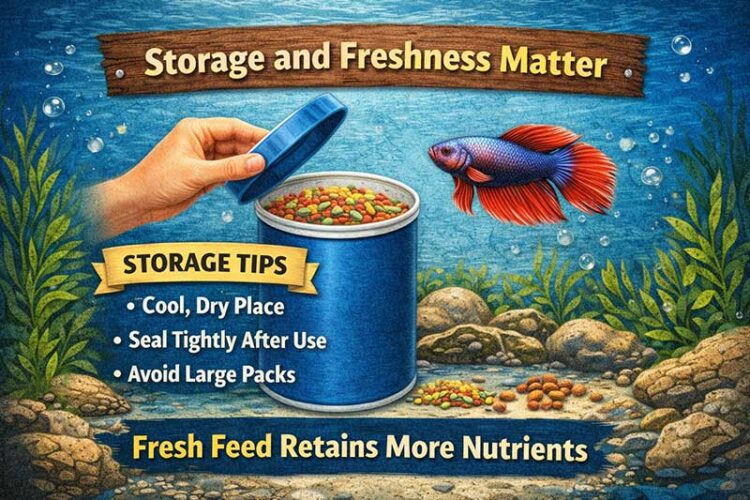
Storage and Freshness Matter
If fish feed is not stored properly, its nutritional content gradually decreases.
Storage Advice:
- Store feed in a dry, cool environment.
- After usage, firmly seal the container.
- Don’t purchase packs that are too big.
Your fish will get the most nutrients if you use fresh, premium fish feed.
Budget vs Quality: Finding the Right Balance
Although premium fish feed may be more expensive, it frequently lasts longer and causes fewer health issues, saving money on water changes and treatments. Fillers in cheap feed are typically difficult for fish to digest.
In the long term, selecting premium fish feed is more cost-effective.
Conclusion
Maintaining a lively, healthy aquatic environment requires choosing the best fish feed for your aquarium. You can make sure your fish get the best nutrition possible by being aware of the species of fish you have, selecting the appropriate feed type, examining the ingredients, and adhering to the right feeding procedures. Keep in mind that not all feeds are made equal. Purchasing premium fish feed results in cleaner water, healthier fish, and a more pleasurable aquarium experience.
Your aquarium will thrive and become a genuine focal point of colour and vitality in your house with the correct information and thoughtful choices.
Thanks for reading 🙂
Click here to read this: How to Choose the Right Floating Fish Feed