
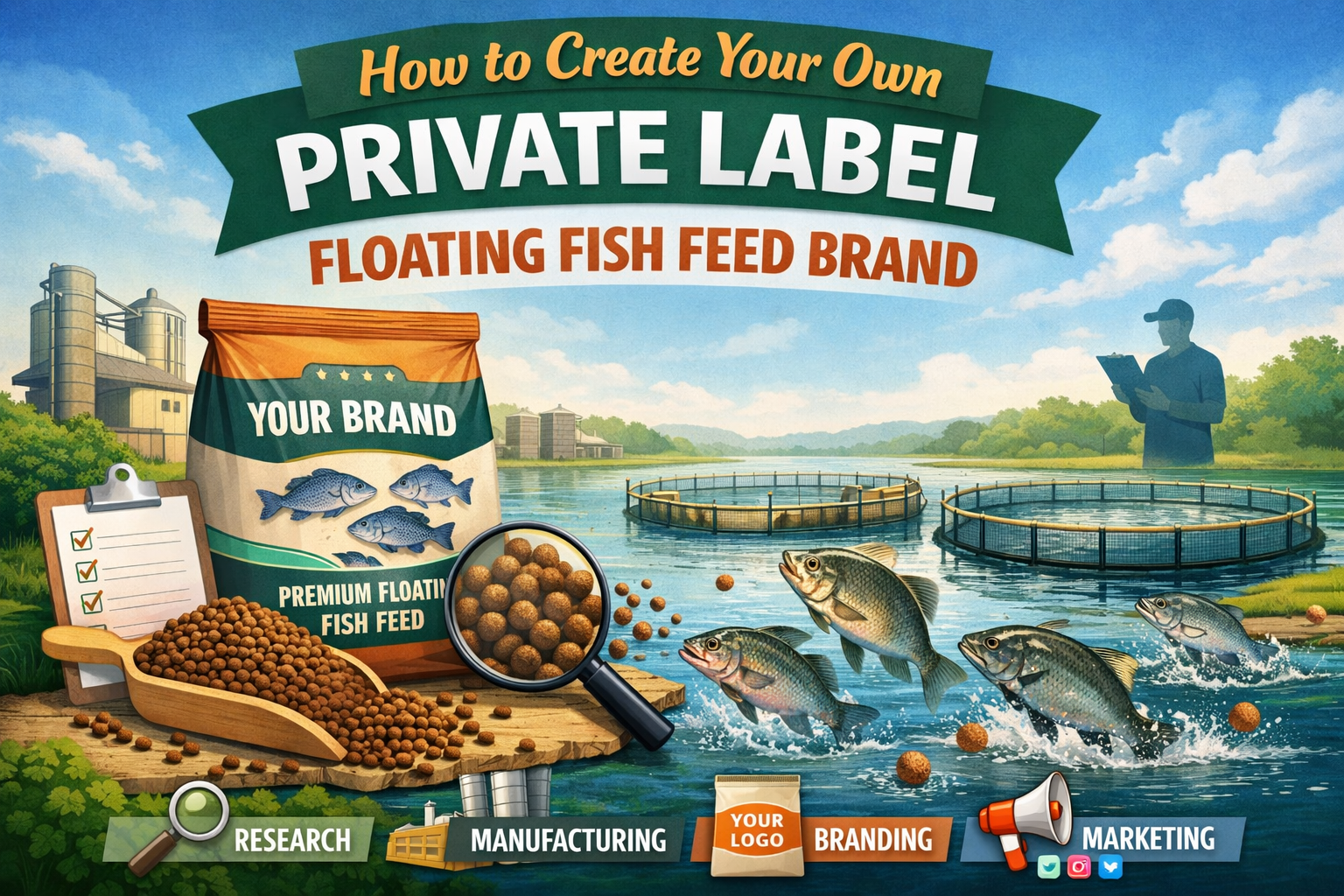
Globally, the aquaculture sector is expanding quickly due to rising demand for sustainable food supplies and high-quality protein. Establishing a private label floating fish feed brand is one of the most promising business prospects in the successful fish farming industry. Private labelling enables you to sell premium floating fish feed under your own brand name with less investment and quicker market access than producing feed from scratch.
From market research to branding, production, and distribution, this blog will walk you through every step of developing your own private-label floating fish feed business.
1. Understand the Floating Fish Feed Market
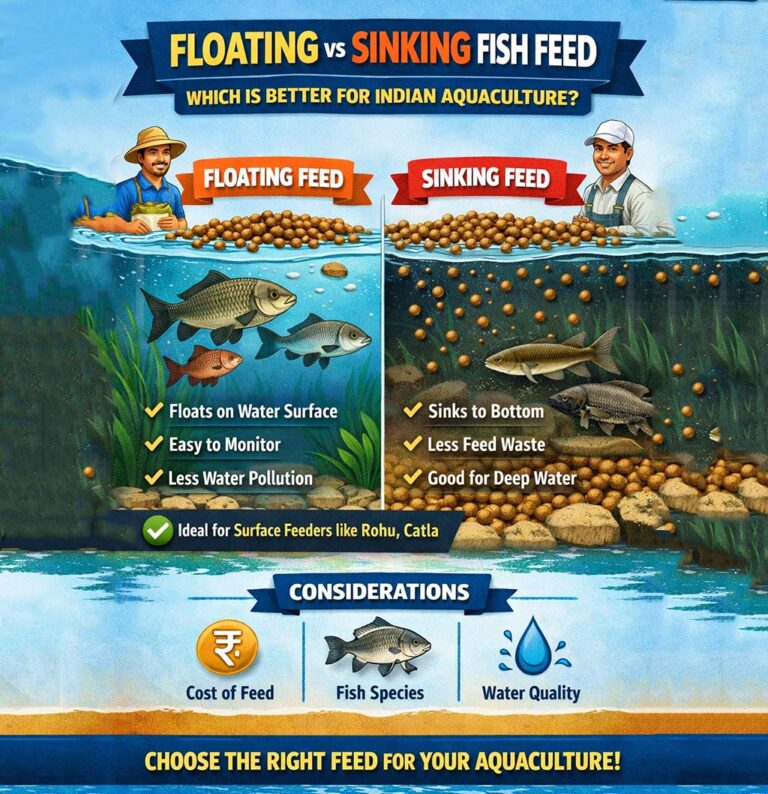
It is crucial to comprehend consumer demands and the fish feed market before launching your business. Because it enables farmers to keep an eye on fish eating habits, cut waste, and improve water quality, floating fish feed is a popular choice.
Important aspects of research include:
- Popular fish species in your intended area, such as tilapia, pangasius, rohu, and catla
- Feed dimensions and pellet specifications
- Expectations for protein, fat, and nutrients
- Pricing patterns and rival brands
You may sell your private-label floating fish feed as a dependable and lucrative choice for fish farmers by having a thorough grasp of the market.
2. Define Your Brand Vision and Target Audience
Your brand should represent a certain value, such as sustainable nutrition, quick growth, affordability, or quality. Choose whether the following will be the focus of your private-label floating fish feed:
- Fish growers on a small scale
- Aquaculture farms for commercial purposes
- Eco-friendly or organic fish farming
- High-growth premium feed market
Early target audience definition aids in the development of your product, price plan, and marketing strategy.
3. Choose the Right Manufacturing Partner
The manufacturer you select will have a significant impact on the success of your private label brand. The floating fish feed will be produced by the manufacturer and sold under your own brand name because you are private labelling.
When choosing a manufacturer, make sure they:
- Make use of premium raw resources
- Observe regular feed formulation procedures.
- Possess extrusion technology for pellets that float
- Provide a steady supply and quality
- Allow for pellet size and feed mixture customisation.
Customers will be more trusting of your private-label floating fish feed if you have a trustworthy production partner.
4. Develop the Feed Formula and Specifications
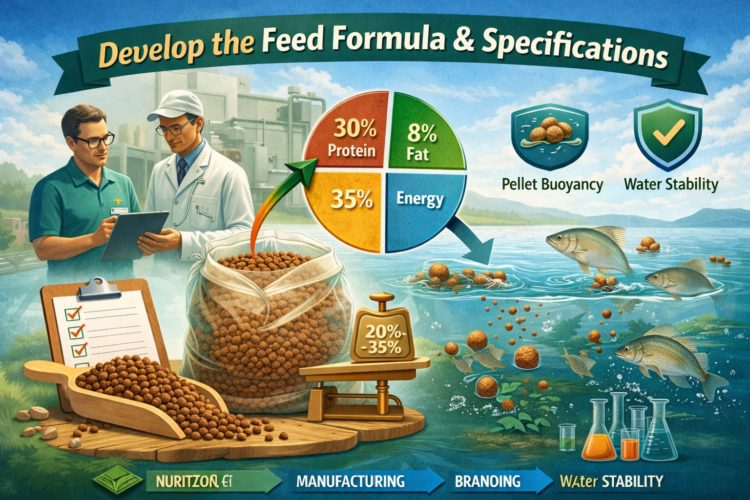
The nutritional makeup of floating fish feed determines its quality. To complete the feed formula, collaborate closely with your manufacturer or an aquaculture nutrition specialist.
Crucial components consist of:
- Protein content (typically between 20% and 35%, depending on the type of fish)
- Balance between fat and energy
- Minerals and vitamins
- Water stability and pellet buoyancy
- Feed conversion ratio (FCR) and digestibility
In a crowded market, providing nourishment that is scientifically balanced will make your business stand out.
5. Branding and Packaging Design
Customer perception is significantly influenced by branding. Inadequate branding can restrict sales even in cases where the feed quality is exceptional.
Pay attention to:
- A powerful and enduring brand name
- Expert colour scheme and logo
- Unambiguous packing information (fish type, feeding instructions, protein percentage)
- Sturdy and moisture-resistant bags
Your own label of floating fish feed gains credibility from attractive and educational packaging, which also assists farmers in making assured purchasing decisions.
6. Ensure Quality Control and Certifications
In the manufacturing of fish feed, quality control is essential. Ensure that your manufacturing partner adheres to stringent quality control procedures, such as:
- Testing of raw materials
- Checks for nutritional consistency
- Testing for pellet floatability
- Analysis of shelf life and storage
Get the necessary certifications, such as ISO, GMP, or feed safety compliance, if you can. These certifications increase brand credibility and provide access to institutional buyers and larger distributors.
7. Pricing and Profit Margin Planning
Increased profit margins are one of the main benefits of private labelling. Pricing must be competitive while maintaining sustainability, though.
Think about:
- Costs of production and packaging
- Costs associated with storage and logistics
- Retailer and distributor margins
- Benchmarks for market prices
A well-thought-out price strategy guarantees that your private label floating fish feed is both profitable for your company and accessible to farmers.
8. Build a Strong Distribution Network
For your fish feed brand to grow, distribution is essential. Determine which sales channels work best, such as:
- Local suppliers of aquaculture inputs
- Distributors at wholesale prices
- Sales to fish farms directly
- B2B online platforms
Maintaining a steady supply and prompt delivery facilitates the development of enduring connections with farmers and traders.

9. Marketing and Promotion Strategies
To raise brand awareness and demand, marketing is crucial. Successful tactics consist of:
- Sample trials and field demonstrations
- Meetings and awareness campaigns for farmers
- Digital marketing via websites and social media
- Information on fish nutrition and feeding techniques
Emphasise the advantages of your private label floating fish feed, including decreased water pollution, improved feed efficiency, and quicker growth.
10. Customer Support and Brand Trust
Customer happiness is essential for long-term success. Provide robust post-purchase assistance by:
- Advising on feeding
- Responding promptly to farmer concerns
- Gathering input to enhance the product
Farmers are more inclined to stick with your brand and refer others to it when they witness regular results.
Conclusion
In the expanding aquaculture sector, starting your own private-label floating fish feed brand is a clever and scalable business opportunity. You may start a successful fish feed business by knowing the market, working with the correct manufacturer, emphasising high-quality nutrition, and developing a strong brand identity.
Your private label floating fish feed business can achieve long-term success and become a reputable name in the aquaculture industry with the correct plan, dedication to quality, and a farmer-centric attitude.
You can explore reliable options at Happy Feeds: https://www.happyfeeds.co.in/
Thanks for reading 🙂
Click here to read this: How to Choose the Right Floating Fish Feed