
Innovative Ingredients Revolutionizing Fish Feed Pellet Formulations
Introduction
Aquaculture is the world’s fastest-growing food sector, and as it scales, feed manufacturers face a hard truth: traditional fishmeal- and soybean-centered diets aren’t sustainable, affordable, or always optimal for fish health and producer margins. New proteins, functional additives, and clever binders are part of a new wave of innovative ingredients that are rewriting the rules for what fish feed pellets can do. Not only are these ingredients less dependent on diminishing marine resources, but they also improve growth performance, resistance to disease, feed conversion, and the footprint on the environment. Here’s a rundown of the most impactful innovations and why they matter.
Why ingredients innovation matters
Fish feed is more than calories and protein: it’s a delivery vehicle for nutrition, immunity, and growth programming. Innovations matter because they:
- Reduce pressure on wild fish stocks and arable land.
- Reduce expenses and emissions by increasing feed conversion ratios (FCR).
- Enhance gut health and disease resistance, reducing antibiotic use.
- Allow precision nutrition tailored to species, life stage and production systems.
High-value alternative proteins
Insect meals (Black Soldier Fly, mealworm, etc.)
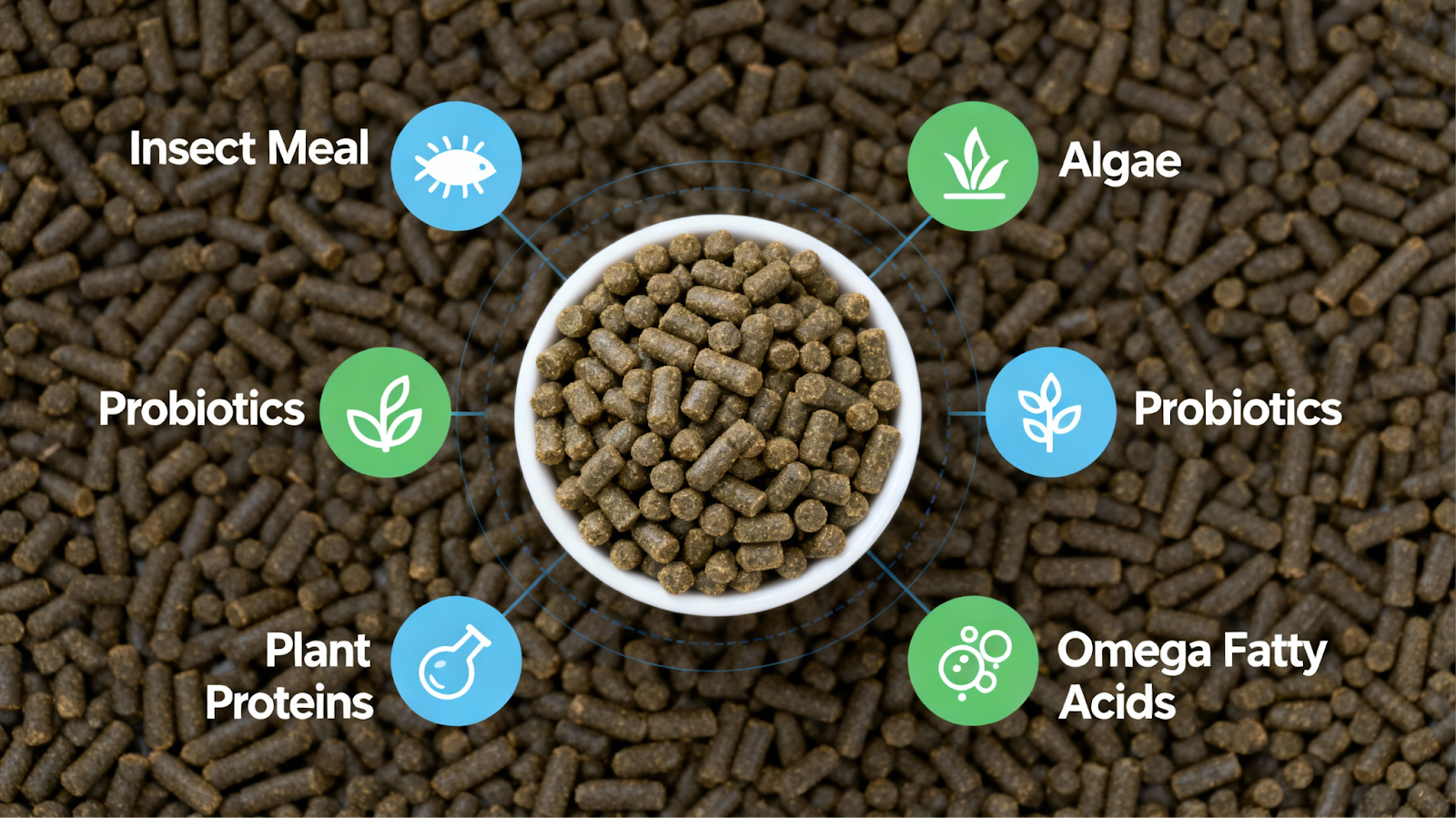
Insect meals are among the most talked-about alternatives. They offer high protein content and favourable amino acid profiles and are produced from low-value organic waste streams, closing nutrient loops. Beyond macronutrients, insects provide chitin — a functional component that can support gut health and immunity.
Single-cell proteins (SCP)
SCPs—produced from microalgae, yeast, fungi, or bacteria—deliver concentrated protein and micronutrients with a small land footprint. Microalgae are especially prized for their omega-3 fatty acids (EPA/DHA) and pigments (astaxanthin), making them a dual-purpose ingredient that supports growth and enhances flesh quality and color in species like salmon and trout.
Fermented plant proteins
Fermentation transforms plant meals (e.g., soybean, rapeseed, pea) by reducing anti-nutritional factors and improving digestibility and palatability. Fermented meals often contain beneficial metabolites and bioactive peptides that can modulate gut microbiota and immunity.
Functional lipids and marine substitutes
Algal oils and microalgae
Algal oils are a sustainable source of long-chain omega-3s traditionally supplied by fish oil. They support neural development, growth, and flesh quality. Using microalgae in pellets also reduces the need for wild-caught forage fish.
Gut health modulators: probiotics, prebiotics and synbiotics
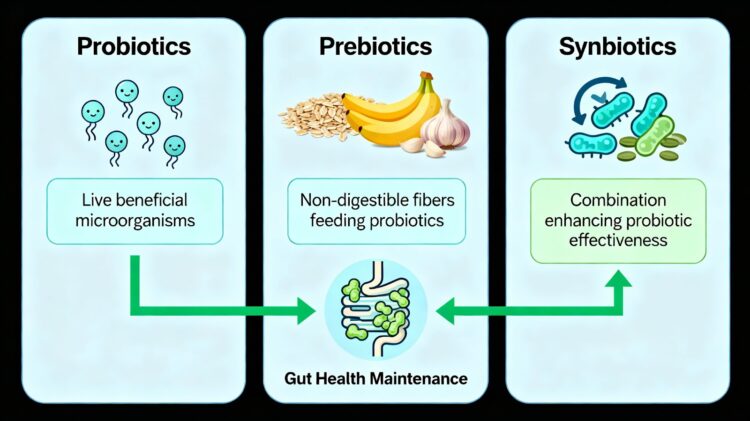
Healthy intestines mean better nutrient absorption and disease resistance. Modern pellet formulations increasingly include:
- Probiotics: live beneficial microbes that colonize the gut and outcompete pathogens.
- Prebiotics are non-digestible fibers that feed beneficial microbes selectively.
- Synbiotics: combinations of both, designed to produce synergistic benefits.
These additives are particularly useful in intensive systems with high levels of stress and pathogen pressure.
Immunostimulants and bioactives
Ingredients like beta-glucans, nucleotides, seaweed extracts (laminarin, fucoidan), and plant polyphenols are being used to prime immune responses, reduce mortality during disease challenges, and improve recovery after stress. Many of these serve as “Functional foods” for fish, supporting immune competence rather than replacing vaccines.
Enzymes and digestive enhancers
Exogenous enzymes (proteases, phytases, carbohydrases) expand the range of usable raw materials by breaking down anti-nutritional components, increasing phosphorus availability, and improving the digestibility of plant-based ingredients. This reduces waste output, such as phosphorus in effluent, and lowers feed costs.
Precision amino acids and peptides
Rather than overfeeding crude protein, modern formulations increasingly utilize crystalline amino acids (lysine, methionine, and threonine) and peptide-based ingredients to fine-tune amino acid profiles. This precision lowers nitrogen waste and supports optimal growth with smaller, more efficient diets.
Flavor, attractants and palatability enhancers
Maintaining palatability becomes increasingly important as new ingredients are added to formulations. Natural attractants (fish hydrolysates, krill derivatives, and enzymatic hydrolysates) and volatile flavor compounds help ensure consistent intake, particularly for juveniles and picky species.
Novel binders and pellet stability solutions
Ingredient development must coincide with pellet technology. Strategies for pellet stabilization and new binders include:
- Alginate and seaweed-based binders: improve water stability without synthetic polymers.
- Microbial polysaccharide binders: produced by fermentation, these can provide sustained pellet integrity.
- Enzymatic and extrusion tweaks: optimized processing (extrusion temperature, screw design) and inclusion of heat-stable functional ingredients preserve nutrient integrity while producing dense, slow-disintegrating pellets suitable for different feeding modes.
Upcycled and circular-economy ingredients
Upcycling agro-industrial streams—brewery spent grains, fish-processing byproducts, and fruit/vegetable waste—converts waste into feed. These streams become safe, nutrient-dense feed ingredients when combined with microbial treatment or fermentation. This promotes circularity, reduces overall production costs, and lessens the impact on the environment.
Microencapsulation and targeted delivery
Microencapsulation allows heat- or oxidation-sensitive nutrients (vitamins, oils, probiotics) to survive feed processing and passage through water until ingestion. Additionally, targeted delivery systems have the ability to release additives in specific parts of the gut or during stress, thereby reducing dosage requirements and increasing efficacy.
Environmental and economic impacts
These ingredient innovations reduce reliance on wild fish for fishmeal and fish oil, decrease land and water use compared with conventional crops, and often lower greenhouse gas emissions per unit of protein produced. Economically, alternatives can stabilize feed costs by diversifying supply chains and creating local ingredient markets for farmers and processors.
Challenges and considerations
Innovation isn’t frictionless. Formulators must manage:
- Nutrient variability: novel ingredients can vary batch-to-batch; robust quality control is essential.
- Digestibility and anti-nutritional factors: testing and processing (e.g., fermentation, heat treatment) are often required.
- Regulatory and consumer acceptance: especially for insect-based or genetically modified ingredients.
- Cost scaling: some ingredients are still costlier than traditional ones until production scales
What this means for aquaculture stakeholders
Feed manufacturers need R&D partnerships with ingredient producers, nutritionists, and farmers to run feeding trials and species-specific evaluations. Farmers should demand transparent sourcing and consistent specs. Investors and policymakers can accelerate adoption by supporting local processing facilities for SCP, insect rearing, and fermentation hubs.
Looking ahead
Blends of insect and microbial proteins, algae-derived omega-3s, precision amino acids, and functional additives delivered via microencapsulation will make the next generation of fish feed pellets smarter and more sustainable. Digital tools—from near-infrared ingredient scanners to AI-driven formulation software—will make precision nutrition practical and affordable. Ultimately, the best pellets will do more than feed fish: they will improve animal welfare, reduce environmental impact, and support resilient, profitable aquaculture systems.
Conclusion
Innovative ingredients are transforming fish feed pellet formulations from simple mixtures of protein and carbohydrates into precision tools for growth, health, and sustainability. While technical, regulatory, and economic hurdles remain, the momentum is clear: farms that adopt well-formulated, evidence-backed innovations will be better positioned to meet the growing global demand for seafood—responsibly, efficiently, and profitably.