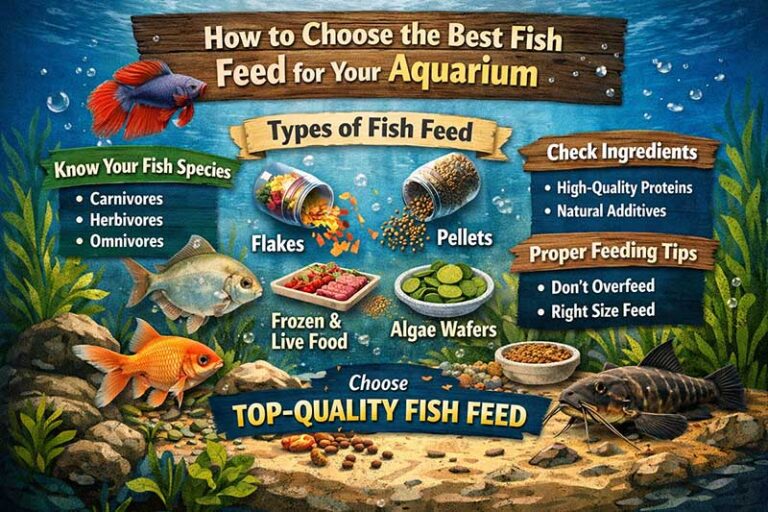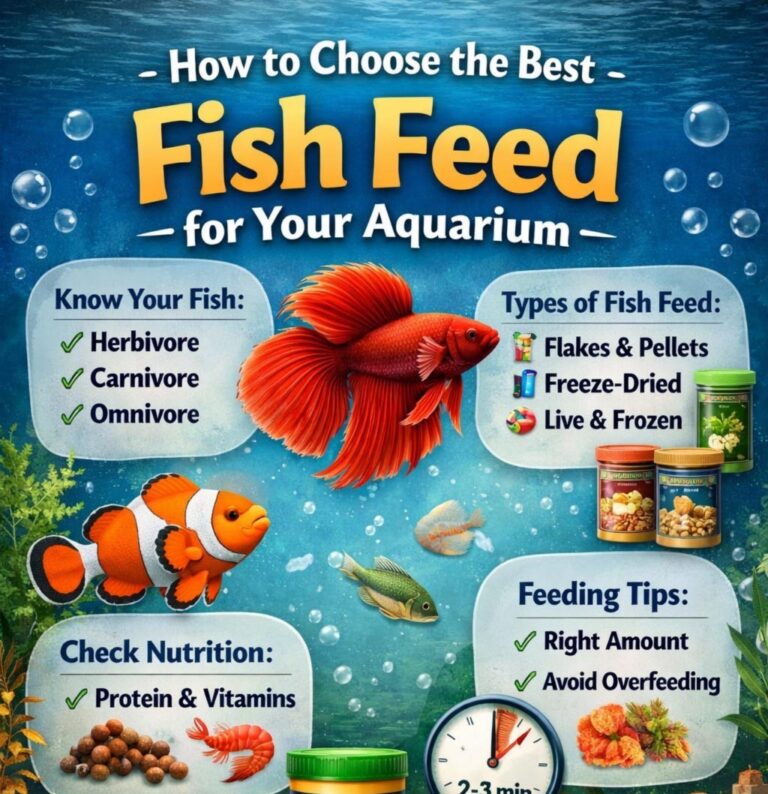

One of the most crucial choices for anyone interested in fish breeding or aquarium maintenance is selecting the appropriate fish feed. Fish growth, health, water quality, and overall profitability are all directly impacted by feed quality. Because of its ease of use, effectiveness, and nutritional advantages, floating fish feed has become one of the most popular solutions on the market. But not every floating feed is created equal. Fish species, nutritional makeup, pellet size, and water conditions must all be carefully taken into account when choosing the best floating fish feed.
Whether you are a hobbyist or a commercial fish farmer, we will walk you through the process of selecting the best floating fish feed for your fish in this article.
Understanding Floating Fish Feed
The purpose of floating fish feed is to stay on the water’s surface for a predetermined amount of time rather than sinking right away. This makes it comfortable for fish to eat at the surface and easy for farmers to keep an eye on their feeding habits. For species such as carp, tilapia, catfish, and ornamental fish, it is frequently used in aquaculture.
Reduced waste is one of the main benefits of floating fish feed. Farmers can adjust feeding amounts to avoid overfeeding and preserve improved water quality, as the feed remains visible.
Identify the Fish Species
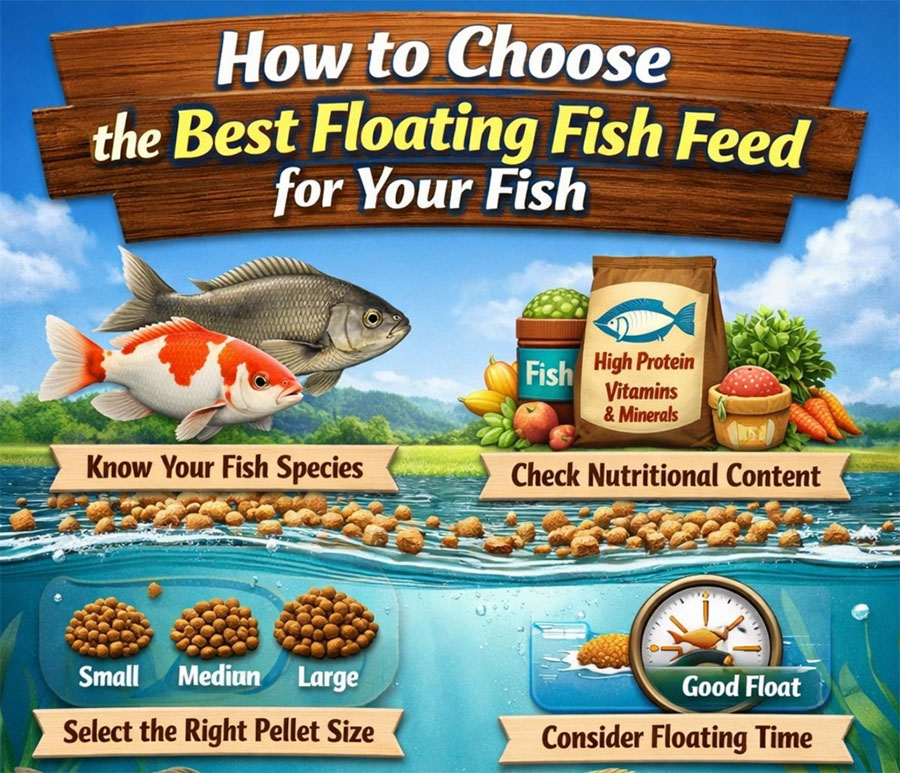
Determining the type of fish you are feeding is the first and most important step in selecting the best floating fish feed. The dietary needs of various fish species vary.
- Carnivorous fish need a lot of protein.
- More plant-based nutrients are required for herbivorous fish.
- A balanced combination of proteins, carbs, and lipids is necessary for omnivorous fish.
For instance, catfish may require higher-protein formulations, whereas tilapia and carp do well on floating fish feed with moderate protein levels. Optimal growth and fewer health problems are ensured by using species-specific feed.
Check Nutritional Composition
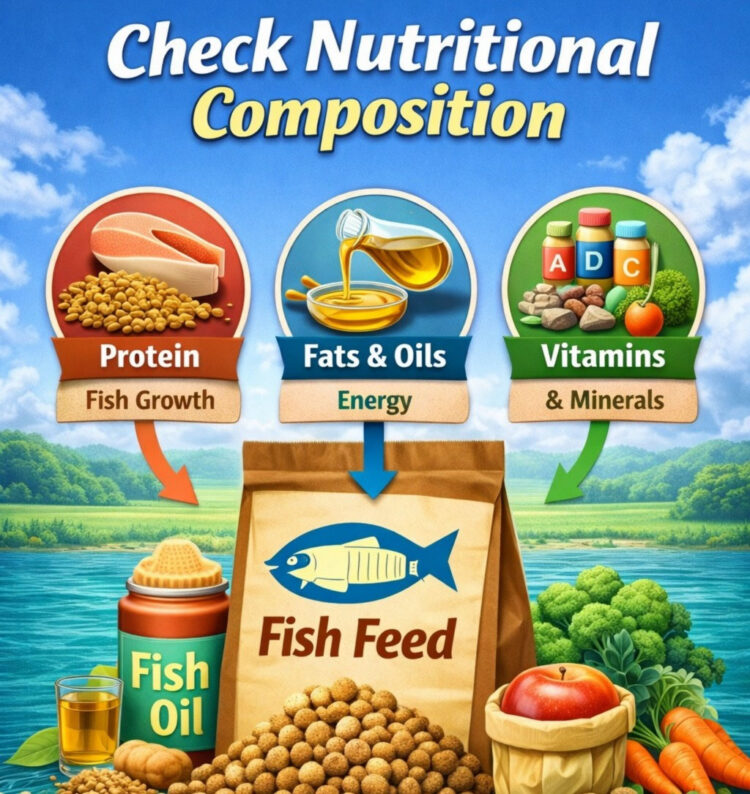
A good floating fish feed should provide a well-balanced diet. Always look at the nutritional profile on the feed label. Important elements to search for are:
Protein Content
Fish growth and muscle development depend on protein. Fish species and age determine the amount of protein needed:
- Fingerlings and fry: 30–40% more protein
- Fish in adulthood: 20–30% protein
Fats and Oils
Healthy fats increase feed efficiency and supply energy. Seek out feeds that have the right amounts of plant-based or fish oil.
Vitamins and Minerals
Vitamins A, D, E, and C promote growth, stress tolerance, and immunity. Bone formation depends on minerals like calcium and phosphorus.
Faster growth, a higher feed conversion ratio (FCR), and better fish health are all guaranteed with nutritionally balanced floating fish feed.
Choose the Right Pellet Size
Feeding efficiency is significantly influenced by pellet size. Smaller fish may find it difficult to consume pellets that are too big. Larger fish may squander food if they are too small.
Pellets for floating fish feed come in several sizes:
- Micro pellets or crumbles for frying
- For fingerlings, little pellets
- Bigger pellets for fish that are adults
Uniform growth is ensured, and feed waste is decreased by matching pellet size to fish mouth size.
Consider Feed Digestibility
Highly digestible floating fish feed reduces waste outflow and enhances nutritional intake. Undigested debris from poor-quality feed contaminates the water and raises ammonia levels.
In general, feeds prepared from premium raw materials like wheat flour, soybean meal, and fish meal are easier to digest. Cleaner water and healthier fish result from improved digestibility.
Evaluate Floating Stability
Not every floating feed remains afloat for the same amount of time. Good floating fish food should stay on the water’s surface long enough for fish to eat it without dissolving and contaminating the water.
The feed should ideally:
- For a few minutes, float
- Preserve the form of the pellet
- not decompose rapidly in water
Overfeeding can be avoided, and feeding patterns can be easily observed with stable floating feed.
Assess Water Conditions
Fish metabolism and eating habits are influenced by temperature and water quality. Fish need more energy-rich floating fish feed because their metabolism increases in warmer water. Fish eat less in colder water; therefore, feeding should be modified correspondingly.
Additionally, floating feed is a preferable choice if your pond or tank has inadequate water circulation because it keeps feed from building up at the bottom.
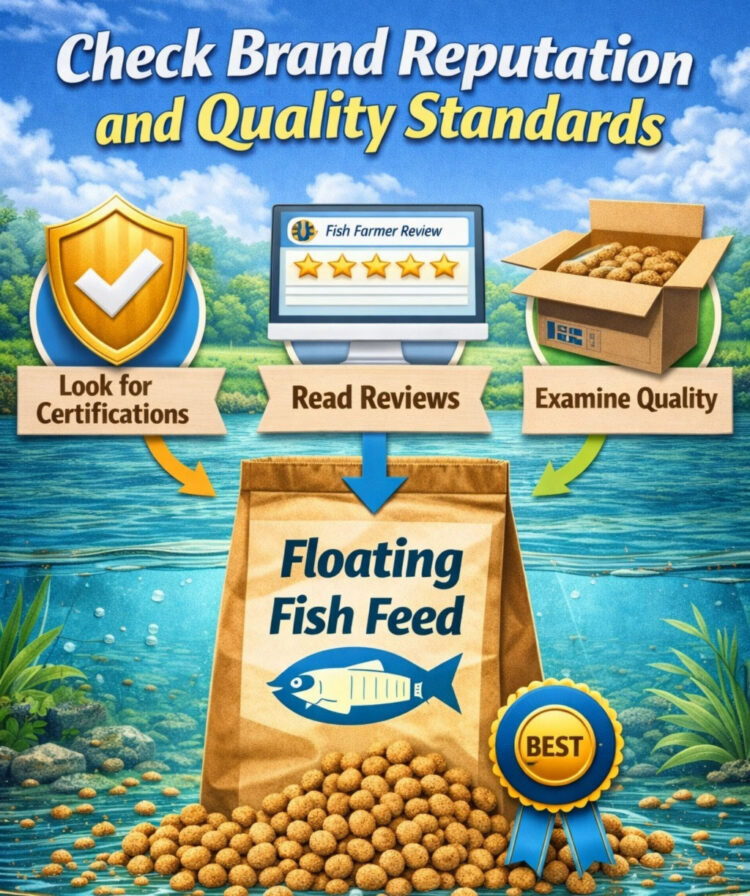
Check Brand Reputation and Quality Standards
Select floating fish feed from a reputable manufacturer at all times. Reputable companies typically employ scientifically developed formulations and adhere to stringent quality control procedures.
Search for:
- Labels for quality assurance or certifications
- Positive feedback from fish farmers
- Regular packaging and pellet quality
Although cheap feed may save money in the short term, it can lead to long-term losses, poor growth, and increased mortality.
Cost vs. Value
While price is a significant consideration, it shouldn’t be the sole one. Consider value for money rather than choosing the least expensive option.
Although it may cost more, premium floating fish feed provides:
- Higher rates of growth
- Reduced feed conversion ratio
- decreased risk of illness
- Water that is cleaner
Quality feed frequently turns out to be more cost-effective over time.
Feeding Frequency and Quantity
If fed improperly, even the best floating fish feed won’t work. Underfeeding inhibits fish growth, while overfeeding results in wasted feed and water pollution.
Watch how fish behave when they are eating:
- Fish should only be fed what they can eat in a few minutes.
- Adapt the amount to the fish’s size and season.
- Cut back on feeding when it’s cold or rainy.
Monitoring intake and modifying feeding regimens is made simpler using floating feed.
Benefits of Using Floating Fish Feed
Selecting the appropriate floating fish feed has a number of benefits:
- Simple observation of fish feeding habits
- Decreased waste of feed
- Better quality of water
- Improved health and growth of fish
- Precise feed control for farmers
In contemporary aquaculture, floating feed is a preferred option because of these advantages.
Conclusion
A key component of effective fish farming or aquarium maintenance is choosing the best floating fish feed. You can guarantee the best possible fish health and growth by knowing your fish species, understanding their nutritional requirements, selecting the appropriate pellet size, and accounting for feed quality and water conditions.
Keep in mind that feeding fish is only one aspect of floating fish feed; another is feeding them properly. Long-term profitability, improved yields, and healthier fish can be achieved by investing in high-quality feed and appropriate feeding techniques.
Thanks for reading 🙂
Click here to read this: How to Choose the Right Floating Fish Feed