
Pangasius farming has become a part of commercial freshwater aquaculture because of the fishs ability to adapt grow quickly and meet market needs. For fish farmers achieving growth and making money from farming requires more than just good-quality fish eggs and good pond conditions. Choosing the fish feed for Pangasius farming is just as important because what the fish eat directly affects how they grow how well they use the food and how productive the whole farm is. A good feeding plan helps farmers give the fish what they need to grow while keeping waste and costs low.
Pangasius needs a diet that has protein, fats, carbs, vitamins, minerals and essential amino acids. Protein helps build muscle and tissues which’s very important when the fish are small. Fats give energy and carbs help meet the fishs energy needs. Vitamins and minerals help with body functions, building bones and keeping the fish healthy. So farmers should pick a feed that has all these things of just looking at the protein number on the label.
The amount of protein that Pangasius needs depends on how big the fish’re what stage they are in how they are raised and what the feed is made of. Younger fish need food that’s full of nutrients to grow fast while bigger fish can do well on food that has different levels of protein and energy. Choosing the mix is important based on what the fish need and what the maker of the feed suggests.
Another thing to think about is how well the fish can digest the food. A feed that has protein and balanced nutrients helps the fish use the food better. Ingredients like soybean meal, fish meal and other good sources of protein can help make the feed better. But it is more important to look at the quality how easy it is for the fish to digest, the balance of acids and how the feed is made than just looking at one single ingredient.
Floating fish feed is a choice for many Pangasius farming setups. Floating pellets let farmers watch the fish eat on the top of the water. This helps them see if the fish are eating the food. This view helps farmers change how much they give each day and notice if the fish are eating less. It also makes it easier to manage feeding than when the food goes into the pond and’s hard to see.
When choosing fish feed pellets farmers should also think about how strong the pelletsre how fresh they are and if they are the right size for the fish to eat. Good quality pellets should stay together enough for the fish to eat them without falling apart. Getting feed from a trusted company in India can help farmers keep the quality of the feed the same and help manage the farm
Pangasius Feeding Rate and Pellet Size: How Feed Should You Provide?
Figuring out how much feed to give Pangasius is important to make sure they grow well and use the food efficiently. Giving little feed can slow down growth while giving too much can cost more money and let extra food sit in the pond. The amount of feed needed each day should be based on how all the fish weigh, their average size and how they are eating.
Fish weight is the weight of all the fish in a pond. For example if a pond has 10,000 Pangasius that each weigh 100 grams the total weight of the fish is 1,000 kilograms. If the farm says to feed 2% of the weight each day that would be 20 kilograms. This is an example, not a rule. The right percentage depends on how big the fish’re what the feed is like the water conditions and what the experts say.
As Pangasius grow, the amount of feed they need changes. Small fish usually need feed compared to their size than bigger fish. So farmers should check the size of the fish often. Change how much they feed instead of using the same amount all the time. How often to feed should also match the size of the fish and the conditions of the farm. Small fish often do better with meals than bigger fish.
The size of the pellets is another thing to think about for Pangasius farming. Small fish need pellets that’re easy for them to eat while bigger fish need larger pellets that match their mouth size. Pellets that are too big can make it hard for the fish to eat and pellets that are too small can be hard for bigger fish to use. Changing the size of the pellets as the fish grow can help with feeding. Reduce waste.
Happy Feeds has sizes of fish feed pellets for different kinds of farming. Their guide lists pellet sizes from 1.5 mm to 5 mm with nutrition for different uses. Farmers should choose the size and nutrition for their Pangasius before buying feed.
How much feed to give should be based on watching and calculating. Farmers should watch how fast the fish eat the pellets and see if any are left. If a lot of feed is left it might mean the amount, the conditions or the health of the fish needs checking. If the fish suddenly eat less it could mean the water is not good the temperature is wrong the oxygen is low. The fish are sick.
Keeping the pond in shape is very important for feeding. Low oxygen, water and stress can make the fish eat less and grow slower. Farmers should check the water. Avoid giving too much food when things are not right. Feed should be stored in a dry clean place away from water, bugs and the sun. Proper storage helps keep the feed good and the nutrients strong.
How Quality Pangasius Fish Feed Improves Growth and Farm Profitability
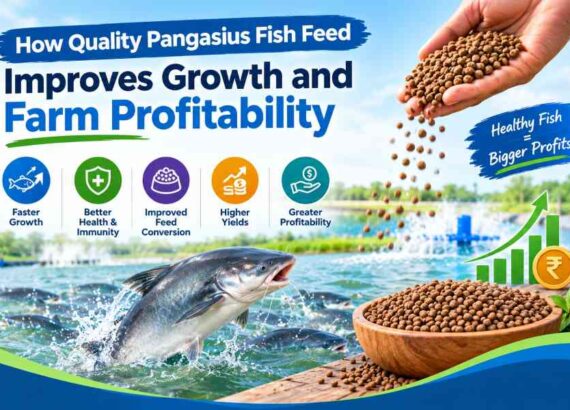
Choosing Pangasius fish feed can help farmers grow better fish use food better and manage their costs. Feed is a part of the cost in farming so picking the right type and making sure the fish eat the right amount is important for making money.. The cheapest feed is not always the best choice. Farmers should look at the nutrition how well the fish can use the food, how the pellets work and the price.
A good sign of how the feed works is the Feed Conversion Ratio. This is how much feed is used compared to how much the fish grow. For example if it takes 1.5 kilograms of feed to get 1 kilogram of fish the FCR is 1.5. A lower FCR means the feed is used better. It also depends on how healthy the fish are, how many are in the pond the quality of the feed the water and how the records are kept.
Checking the fish often helps farmers get numbers for how much they weigh and change how much to feed. Of guessing farmers can look at some fish and update their feeding plans. Keeping track of how much food’s used how much the fish weigh how many die and how fast they grow gives useful info to find problems and get better results next time.
Floating fish feed helps with this because it is easier to see how the fish are eating. When the fish eat the feed farmers can check if the amount is right. If there is a lot of leftover food they can give less. Find out why. Extra food can add waste to the pond. Make the water worse which affects the fish and the farm.
Another thing to think about is how consistent the feed is. If the size of the pellets the nutrition or how they look changes it can affect how the fish eat and get their nutrients. Farmers should pick food that is made for their fish and the stage they are in and follow what the maker says. Getting the feed on time and keeping it right is also important especially if they buy in amounts.
For farmers in India who are looking for fish feed Happy Feeds has floating fish feed for aquaculture including for Pangasius, Tilapia and Indian Major Carp. Their collection has options for fish sizes and feeding needs. Farmers can check the products. Pick the right one based on what they need the size of the fish and the nutrition they need.
Good Pangasius farming is about combining feed with smart farm management. Things like how many fish are in the pond checking the water taking care of the fish knowing how much they weigh and feeding them on time all help get results. Even the best feed can’t help if the fish are in water or getting too much or too little.
Conclusion
Choosing the fish feed for Pangasius farming is important to help the fish grow use the food well and keep the farm making money. The food should have the amount of protein, energy, fats, vitamins and minerals depending on how the fish are growing. Picking the size of pellets calculating how much to feed based on how much the fish weigh and watching how they eat can help farmers waste less and get better results.
Farmers should also keep the pond in shape check the fish often and store the feed right to keep it good. By using fish feed that’s good and using the right way to feed Pangasius farmers can get good growth and better farming results. Happy Feeds has fish feed options for farmers who need the products for their Pangasius farming needs.
Frequently Asked Questions (FAQs)
- What is the best fish feed for Pangasius farming?
The best fish feed for Pangasius farming is a feed that has the mix of protein, fats, carbs, vitamins and minerals. The mix should match the fishs stage of growth, size and how they are raised.
- How many times should Pangasius fish be fed daily?
How often to feed depends on the size of the fish the stage they’re in the water conditions and the feeding plan. Younger fish usually need meals while bigger fish may need fewer. Farmers should follow what the feed maker says and watch how the fish eat.
- What is the ideal feeding rate for Pangasius fish?
There is no feeding rate that works for all Pangasius farms. How much to feed each day depends on how all the fish weigh how big they are the water temperature, the quality of the feed and how much the fish eat. Farmers should figure out how based on the weight of the fish and adjust as they grow.
- Is floating fish feed for Pangasius farming?
Yes floating fish feed can be suitable, for Pangasius farming if the way it is made and the size of the pellets match what the fish need. Floating pellets let farmers see how the fish are eating and adjust how much they give, which can help reduce waste.
- How can farmers improve Pangasius growth and feed conversion?
Farmers can make feeding more efficient, by choosing quality feed using the right pellet sizes figuring out daily rations correctly keeping track of fish weight and making sure the water quality is just right. Keeping feed stored properly and checking how much the fish want to eat on a basis also helps with good feeding management.
Thanks for reading
……………………………………………………………………………………………………………………………………………….
Click here to read this: How to Choose the Right Floating Fish Feed
Visit our product page to see all products: Click here to visit
Need help choosing feed? Use our Free Feed Calculator
Visit: Dust Fish Feed Products