
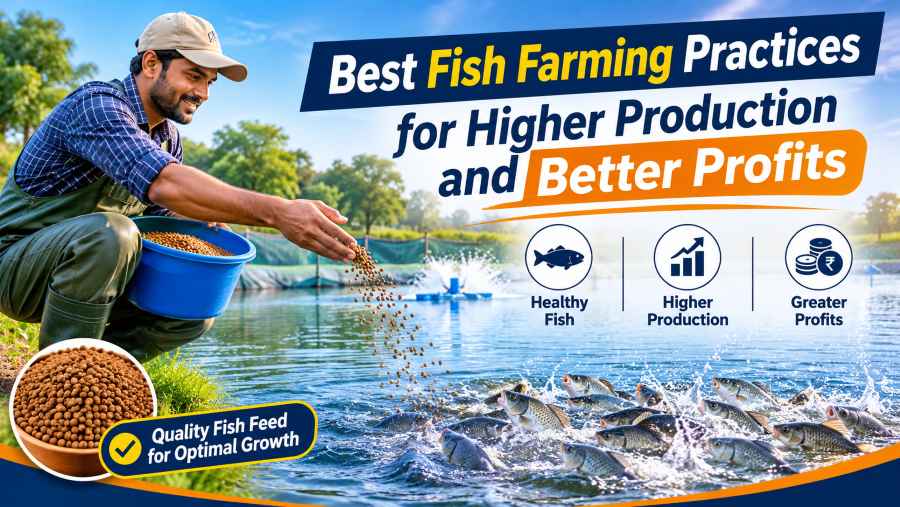
Fish farming, also known as aquaculture, is a growing sector of India’s agriculture and food production industry. With increasing demand for freshwater fish, commercial fish farming offers opportunities for farmers, entrepreneurs and aquaculture businesses. However, achieving fish production and better profits requires more than simply raising fish in ponds. Successful fish farming depends on pond preparation, quality fish seeds, balanced nutrition, effective water management and regular health monitoring. By following these practices, farmers can improve fish growth, increase survival rates, reduce production costs, and earn better returns from their aquaculture business. Choosing the right fish feed and maintaining a pond environment are particularly important for building a productive and sustainable fish farming operation.
Choose the Right Fish Species and Maintain Proper Pond Management
Selecting fish species is the first important step towards successful and profitable fish farming. Farmers should consider climate conditions, water availability, farming infrastructure, production costs and market demand before selecting fish varieties. In India, popular freshwater fish species include Rohu, Catla, Mrigal, Tilapia and Pangasius. These species are widely cultivated because of their demand and suitability for different aquaculture systems. Composite fish farming, which involves raising fish species together, is another effective approach to improving pond productivity. For example, Rohu, Catla and Mrigal are commonly cultivated together because they utilise feeding zones within the pond.
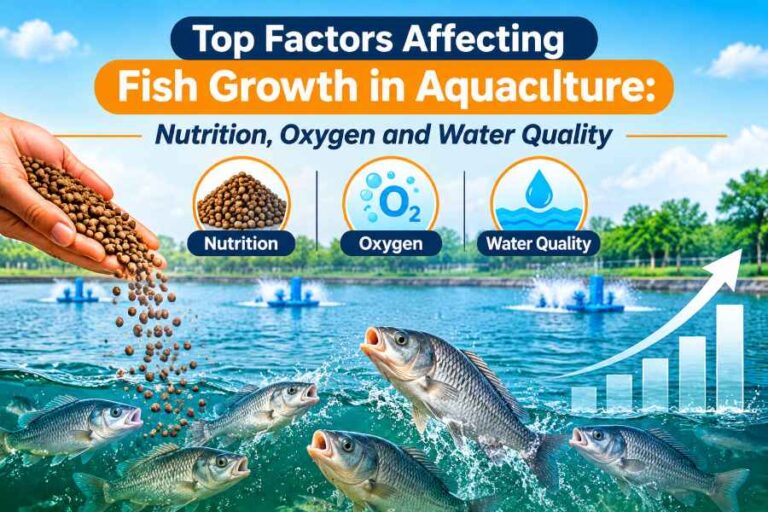
Proper pond preparation is equally important for achieving fish production. Before introducing fish fingerlings, farmers should clean the pond, remove aquatic weeds, eliminate predatory fish and inspect pond boundaries. The pond should have water depth, proper drainage facilities and a reliable water supply. Maintaining water conditions helps fish adjust to their environment and reduces the risk of stress and diseases. Farmers should also monitor water quality parameters such as temperature, pH, dissolved oxygen and ammonia levels. Poor water quality can negatively affect fish appetite, metabolism, immunity and overall growth.
Regular pond maintenance helps create an environment for fish development. Farmers should inspect ponds regularly, remove accumulated waste and prevent feed residues from affecting water quality. Aeration systems can also be useful in maintaining dissolved oxygen, particularly in high-density fish farming systems. Proper stocking density is another consideration. Overstocking can increase competition for food and oxygen, create stress, and increase the risk of disease outbreaks. Therefore, fish farmers should select stocking levels according to fish species, pond capacity, available oxygen, water management facilities and feeding arrangements. Combining species with scientific pond management creates a strong foundation for productive and profitable aquaculture.
Use High-Quality Fish Feed and Follow Scientific Feeding Practices
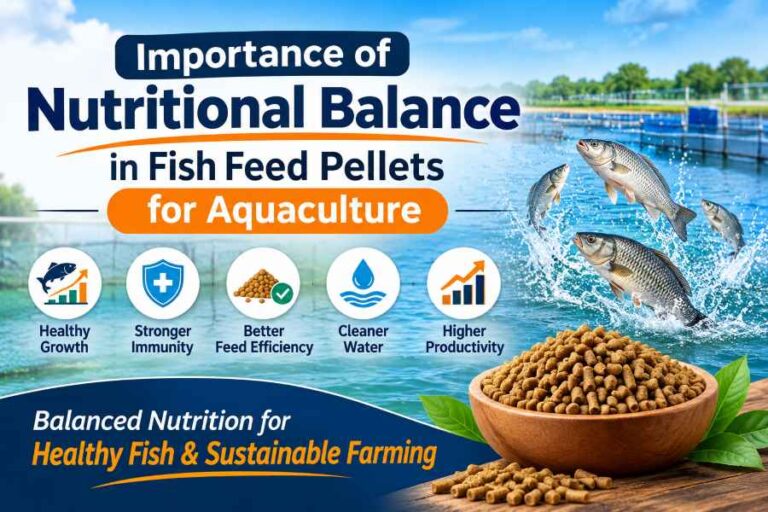
Fish nutrition is one of the important factors affecting fish growth, production and profitability. Like other livestock, fish require balanced nutrition to develop properly, maintain good health and achieve their growth potential. A suitable fish feed should provide nutrients, including protein, carbohydrates, fats, vitamins and minerals. Protein is particularly important because it supports muscle development, tissue repair and overall growth. However, nutritional requirements differ according to fish species, body weight, age and production stage. Therefore, selecting the fish feed for the cultivated species is essential for achieving better farming results.
Using high-quality floating fish feed or suitable formulated pellet feed can improve feeding efficiency. This makes daily farm management easier. Floating pellets allow farmers to observe feeding behaviour and estimate whether fish are consuming the provided feed properly. This helps reduce feed wastage and makes it easier to adjust feeding quantities according to fish requirements. Commercial fish feed should be selected according to the needs of species such as Rohu, Catla, Mrigal, Tilapia and Pangasius. Farmers should also pay attention to pellet size, feed freshness, composition and storage conditions.
Following a feeding schedule is another important fish farming practice. Fish should receive quantities of feed based on their body weight, growth stage, water temperature and feeding response. Overfeeding should be avoided because uneaten feed can accumulate at the bottom of the pond, increase waste, and negatively affect water quality. Underfeeding, on the other hand, can slow down fish growth and reduce production potential. Farmers should regularly observe fish during feeding to identify changes in appetite or unusual behaviour.
Growth monitoring also helps improve feed management. Periodically sampling fish to measure their weight and size allows farmers to adjust feeding rates and pellet sizes. Maintaining feeding records can help identify feed consumption patterns and evaluate production costs. Since feed generally represents an operating expense in aquaculture, improving feed conversion efficiency can significantly contribute to better profits. Partnering with a fish feed manufacturer such as Happy Feeds can help farmers access suitable nutritional solutions for different fish farming requirements. Quality fish nutrition, combined with feeding practices, supports healthier fish, improved growth performance and more efficient aquaculture production.
Focus on Fish Health, Disease Prevention and Farm Profitability
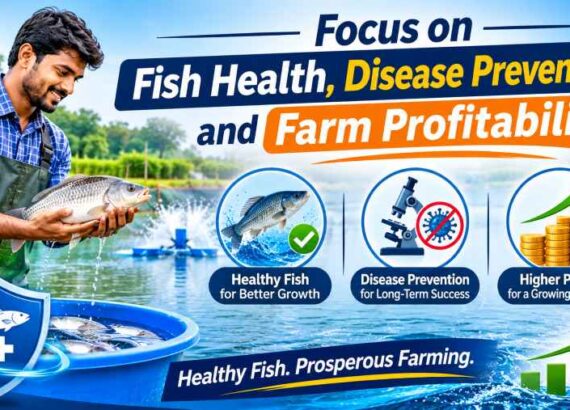
Maintaining fish populations is essential for achieving consistent production and long-term profitability. Fish diseases can cause financial losses by reducing growth, increasing mortality, and raising treatment expenses. Therefore, preventive health management should be a part of every fish farming operation. Farmers should purchase disease-free fingerlings from reliable hatcheries and inspect them carefully before stocking. Purchased fish should be gradually acclimatised to the pond’s water conditions to reduce transportation and environmental stress.
Regular observation helps identify signs of health problems. Fish swimming near the water surface, reduced feeding activity, unusual swimming patterns, visible skin lesions and abnormal gill conditions may indicate water quality or disease-related issues. Farmers should investigate these symptoms promptly. Consult qualified aquaculture professionals before using any treatment. Maintaining stocking density, clean water, balanced nutrition and suitable oxygen levels can reduce several common health risks.
Another important factor in fish farming is maintaining accurate farm records. Farmers should document fingerling purchases, stocking numbers, feed consumption, water quality readings, fish growth, mortality, labour expenses and harvesting details. These records help evaluate farm performance and identify areas where production costs can be reduced. Monitoring the weight of fish also helps farmers estimate harvesting schedules and plan sales according to market demand. Selling market-sized fish at the right time can improve revenue and prevent unnecessary feeding expenses.
Technology is also creating opportunities for modern aquaculture. Digital water quality monitoring systems, automatic feeders, aerators and farm management applications can help farmers improve efficiency. These solutions allow monitoring of pond conditions, more accurate feeding, and timely identification of potential problems. However, technology should be selected according to farm size, investment capacity and production requirements.
Sustainable fish farming practices can further improve long-term business performance. Farmers should avoid chemical usage, manage pond waste responsibly, maintain appropriate water exchange, and use feed efficiently. Reducing input expenses while maintaining fish health and growth can improve overall profitability. By combining farming techniques, quality fish seed, balanced nutrition and effective farm management, aquaculture businesses can achieve higher production and build sustainable growth. Working with a fish feed supplier like Happy Feeds can also support farmers in maintaining consistent nutritional standards throughout the fish production cycle.
Conclusion
Successful fish farming requires an approach that focuses on fish nutrition, pond management, water quality and disease prevention. Choosing fish species, maintaining proper stocking density, using high-quality fish feed, and following scientific feeding schedules can significantly improve fish growth and farm productivity. Regular monitoring and accurate record-keeping also help farmers control expenses and make business decisions. As the demand for quality fish continues to grow in India, adopting sustainable aquaculture practices can create better opportunities for farmers. With the farming techniques and reliable nutritional support from Happy Feeds, fish farmers can work towards healthier fish, higher production and improved profitability.
Frequently Asked Questions (FAQs)
- What are the best practices for fish farming?
The best practices include selecting fish species, preparing ponds properly, maintaining optimal water quality, purchasing healthy fingerlings, using balanced fish feed and following appropriate stocking densities. Regular health monitoring and farm record-keeping also help improve profitability.
- Which fish species are best for commercial fish farming in India?
Rohu, Catla, Mrigal, Tilapia and Pangasius are choices for commercial fish farming in India. The right species depends on climate, water conditions, farming methods and market demand.
- Why is high-quality fish feed important for fish farming?
High-quality fish feed provides nutrients required for fish growth, muscle development and good health. Appropriate nutrition also improves feed utilisation, supports growth performance and helps reduce unnecessary feed wastage.
- How can fish farmers improve fish growth and production?
Farmers can improve fish growth by maintaining water quality, using suitable fish feed, following regular feeding schedules, avoiding overstocking and monitoring fish health. Proper aeration and regular growth assessment can also support production.
- How does water quality affect fish farming profitability?
Water quality directly influences fish appetite, growth, survival and disease resistance. Poor water conditions can increase fish mortality and treatment costs, whereas proper oxygen levels, suitable pH and effective waste management support fish and better production results.
Thanks for reading
……………………………………………………………………………………………………………………………………………….
Click here to read this: How to Choose the Right Floating Fish Feed
Visit our product page to see all products: Click here to visit
Need help choosing feed? Use our Free Feed Calculator
Visit: Dust Fish Feed Products