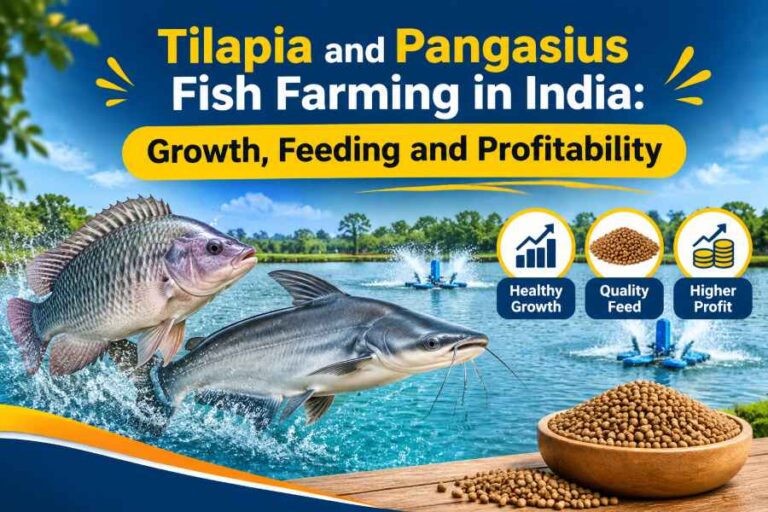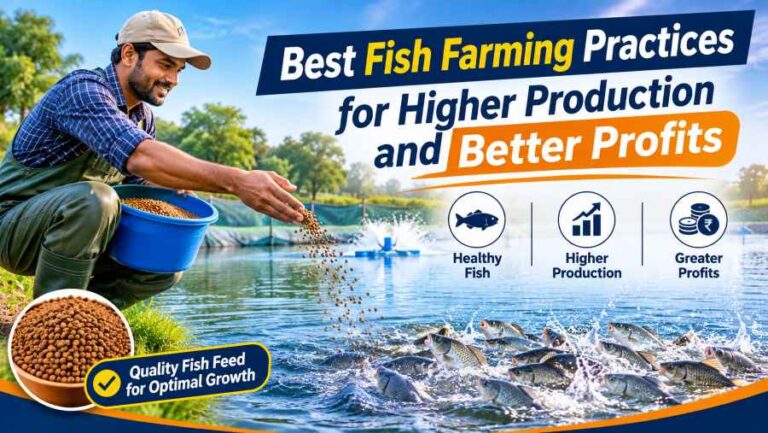

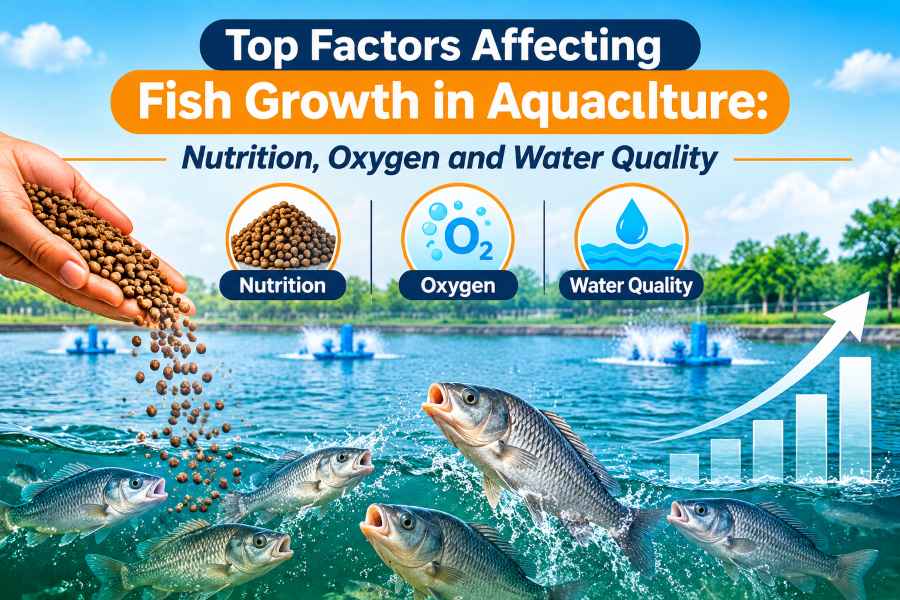
Fish growth is one of the important factors determining the productivity and profitability of aquaculture farming. Whether farmers are raising Rohu, Catla, Mrigal, Tilapia or Pangasius, achieving consistent fish growth requires proper nutrition, sufficient oxygen and good water quality. These factors directly influence fish metabolism, feeding behaviour, immunity, weight gain and overall development. In aquaculture, farmers are increasingly focusing on scientific fish farming practices, high-quality fish feed and regular pond monitoring to improve production.
Understanding the factors affecting fish growth in aquaculture helps farmers identify problems early and maintain a healthy farming environment. Proper feeding schedules, balanced fish feed pellets, oxygen management and water quality monitoring can significantly improve fish growth. Reduce unnecessary farming expenses. By maintaining the balance between nutrition and environmental conditions, fish farmers can achieve better feed conversion, healthier fish and improved harvesting results.
Importance of Nutrition and Quality Fish Feed for Fish Growth
Nutrition plays a major role in determining fish growth and development. Fish require a diet containing proteins, carbohydrates, fats, vitamins and minerals to support muscle development, energy production, immunity and healthy body functions. Among these nutrients, protein is particularly important because it supports tissue development and weight gain. The nutritional requirements of fish vary depending on their species, size, age and growth stage. Therefore, selecting the fish feed is essential for achieving better aquaculture production.
High-quality fish feed pellets provide essential nutrients in appropriate proportions and help fish maintain consistent growth. Floating fish feed is particularly useful because farmers can observe feeding behaviour, monitor consumption, and identify whether fish are receiving nutrition. It also makes it easier to identify feed and adjust feeding quantities accordingly. Choosing floating fish feed for species such as Rohu, Catla, Tilapia and Pangasius can support efficient feeding and healthy development.
Another important factor is feed quality and digestibility. Poor-quality feed may contain nutrients or ingredients that fish cannot digest efficiently. This can result in increased feed wastage and higher production costs. Farmers should select balanced fish feed manufactured using appropriate ingredients and quality standards. Feeding frequency and quantity should also be adjusted according to fish size, water temperature, species and feeding behaviour.
Overfeeding should be avoided because uneaten feed accumulates in ponds, increases waste, and negatively affects water quality. Similarly, insufficient feeding can reduce growth rates. Create nutritional deficiencies. Maintaining a feeding schedule and using quality fish feed from a reliable manufacturer like Happy Feeds can help farmers improve feeding efficiency, fish health and overall aquaculture productivity.
Dissolved Oxygen and Water Quality: Essential Factors for Healthy Fish Growth
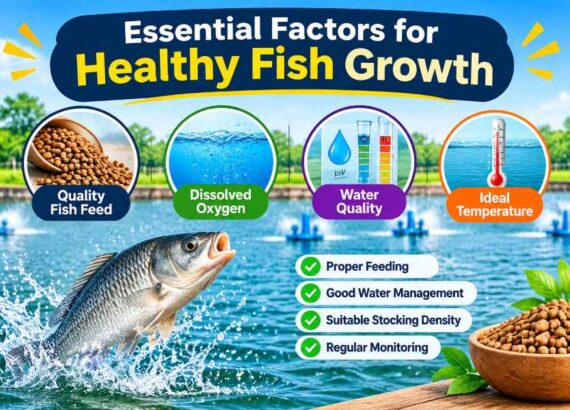
Water quality is another factor affecting fish growth in aquaculture. Fish depend on their environment for oxygen, temperature regulation and the removal of metabolic waste. When farmers provide high-quality nutrition, poor water conditions can prevent fish from achieving their expected growth potential. Maintaining dissolved oxygen, pH, temperature and ammonia levels is therefore essential for successful fish farming.
Dissolved oxygen is particularly important because fish require oxygen for respiration, metabolism and energy production. Low oxygen levels can reduce feeding activity, slow growth, increase stress, and negatively affect fish survival. For tropical freshwater aquaculture systems, maintaining dissolved oxygen around 5 mg/L or higher is a useful general target, although actual requirements depend on fish species, stocking density, temperature and farming conditions.
Farmers can improve oxygen availability through aeration, water circulation and regular pond maintenance. Mechanical aerators and paddlewheel aerators help increase oxygen transfer into pond water. Monitoring oxygen levels early in the morning is especially important because dissolved oxygen often reaches its level around sunrise. Overcrowding and excessive feeding should also be avoided because they increase oxygen demand and organic waste accumulation.
Water temperature also influences fish metabolism, digestion and feeding behaviour. Different fish species have temperature preferences, and sudden temperature changes can create stress and reduce feed consumption. Farmers should maintain temperature conditions according to the fish species being cultured.
Similarly, pH, ammonia, and nitrite levels require monitoring. Ammonia can accumulate through fish waste. Decomposing uneaten feed can become harmful when concentrations rise. Maintaining water exchange, avoiding overfeeding, and managing pond waste can help prevent water quality deterioration. A balanced aquatic environment supports digestion, improved feed utilisation and healthier fish development.
Stocking Density, Pond Management and Modern Aquaculture Practices
Apart from nutrition, oxygen and water quality, stocking density and pond management also have an influence on fish growth. Stocking density refers to the number of fish raised within a pond area or water volume. When many fish are stocked together, competition for feed, oxygen and living space increases. This can create stress, reduce feeding efficiency and affect fish growth.
Farmers should select a stocking density according to the fish species, pond size, water availability, aeration capacity and management system. Healthy fingerlings from hatcheries should be selected because good-quality fish seed provides a strong foundation for successful farming. Before stocking, fingerlings should be properly acclimatised to the pond environment to minimise stress.
Regular pond cleaning and maintenance are equally important. Accumulated organic waste, excessive algae and decomposing feed can negatively affect water conditions. Farmers should monitor fish behaviour, feeding activity and overall health to identify signs of environmental stress or disease. Regular sampling and weight measurements also help determine whether fish are growing according to the expected production targets.
Modern aquaculture practices are increasingly incorporating water testing equipment, automatic feeders, aeration systems and digital monitoring technologies. These tools help farmers manage feeding schedules, monitor conditions and make informed farming decisions. Precision feeding can reduce feed wastage while improving efficiency and production performance.
Farmers should also maintain records of feed consumption, fish growth, mortality and water quality. These records help identify management problems. Improve future farming cycles. Combining scientific pond management with fish nutrition and reliable fish feed can create favourable conditions for sustainable aquaculture.
As India’s aquaculture industry continues to develop, adopting fish farming practices is becoming increasingly important. Happy Feeds supports fish farmers with fish feed solutions designed to meet aquaculture requirements. Choosing fish feed and following responsible farming practices can help improve fish growth, productivity and long-term farm profitability.
Conclusion
Fish growth in aquaculture depends on interconnected factors, including balanced nutrition, dissolved oxygen, water quality, stocking density and effective pond management. Providing high-quality floating fish feed, maintaining oxygen levels and regularly monitoring water parameters can help farmers achieve healthier fish and better growth performance. Avoiding overfeeding, controlling pond waste and selecting stocking densities are equally important for sustainable fish production. By combining quality fish feed with scientific aquaculture management, farmers can improve feed efficiency, reduce production challenges and increase farming profitability. Happy Feeds aims to support the aquaculture sector with quality fish feed solutions that contribute to fish and productive fish farming.
Frequently Asked Questions (FAQs)
- What are the main factors affecting fish growth in aquaculture?
The main factors affecting fish growth include nutrition, dissolved oxygen, water temperature, water quality, stocking density, fish genetics and proper pond management. Maintaining a balance between these factors supports fish development and better production.
- How does fish feed affect fish growth?
Fish feed provides nutrients such as protein, carbohydrates, fats, vitamins and minerals. High-quality balanced fish feed supports muscle development, metabolism, immunity and weight gain while improving feed utilisation.
- Why is dissolved oxygen important for fish growth?
Dissolved oxygen is essential for fish respiration and energy production. Low oxygen levels can reduce feeding activity, increase stress and slow down fish growth. Proper aeration helps maintain oxygen levels in aquaculture ponds.
- How does poor water quality affect fish growth?
Poor water quality caused by low oxygen, unsuitable pH, high ammonia, excessive waste and temperature fluctuations can create stress and reduce fish feeding efficiency. Regular water testing and pond maintenance help maintain growing conditions.
- How can fish farmers increase fish growth
Farmers can improve fish growth by providing fish feed following proper feeding schedules, maintaining suitable oxygen levels, monitoring water quality, avoiding overcrowding and selecting healthy fingerlings. Consistent pond management also improves farming performance.
Thanks for reading
……………………………………………………………………………………………………………………………………………….
Click here to read this: How to Choose the Right Floating Fish Feed
Visit our product page to see all products: Click here to visit
Need help choosing feed? Use our Free Feed Calculator
Visit: Dust Fish Feed Products