
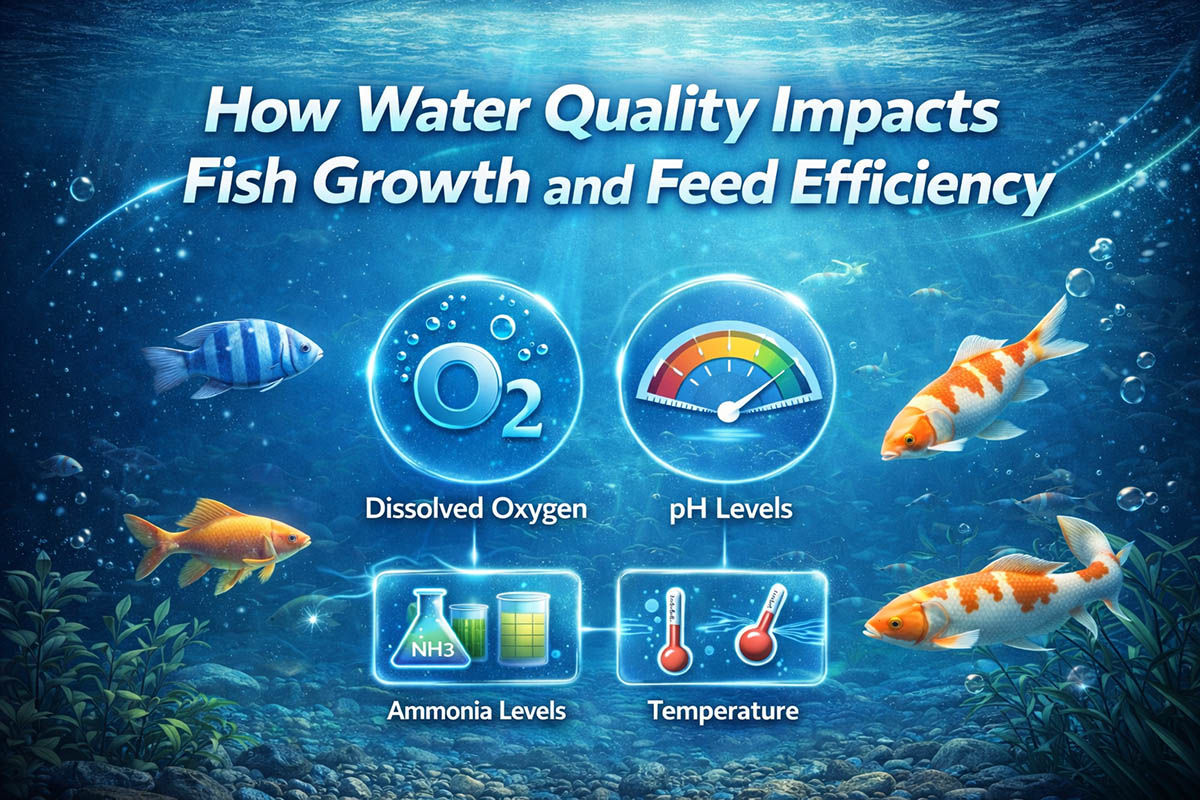
A key factor in the success of aquaculture is water quality. If pond water is not properly managed, even the best aquaculture fish feed won’t work. Fish appetite, digestion, and growth rate are directly impacted by variables such as oxygen levels, temperature, pH, and cleanliness.
To maximise yield, today’s professional farmers rely on floating fish feed pellets, appropriate feeding charts, and scientifically developed fish feed. However, feed efficiency sharply declines in the absence of healthy water conditions.
This blog will discuss how water quality affects fish growth, how to improve feed conversion, and the importance of selecting high-quality fish feed from reputable fish feed producers in Andhra Pradesh and across India.
Why Water Quality Matters in Fish Farming
Since fish are completely submerged in water, changes in water conditions affect their health.
Low-quality water causes:
• A decrease in feed consumption
• Slow expansion
• An increased risk of illness
• A rise in mortality
Wastage of feed occurs when oxygen levels are low or ammonia levels rise; even well-known brands of fish feed cannot function properly.
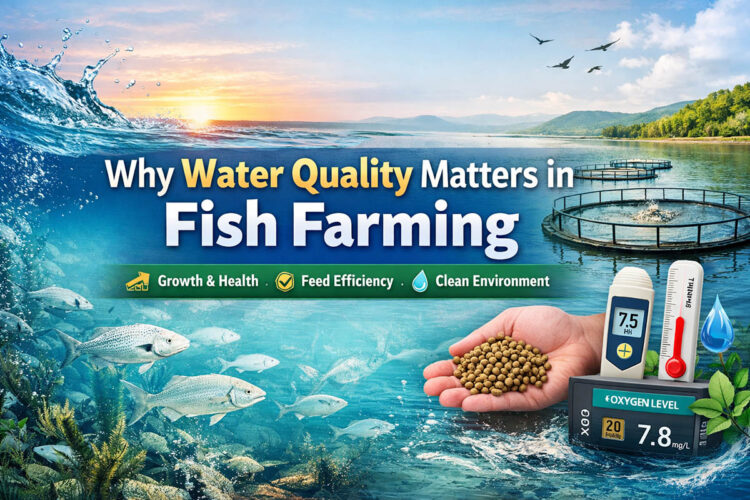
Top-performing farms continue to:
• Pond water that is clean
• pH balance (6.5–8.5)
• Sufficient dissolved oxygen
• The right temperature
• Very little waste buildup
These circumstances aid in the proper digestion of floating pellet fish food and the conversion of nutrients into body mass.
Relationship Between Water Quality and Feed Efficiency
Feed Efficiency (FCR – Feed Conversion Ratio) measures how effectively fish convert feed into weight.
Good water quality ensures:
✅ Better digestion
✅ Faster metabolism
✅ Higher survival rates
✅ Less feed loss
✅ Increased harvest size
Floating feeds work especially well in clean water because farmers can monitor feeding behaviour and avoid overfeeding.
This is why modern farms prefer floating fish feed over sinking feed.
Importance of Floating Fish Feed Pellets
Aquaculture has been transformed by floating fish feed pellets. In contrast to conventional feed, floating pellets remain on the surface, enabling farmers to:
- Examine the feeding habits of fish.
Cut down on waste
Enhance FCR - Keep ponds clean.
Prominent feed manufacturers and private label providers of floating fish feed create pellets that:
• Maintain form in water
• Be highly digestible
• Have balanced protein content
• Decrease pollution in ponds
Using floating pellet fish feed increases overall farm productivity while preserving water clarity.
Using a Fish Feeding Chart for Better Results
Farmers are guided by a fish feeding chart on:
• The amount of feed
Frequency of feeding
• Pellet size according to growth stage
The following are typical feeding stages:
- Fingerlings
Frequent feeding, high protein, and small pellets - Young fish
Balanced nutrition and medium pellets
Adult Fish
Greater pellet size and regulated feeding
Adhering to a feeding chart helps ensure ideal growth, keeps water clean, and prevents overfeeding.
Role of Good Quality Fish Food
Not all feeds are equal. Good quality fish food contains:
- High-grade protein
- Essential amino acids
- Vitamins & minerals
- Low dust content
- High water stability
Top fish feed manufacturers in Andhra Pradesh and across India focus on advanced formulations to support:
- Faster growth
- Strong immunity
- Improved survival
Low-quality feed increases waste and pollutes water, directly harming fish health.
Choosing the Right Feed Company
Selecting a reliable feed company is critical. Always look for:
✔ proven manufacturing standards
✔ Consistent pellet quality
✔ Technical support
✔ Availability of floating feed
✔ Custom private labeling
Many farms partner with suppliers from the top 10 fish feed companies in India to ensure consistent results.
Some companies also offer private-label floating fish feed, helping distributors build their own brand.
Fish Feeding Practices That Protect Water Quality
Smart fish feeding techniques help maintain clean ponds:
- Feed only what fish consume in 10–15 minutes
- Avoid feeding during low oxygen hours
- Remove uneaten feed
- Monitor fish activity
- Adjust feed during seasonal changes
These practices protect water quality and improve feed utilisation.
Why Andhra Pradesh Leads Fish Feed Manufacturing
Andhra Pradesh is one of India’s largest aquaculture hubs. Many advanced fish feed manufacturers in Andhra Pradesh serve national markets with:
- Scientific formulations
- Automated production
- Quality testing labs
- Bulk supply capabilities
Farmers across India trust Andhra suppliers for popular fish feed and floating pellets.
How Clean Water Boosts Profitability
Maintaining water quality leads to:
- Faster growth cycles
Reduced disease outbreaks
Lower feed cost per kg of fish
Better harvest size
Sustainable farming
Even the best aquaculture fish feed performs poorly in dirty water, proving that water management and nutrition must work together.
Conclusion
Water quality is the foundation of successful aquaculture. Combined with floating fish feed pellets, proper fish feeding charts, and good quality fish food, clean water maximises growth and feed efficiency.
Choosing trusted fish feed manufacturers in Andhra Pradesh or among the top 10 fish feed companies in India ensures access to reliable nutrition solutions.
By maintaining pond conditions and using premium floating pellet fish feed, farmers can achieve healthier fish, higher profits, and sustainable operations.
FAQs
Q1. Why is water quality important for fish growth?
Poor water reduces oxygen and increases toxins, slowing digestion and growth.
Q2. What is the advantage of floating fish feed?
Floating feed allows for feeding observation, reduces waste, and improves feed conversion.
Q3. How often should fish be fed?
Use a fish feeding chart based on fish size and species—usually 2–3 times daily.
Q4. What makes good-quality fish food?
High protein, stable pellets, balanced nutrients, and low dust.
Q5. Can private-label floating fish feed be trusted?
Yes, when sourced from certified manufacturers with quality control systems.
Q6. Where are major fish feed manufacturers located in India?
Andhra Pradesh is a major hub, along with Tamil Nadu and Gujarat
You can explore reliable options at Happy Feeds: https://www.happyfeeds.co.in/
Thanks for reading 🙂
Click here to read this: How to Choose the Right Floating Fish Feed