

In India and around the world, the fish feed manufacturing industry is expanding quickly. Farmers are seeking premium fish feed pellets that guarantee rapid growth, an improved feed conversion ratio (FCR), and higher profits as commercial aquaculture expands.
The fish feed industry is changing in 2026 due to new technologies in pellet manufacturing. Manufacturers of fish feed produce high-quality floating and sinking pellets with consistent quality thanks to automation, quality control measures, and advanced extrusion systems.
This blog will examine the latest advancements in fish feed manufacturing technologies and their benefits for aqua feed companies and farmers.
1. What is the Manufacturing of Fish Feed Pellets?
Fish meal, soybean meal, wheat flour, corn gluten, vitamins, and minerals are among the raw materials used to make fish feed pellets, which are specially prepared feed particles. To provide balanced nutrition for fish species such as tilapia, pangasius, carp, and shrimp, these ingredients are processed into uniform pellets.
Pellet production guarantees:
- Consistent pellet size
- Good nutritional content
- Improved digestibility
- Better digestibility
- Reduced feed wastage
2. Latest Extrusion Technology in Fish Feed Industry
One of the most cutting-edge techniques for producing pellets in 2026 is extrusion technology. The feed mixture is cooked and shaped into floating or sinking pellets by modern extruders using high pressure and temperature.
✅ Important Advantages of Extrusion Technology
• Makes pellets for floating fish food.
• Enhances the digestibility of feed
• Eliminates dangerous bacteria and infections
• Increases the water stability and durability of pellets
Leading fish feed producers in India and around the world use extrusion technology extensively.
3. Intelligent Manufacturing Systems and Automation
Automation and smart manufacturing systems are being implemented by fish feed factories in 2026. These systems increase production efficiency and decrease human error.
Features of Contemporary Automation: Automated systems for batching
• Extruders and dryers with PLC control
• Real-time moisture and temperature monitoring
• Automatic packaging and cutting of pellets
Automation helps companies produce consistent quality fish feed pellets and reduce production costs.
4. Advanced Ingredient Processing Technology
The performance of fish feed is significantly influenced by the quality of the raw materials. New processing technologies guarantee improved pellet quality and nutrient retention.
✔ Technology for Grinding
Pellet binding and digestion are enhanced by the consistent particle size produced by fine grinding machines.
Systems of Conditioning
Pellets expand and float better when steam conditioning is used to improve starch gelatinisation.
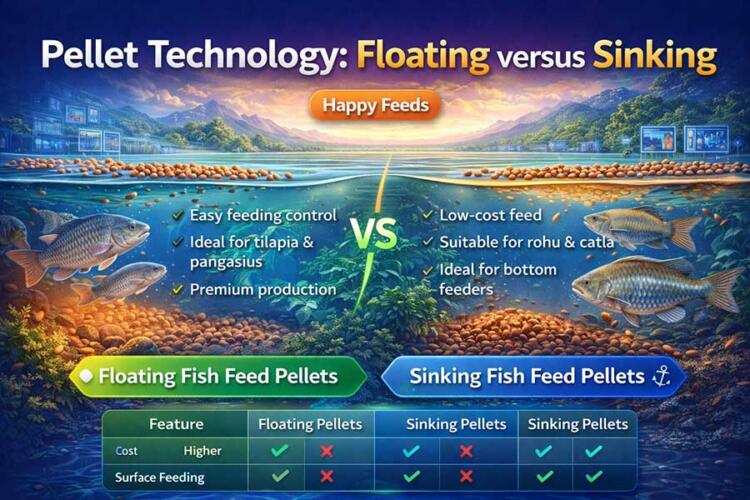
- 5. Pellet Technology: Floating versus Sinking
Depending on the type of fish, producers can produce both floating and sinking feed
Thanks to modern pellet manufacturing.
Pellets for Floating Fish Food
- Perfect for pangasius and tilapia
• Simple to keep an eye on feeding
• Lowers water pollution
- Fish feed pellets that sink
• Fit for carp and other bottom feeders
• Guarantees full feed intake
Manufacturers can control pellet buoyancy through advanced extrusion and coating technologies.
6. Coating and Nutrient Enrichment Technology
In 2026, coating technology is widely used to enhance pellet nutrition. Oil, vitamins, probiotics, and enzymes are sprayed on pellets after extrusion.
Benefits of Coating Technology
- Improves fish growth rate
- Enhances the immune system
- Increases feed palatability
- Reduces feed conversion ratio (FCR)
7. Sustainable and Eco-Friendly Pellet Manufacturing
- One of the biggest trends in the fish feed sector is sustainability. To reduce their environmental impact, manufacturers are implementing eco-friendly production techniques.
Eco-Friendly Technologies
- • Utilising sources of plant-based protein
Dryers with low emissions - • Extruders that use less energy
• Systems for recycling waste
Farmers can lower pollution and preserve water quality by using environmentally friendly fish feed pellets. - 8. Technology for Quality Control and Testing
In pellet production, quality control is crucial. Feed is tested for contaminants, moisture, fat, and protein in modern labs.
Methods of Quality Testing
- • NIR, or near-infrared spectroscopy
Microbiological examination
• Tests for water stability and pellet durability
These innovations guarantee fish feed pellets that are both safe and effective.
9. Advantages of New Technology in Pellet Manufacturing
Fish farmers and feed companies can benefit from a number of contemporary pellet manufacturing technologies.
For Farmers of Fish
• Quicker growth of fish
• An improved ratio of feed conversion
- Increased production capacity
- Strong brand reputation
10. Future of Fish Feed Pellet Manufacturing in India
- One of the world’s aquaculture markets with the fastest growth is India. The fish feed market is expected to grow significantly between 2026 and 2030, driven by rising demand for seafood exports.
Future technologies may include: Feed formulation based on AIAquaculture ponds with smart sensorsSupply chain tracking using blockchain- technology
- In feed factories, robots
Conclusion
India’s aqua feed sector will undergo a revolution thanks to these developments.
With the advent of new pellet manufacturing technologies, the fish feed industry is changing quickly. Manufacturers produce high-quality floating and sinking fish feed pellets using extrusion systems, automation, coating technology, and quality control techniques.
High-quality pellets lead to improved feed efficiency, faster growth, and higher profits for fish farmers. Modern technology guarantees market competitiveness, sustainability, and consistent quality for manufacturers.
FAQ – Frequently Asked Questions
1. What is the best technology for fish feed pellet manufacturing?
Extrusion technology is considered the best for producing high-quality floating and sinking fish feed pellets.
2. Why are floating fish feed pellets important?
Floating pellets enable farmers to track animal consumption, reduce food waste, and improve pond water quality.
3. How does automation improve fish feed production?
Automation reduces human errors while maintaining product quality and boosting manufacturing output.
4. What is coating technology in fish feed manufacturing?
Coating technology applies oils, vitamins, and probiotics to pellets, enhancing nutrition and fish growth.
5. Is eco-friendly fish feed manufacturing important?
Yes, sustainable production methods help reduce environmental pollution and improve the sustainability of aquaculture.
You can explore reliable options at Happy Feeds: https://www.happyfeeds.co.in/
Thanks for reading
Click here to read this: How to Choose the Right Floating Fish Feed
Visit our product page to see all products: Click here to visit
Need help choosing feed? Use our Free Feed Calculator
Visit: Dust Fish Feed Products