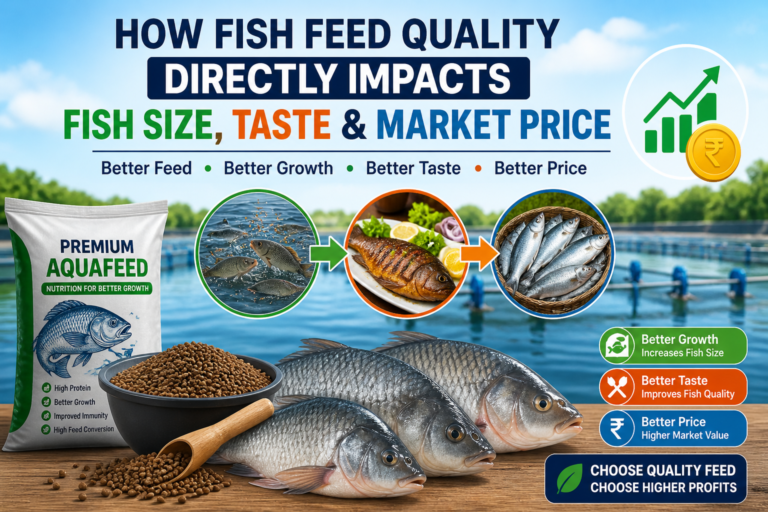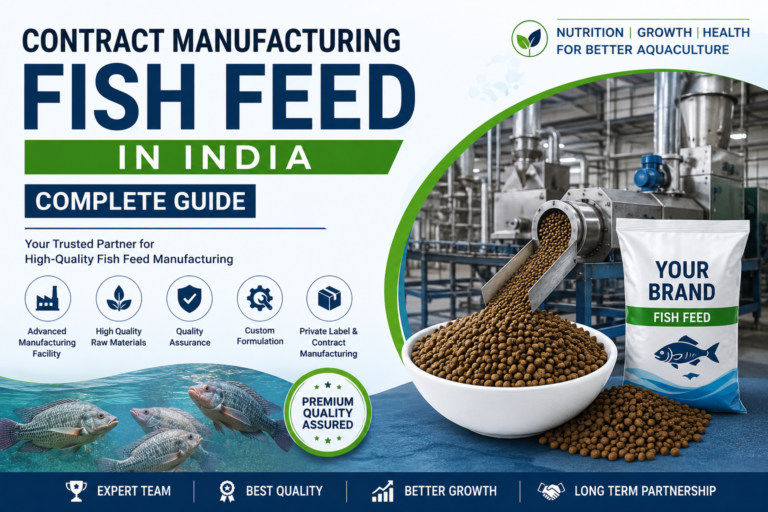

Fish growth problems are common in aquaculture, as multiple factors affect fish farming. For instance, nutrition, water quality, feeding practices, and the type of fish feed all play a crucial role. As a result, even small mistakes can lead to slow fish growth and reduced productivity.
Therefore, the first step in solving fish growth problems is to correctly identify the root causes. Once you understand the issue, you can apply the right solutions effectively. Moreover, maintaining proper feeding and water conditions further helps in improving overall fish growth.
In India, fish farming is a rapidly growing industry; however, there are many farmers who are experiencing issues with slow-growing fish as a result of a lack of fish seed or quality pond installations. Due to this there is often disappointment in the outcome from their efforts. But why is there such a high rate of failure?
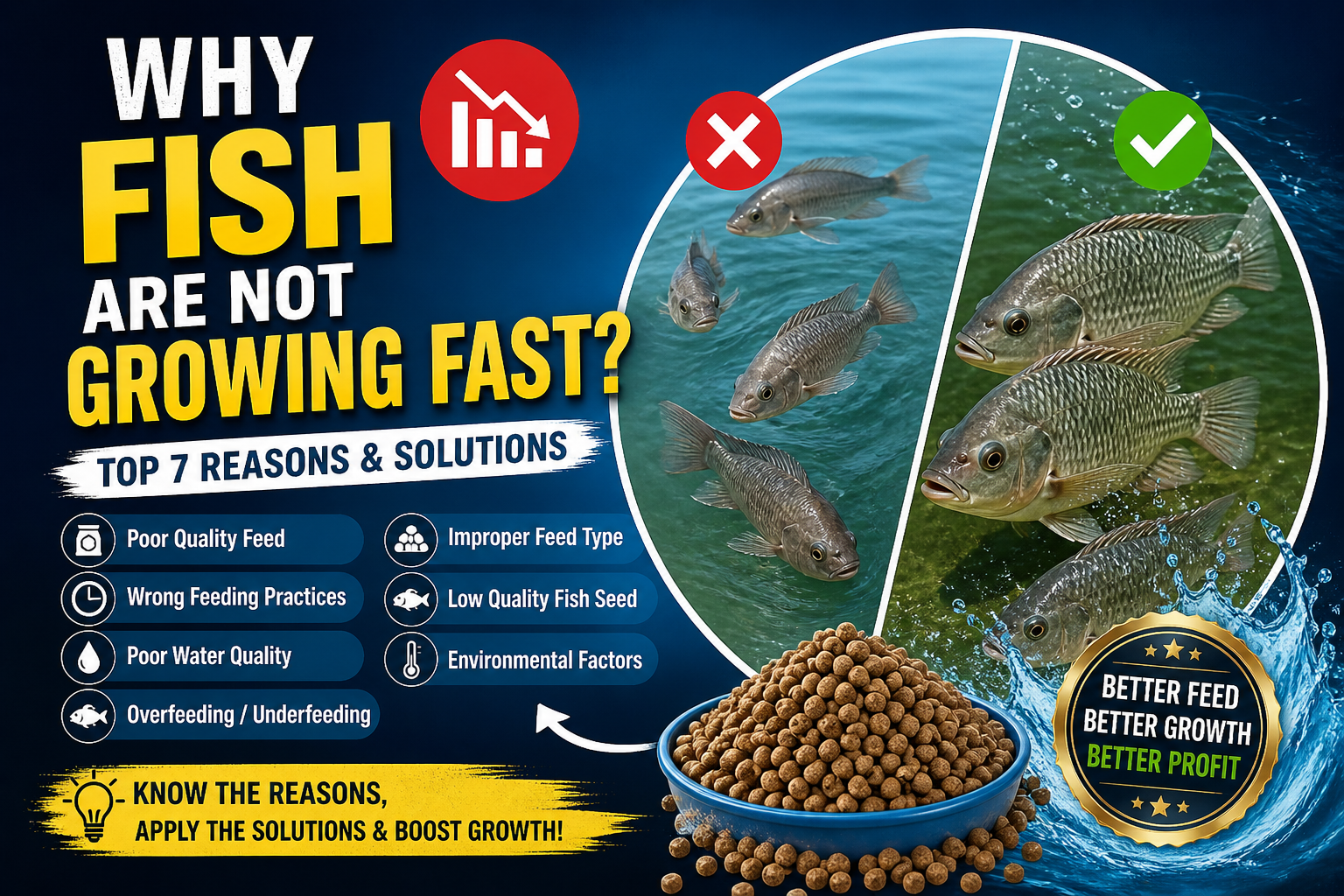
The reason for low fish growth is due to the number of variables involved in fish farming; including, but not limited to; nutrition, water quality, feeding practices and type of feed. This makes the first step in rectifying the slow growth problem the ability to identify the problems associated with fish not growing quickly.
1. Poor Quality Fish Feed
First and foremost, the quality of the feed is very important for the growth of fish. Your fish won’t get the nutrients they need if you feed them low-quality or unbalanced food.
A lot of farmers still use cheap or local feed instead of getting their fish feed from a good fish feed company in India. Because of this, fish growth slows down a lot.
Answer:
• Always feed your fish high-quality food that has the right amount of protein.
• Choose high-quality floating fish feed for better digestion and tracking.
• Pick well-known brands from the best fish feed makers in India
2. Wrong Time to Feed (Wrong Time to Feed)
another big mistake is feeding fish at different times. To grow properly, fish need to be fed on a regular basis.
3. Poor Water Quality
Fish growth problems The health of fish is directly affected by the quality of the water. If the water isn’t good, even the best feed won’t work.
Fish growth and metabolism can slow down if the water is dirty, has low oxygen, or has a lot of ammonia.
Answer:
• Check the water parameters on a regular basis
• Keep the air flowing properly
• Clean the pond every so often
• Make sure the pH of the water is right
In India, healthy water means healthy fish, which in turn means better production.
4. Choosing the Wrong Type of Feed
Not all kinds of fish food are good for all kinds of fish. Some fish, for example, like floating feed, while others may need sinking pellets.
Solution:
- Use floating fish feed pellets for better visibility and reduced wastage
- Consider floating pellet fish feed for commercial farming
- Use sinking fish food pellets only when required for bottom feeders
Choosing the right feed type from a reliable feed company is essential for growth.
5. Overfeeding or Underfeeding
A lot of farmers believe that giving more food will help plants grow faster. But giving too much food can waste it and pollute the water. On the other hand, not eating enough leads to a lack of nutrients.
Answer:
• Stick to the right amount of food
• Watch how the fish act while you feed them
• Don’t leave leftover feed in the water
to keep things in balance, you need to know how to feed fish the right way.
6. Bad quality fish seed
Fish seed that isn’t good quality won’t grow properly, even with the best food. Beginners often forget about this.
Answer:
• Always buy seeds from suppliers you can trust
• Make sure the fish are healthy and active
• Pick species that are good for your area
Good seed quality and the best fish feed for aquaculture mean faster growth.
7. Wrong Environmental Condition
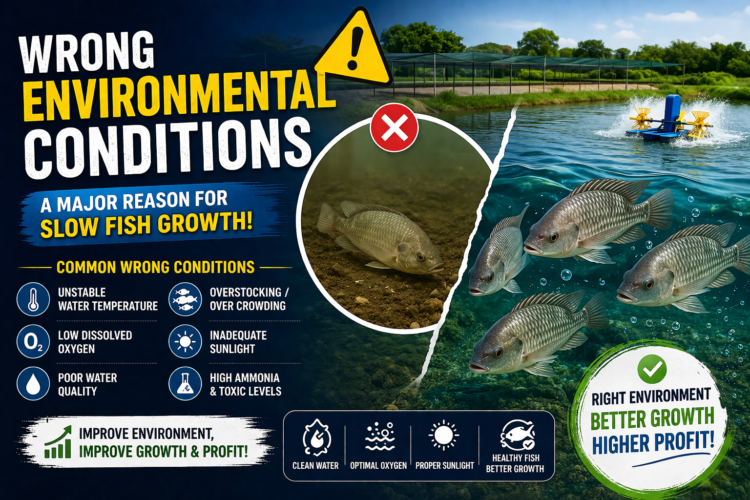
Environmental factors, including temperature, sunlight, and pond size, will affect fish growth. To ensure proper fish growth, there are three major considerations that owners of fish farms or aquaculture producers can do to achieve optimal growth of their fish are;
- Keep water temperature at optimum.
- Make sure to maintain proper sunlight exposure to ponds.
- Avoid overcrowding in ponds.
Proper management will help attain the growth potential of even the most popular fish bait products available on the market today.
Bonus: Ideal Fish Feeding Chart (Basic Reference)
Fish Size | Type of Feed | Feeding Frequency
- Small Fish – Using fine pellets – 3x per day
- Medium Fish – Using floating pellets – 2x per day
- Large Fish – Using floating/sinking feed – 1-2x per day
*Use reference chart as a starting point. Adjust feed type and feeding frequency based on species and water quality.
🏆 Choosing the Right Fish Feed is Critical
Fish growth problems In India, many options of fish feeding sources are available, so selecting the proper type of fish feed is important. Two ways to explore feed options in India are the different feed companies, such as Maharashtra Feeds Pvt Ltd., or through the various areas of India, such as Andhra Pradesh. Many well-respected companies produce many types of feed for fish.
There are several key elements to keep in mind when selecting fish feed, such as;
- Protein level of the feed.
- Will the feed float or sink?
- The reputation of the brand producing the fish food.
- Cost compared to performance, i.e. if the fish feed actually performs as per the specifications listed on the bag.
Due to these elements, many aquaculture farmers will use either private label floating fish feed or from a recognized brand for more consistent growth performance.
Additional Tips for Better Growth
In addition, some simple ways of enhancing your fish’s growth rate include:
- Daily fish inspections
- Being cautious about making quick adjustments to your feeding routines
- Using only floating (premium-quality) fish food
- Ensuring that your water bodies remain clean
- Providing fish with only fish food, specifically designed for ornamental fish.
By implementing the practices above, you will be able to increase your growth potential as well as your profitability.
Conclusion:
As already mentioned, there is no one cause of slow-growing fish. In fact, slow growth in fish is caused by many combined elements. Some examples include low-quality food, incorrect feedings, water quality problems and other issues. All these factors contribute to your fish growing at their maximum rate.
Farmers can focus on these areas of fish growth, including:
- Providing high-quality fish nourishments;
- Establishing an appropriate feeding schedule;
- Maintaining proper water quality;
- Picking the proper type of feed based upon the type of fish and the intended use.
If you make use of the above mentioned factors while using products manufactured only by reputable fish feed manufactures (in India) your fish will grow substantially faster and in turn will produce greater amounts of overall farm yields/groups.
FAQ (Frequently Asked Questions)
1. How often does a fish need to be fed in a day?
Most fish require a feeding schedule of 2-3 times per day depending on the species, size and water temperature.
2. What time is the best time to give fish food?
Good times to give fish food would include early morning and late evening as this is generally when the oxygen level in the water are stable.
3. What type of feed is better to use; floating or sinking feed?
Using floating feed has the added benefit of making it easier for you to monitor how much feed has been consumed and laying out the correct amounts of feed.
4. What are some reasons that my fish may not be gaining weight after providing enough food?
This can be due to a number of factors such as poor water quality, the wrong type of feed and fish not being of a quality that is acceptable.
5. In order to know which is the best fish feed for your fish, what things should you look for?
Factors to consider include checking to see that your feed has high protein content, checking out the reputation of the manufacturer, and lastly ensuring that it is suitable to your fish species.
Thanks for reading
Click here to read this: How to Choose the Right Floating Fish Feed
Visit our product page to see all products: Click here to visit
Need help choosing feed? Use our Free Feed Calculator
Visit: Dust Fish Feed Products