
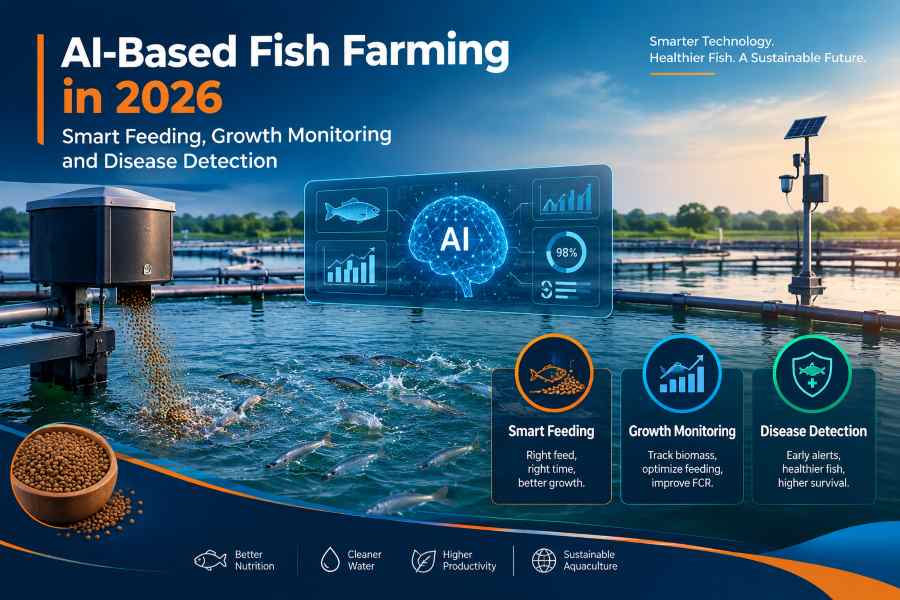
Fish farming is becoming more technology‑driven as aquaculture businesses seek ways to boost fish growth cut feed waste keep water clean and lower production costs. In 2026 AI‑Based Fish Farming is emerging as a tool for modern fish farming. By using sensors machine learning, computer vision and automatic feeding systems fish farmers can make wiser choices and run aquaculture operations more smoothly.
Traditional fish farming often relies on hand‑checking and experience to set feeding times watch fish growth and spot health problems. Although these methods are still useful they may not always give early data about changing pond conditions. AI‑Based Fish Farming brings a data‑driven method that helps farmers track fish behaviour estimate biomass, analyze conditions and spot potential health risks.
For the aquaculture industry these developments open chances to raise the productivity and sustainability of commercial fish farming. Technologies that support better feeding decisions and fish health management can also pair well with high‑quality aqua feed. Scientifically made fish feed pellets. Knowing about these innovations can help fish farmers get ready for the future of aquaculture.
How AI‑Based Smart Feeding Technology Is Transforming Fish Farming
Smart feeding is one of the promising uses of AI in aquaculture. Feed is an operating cost in commercial fish farming so smart feeding is essential for profit. Traditional feeding methods often use fixed schedules. Guessed amounts.. Fish appetite and nutritional needs can change with fish size, water temperature, oxygen levels, stocking density and overall health.
AI‑Powered Fish Feeding Systems can read data from cameras, sensors and feeding equipment to gauge feeding activity. Machine learning models can spot patterns in fish behaviour. Help decide when fish are eating or when their appetite starts to drop. Based on these signals automatic feeders can adjust the timing and amount of feed depending on the system’s design and settings.
This approach can help farmers avoid overfeeding and reduce the build‑up of feed in ponds or tanks. Extra feed can spoil water quality raise waste and hike production costs. By giving precise feeding decisions AI‑Based Fish Farming may help improve feed utilisation and feed conversion ratio (FCR) which measures how much feed is needed to produce one unit of fish biomass.
However smart feeding works best when combined with feed formulation and feeding habits. Fish species have nutritional needs at various growth stages so feeding systems must consider the species being raised. For example tilapia, pangasius and Indian major carp need feeding plans that suit their needs and farm conditions.
High‑quality floating fish feed pellets can aid feeding because farmers can watch feeding activity at the surface and judge how much fish eat the feed. Floating feed also makes it easier to spot overfeeding when pellets stay uneaten. Still floating feed performance depends on pellet quality, water conditions, species needs and good feeding management.
For aqua feed manufacturers such as Happy Feeds, the growing interest in aquaculture highlights the need to produce consistent nutritionally balanced fish feed. When reliable fish feed is combined with feeding schedules and modern monitoring tools farmers can make better‑informed decisions about feed use and farm productivity.
AI‑Powered Growth Monitoring and Water Quality Management
Monitoring fish growth is another use of AI‑Based Fish Farming. Farmers need to know fish size, biomass, growth rates and stocking conditions to estimate feed needs and decide when to harvest. Traditional growth monitoring often means catching and weighing a sample of fish. While this gives data it can be hard work and may stress the fish.
AI‑Powered Computer Vision offers a way by analyzing images and video from underwater cameras or other imaging tools. Depending on water clarity camera position, fish species and model accuracy these systems can estimate fish size, count fish watch swimming patterns and calculate biomass trends.
Biomass estimation is especially useful for feed management because the total weight of fish in a pond influences their nutritional needs. When farmers have biomass estimates they can adjust feed amounts more accurately instead of relying only on earlier stocking figures. Regular monitoring can also reveal differences, in growth patterns. Show when extra checks are needed.
AI can also help manage water quality by looking at data from sensors. Key measurements are dissolved oxygen, water temperature, pH and when the right equipment exists, ammonia and other water quality indicators. Shifts in these measurements can change fish appetite, metabolism, growth and survival.
For instance low dissolved oxygen can lower feeding activity. Put fish under stress. If an AI‑enabled monitoring system spots a change in oxygen levels it can send an alert so the farmer can look into it and act. Likewise changes in temperature or pH can explain differences in fish behaviour and feeding performance.
Combining the Internet of Things (IoT) with AI lets us gather and study data from sensors. Farmers can view dashboards that show water conditions past measurements, feeding records and growth estimates. Some systems can also run automated equipment, like aerators, when set rules are reached.
Still AI‑based monitoring should not replace farm checks. Sensors need calibration cameras can give estimates in muddy water and poor connectivity can stop data collection. Farmers should mix monitoring with hands‑on observation, routine water tests and proper aquaculture practices.
By combining growth monitoring with fish feed pellets farmers can make feeding plans that respond faster. For Happy Feeds and the larger aqua feed industry the ongoing growth of data‑driven fish farming stresses how important feed quality, nutrition and species‑specific feeding advice are.
AI‑Based Fish Disease Detection and the Future of Sustainable Aquaculture
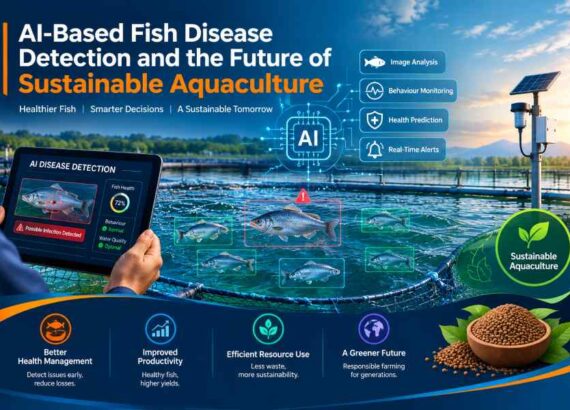
Fish diseases can greatly lower aquaculture productivity especially when problems stay hidden until many fish are affected. Quick detection is therefore vital to protect fish health cut losses and keep production steady. AI‑based disease detection is growing as a tool for modern fish farming.
Computer vision systems can look at fish pictures to spot problems, such as changes in skin look lesions, odd body markings or other patterns that hint at health issues. Machine learning models can also check changes in swimming behaviour feeding activity and movement patterns. When these signs differ a lot from normal the system can raise an alert for investigation.
Environmental monitoring can make this stronger. For example lower feeding activity with odd swimming behaviour and falling dissolved oxygen may show that the pond needs quick help. AI systems can look at data points at once helping farmers see patterns that hard to notice with only occasional checks.
An AI alert does not automatically mean a disease. Similar symptoms can come from water quality missing nutrients, stress, parasites, bacterial infections or other reasons. A correct diagnosis may need a check, lab tests and help from a qualified aquatic animal health expert. Farmers should not rely on AI predictions to give medicine or antibiotics.
AI can also help aquaculture by letting farmers use feed, water, energy and labour more wisely. Better feeding choices can cut feed and constant monitoring can spot environmental problems early. Accurate biomass estimates can aid production planning and lower uncertainty when planning harvests.
With these benefits putting AI into fish farming has real challenges. The first cost for cameras, sensors, automated feeders, software and connectivity can be high for farmers. Good data, technical training, equipment upkeep and system fit are also key. AI model accuracy can differ by fish species, farm setting and local conditions.
A practical start is to bring in monitoring tools and keep precise records of feed use, fish growth, water quality and health notes. Farmers can then see if more automation gives gains for their work. AI adoption should be slow, cheap and fit the farms size and production aims.
For the aquaculture sector the future of AI fish farming is, about mixing new tech with good farming habits, reliable fish feed and careful environmental care. High‑quality aqua feed is still essential because digital systems can help choose feeding. They cannot fix bad nutrition or wrong feed recipes.
As smart aquaculture continues to grow, farmers, technology providers and fish feed manufacturers can join together to boost feeding efficiency strengthen fish health management and help produce fish. By staying up to date with these developments fish farmers can better assess technologies and pick practical solutions that fit their production needs.
Conclusion
AI-based fish farming in 2026 is a step for modern aquaculture. Smart feeding systems can help make feed distribution smarter powered growth monitoring can give better biomass estimates and disease detection tools can warn farmers about possible health problems. When AI-based fish farming tools work with sensors and reliable water quality monitoring, AI-based fish farming tools can help farms run better and let farmers make more informed decisions.
Successful adoption relies on picking the technology keeping data accurate and mixing automated insights with regular farm checks and expert advice. High-quality fish feed pellets, balanced nutrition and proper feeding practices are also very important.
For farmers who want to raise aquaculture productivity adding monitoring methods to reliable aqua feed is a practical step toward more efficient and sustainable fish farming. Happy Feeds backs the value of fish nutrition as the aquaculture industry looks at new ways to grow fish feed them efficiently and produce responsibly.
Frequently Asked Questions (FAQs)
- What is AI-based fish farming?
AI-based fish farming uses intelligence, machine learning, cameras and sensors to help with fish feeding, growth monitoring, water quality control and early detection of health problems. AI-based fish farming lets farmers make decisions based on farm data.
- How does AI improve fish feeding efficiency?
AI-powered feeding systems can look at fish behaviour feeding activity and environmental conditions to decide the times and amounts, to feed. These systems can lower overfeeding. Help use feed more wisely when paired with good feed and farm management.
- Can AI detect fish diseases early?
AI can examine fish pictures, swimming patterns, feeding habits and environmental data to spot signs that may show a health issue.. Ai alerts are not final diagnoses. Fish health concerns should be checked by professionals.
- How does AI help monitor fish growth?
AI-based computer vision can look at images and videos to estimate fish size, count fish and see biomass trends. These estimates can help farmers adjust feeding amounts and plan production though accuracy depends on the species, water clarity, camera set‑up and monitoring conditions.
- How can quality fish feed support AI-based aquaculture?
High-quality fish feed gives the nutrients that fish need to grow and stay healthy. When good fish feed pellets pair with feeding systems and regular monitoring farmers can make better feeding decisions cut unnecessary feed waste and move toward higher production efficiency.
Thanks for reading
……………………………………………………………………………………………………………………………………………….
Click here to read this: How to Choose the Right Floating Fish Feed
Visit our product page to see all products: Click here to visit
Need help choosing feed? Use our Free Feed Calculator
Visit: Dust Fish Feed Products