
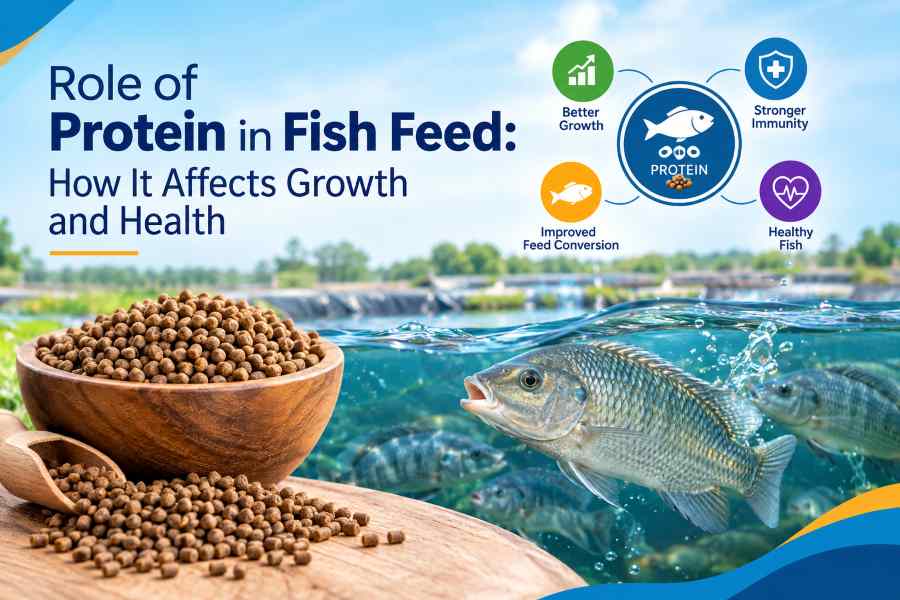
Protein is one of the important nutrients found in aquaculture. Protein plays a role in fish growth, muscle development, tissue repair and overall health. For fish farmers choosing the fish feed that contains an appropriate level of Protein can make a big difference in farming productivity, feed efficiency and profitability. Whether raising Rohu, Catla, Mrigal, Tilapia or Pangasius understanding how Protein works in fish feed helps fish farmers make feeding decisions and keeps fish populations healthy.
High-quality fish feed supplies essential amino acids. Fish need these amino acids to build tissues repair damaged cells and keep normal body functions running. However fish nutritional requirements change with species, age, body size, environmental conditions and farming practices. Therefore choosing fish feed pellets that have balanced Protein content is essential for growth and sustainable aquaculture production.
Why Protein Is Essential in Fish Feed for Growth and Development
Protein is a building block for fish tissues and muscles. When fish eat feed high in Protein, their digestive systems break Protein down into amino acids. Fish then use these acids to build muscle tissue repair cells and support essential physiological processes. A good supply of Protein in the diet is especially important during growth stages when fish bodies grow fast and nutritional demands are high.
Fish Protein requirements depend on factors: species, growth stage, feeding habits and diet composition. Younger fish need carefully formulated nutrient-dense feed to support rapid development. As fish grow approach market size their nutritional needs may change. Therefore fish farmers should pick feed that is made specifically for their species and production stage of assuming one Protein level fits all fish.
In aquaculture enough Protein helps fish gain weight better and build healthy body tissue. When fish eat feed that contains digestible Protein and essential amino acids they can use these nutrients more effectively for growth… Simply raising the Protein percentage does not automatically give better results. Protein quality, amino acid balance, digestibility and availability of nutrients are just as important.
Protein also helps form enzymes and hormones that take part in digestion, metabolism and other biological processes. These functions allow fish to use nutrients and keep body activities going. A balanced diet that contains Protein, fats, carbohydrates, vitamins and minerals gives a nutritional foundation than a diet that focuses only on Protein.
For fish farmers in India picking quality fish feed is especially important when running farming systems. In ponds with fish natural food may not satisfy every fish’s nutritional needs. Well‑made fish feed pellets can supplement food and give a steadier supply of essential nutrients. This leads to predictable growth and helps fish farmers manage feeding programs efficiently.
How Protein in Fish Feed Supports Health, Immunity and Feed Efficiency
Protein in fish feed does more than help fish grow. Adequate Protein nutrition supports tissue maintenance the production of biological compounds and normal immune functions. Healthy fish can handle environmental challenges better… Fish disease resistance also depends on water quality, stocking density, oxygen levels and proper farm management.
Protein deficiency harms fish development and overall condition. When fish do not get Protein they may grow slowly gain poor weight or use nutrients from their own body tissues to keep essential functions running. Inadequate nutrition can also hurt tissue repair and normal physiological activity. For fish farmers these problems cause production cycles, uneven fish sizes and lower farming efficiency.
On the hand giving too much Protein beyond fish needs is not always good. Fish cannot turn all Protein into body tissue. Unused amino acids may break down. Their nitrogen pours into the surrounding water. This adds nitrogen waste. Can hurt water quality if farm management and filtration are weak. Much Protein also raises feed costs because Protein ingredients are usually expensive, in commercial aquaculture feed.
This shows that Protein balance matters when picking the fish feed for commercial farming. The goal should be to give the amount of digestible Protein, a good balance of essential amino acids and enough dietary energy. When the diet supplies energy from fats and carbohydrates fish can use Protein more efficiently for tissue growth instead of using it for energy.
Feed conversion ratio, commonly known as FCR remains a metric in fish farming. FCR measures how much fish feed is needed to produce a quantity of fish biomass. A balanced fish feed, paired with proper feeding practices and good water conditions helps fish use feed more efficiently. Yet FCR can change because of factors such as feed quality, fish species, water temperature how many fish are stocked and how often fish are fed.
Quality floating fish feed allows farmers to watch how fish are eating and to change the amount of feed based on fish behaviour. Less uneaten fish feed is better because it saves money and keeps water cleaner. Farmers must watch fish appetite, fish growth, water conditions and how much fish feed is eaten every day to see if fish feeding practices are correct.
Thus protein management is not about choosing fish feed with the highest protein percentage. Protein management requires knowing the needs of each fish species and giving a balanced fish feed that helps fish grow stay healthy and use nutrients well.
Choosing the Right Protein‑Rich Fish Feed for Fish Species
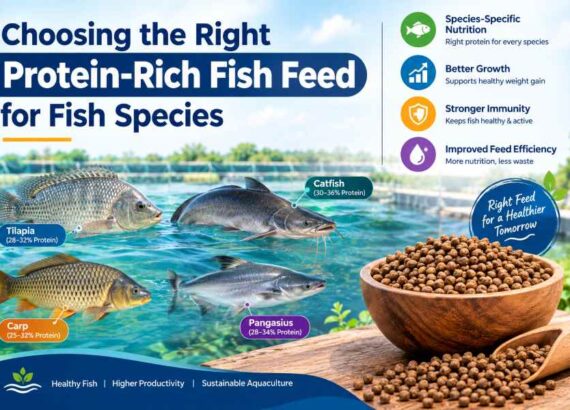
Choosing the right protein‑rich fish feed starts with finding out what each fish needs to eat. Rohu, Catla and Mrigal are Indian carps that many farmers raise in fresh water. Tilapia and Pangasius are also fish species. Each of these fish species has protein and nutrient needs that change with growth stage, farm conditions and how they are fed.
Fish feed makers create diets that use protein ingredients to give fish the amino acids needed for growth. These ingredients may be fishmeal, soybean meal, other plant proteins and chosen alternative proteins. The value of each ingredient depends on its amino acid mix, how well fish can digest it how it is processed and its overall quality. A well‑made fish feed mixes the ingredients so that each fish species gets the nutrients it needs and the feed stays consistent and affordable.
Farmers must look at the listed crude protein amount, ingredient quality, how fresh the fish feed’s how strong the pellets stay and whether the fish feed is right for the fish being raised. Protein percentage alone does not show how much protein fish can eat and use. A fish feed that has an amino acid mix and is easy for fish to digest can be better than a fish feed that has more protein but the wrong mix of nutrients.
The. Size of fish feed matter too. Floating fish feed pellets let farmers see how fish eat, spot uneaten feed and change the amount of feed given. Pellet size should fit the fish mouth. Match the fish growth stage. If pellets are too big or hard to eat fish will not feed well. If pellets are weak they will break and let nutrients fall into the water.
Feeding times must match fish size, water temperature how many fish are in the pond and how hungry the fish look. Small fish often need to be fed often while big fish may need a different schedule. Farmers should use the fish feed maker’s guidelines. Talk to an aquaculture nutritionist when choosing the right amount of fish feed to give.
Keeping the water clean and healthy is just as vital. Even the best fish feed cannot fix problems like dissolved oxygen, wrong temperature, too many fish or bad pond care. Farmers who check fish growth, fish survival, how much fish feed is. Water quality often find issues early and make better production choices.
Aquaculture businesses that want reliable fish nutrition can look at Happy Feeds for ideas about fish feed. Visit https://www.happyfeeds.co.in/ to see the company and its fish feed products. Picking the right fish feed and using feeding practices helps farmers keep fish healthy use nutrients better and move toward more sustainable fish farming.
Conclusion
Protein is a part of fish feed. Protein helps fish build muscle, repair tissues keep metabolism steady and grow. Yet good fish farming needs more than a diet rich in protein. Protein quality, the balance of amino acids how well fish can digest it the energy it gives and the specific needs of each fish species all affect how well fish use their fish feed.
Choosing well‑made fish feed pellets keeping feeding schedules and checking water quality lets farmers feed fish more efficiently and keep fish healthier. Steering clear of little protein and too much protein also helps control feed costs and cuts nutrient waste. Fish farmers who want aquaculture results should learn how protein works in fish feed before making nutritional choices.
FAQs
Why is protein important in fish feed?
Protein gives fish the amino acids needed to build muscle fix tissues grow and make enzymes and other vital body parts. When fish eat protein along, with a balanced diet and good farm conditions fish grow healthy.
What happens when fish feed contains protein?
When fish do not receive dietary protein they grow slowly gain little weight develop less tissue and use feed poorly. The severity and length of the protein shortage well as the fish’s diet and environment decide how bad the effects become.
Does higher protein content always lead to better fish growth?
No. Fish need the amount of digestible protein and a suitable balance of essential amino acids. Much protein can raise feed costs and produce extra nitrogen waste without giving fish more growth.
What protein level is suitable for fish feed?
The suitable protein level depends on the fish species, age, size, growth stage and farming conditions. Farmers should choose feed based on reliable nutrition recommendations instead of applying one protein percentage to all fish.
How can farmers choose quality fish feed for growth?
Farmers should consider protein quality, digestibility, amino acid balance, pellet size, feed freshness and fit, for the fish species. Monitoring how much feed is eaten, fish growth and water quality also shows whether the feeding program works.
Thanks for reading
……………………………………………………………………………………………………………………………………………….
Click here to read this: How to Choose the Right Floating Fish Feed
Visit our product page to see all products: Click here to visit
Need help choosing feed? Use our Free Feed Calculator
Visit: Dust Fish Feed Products