
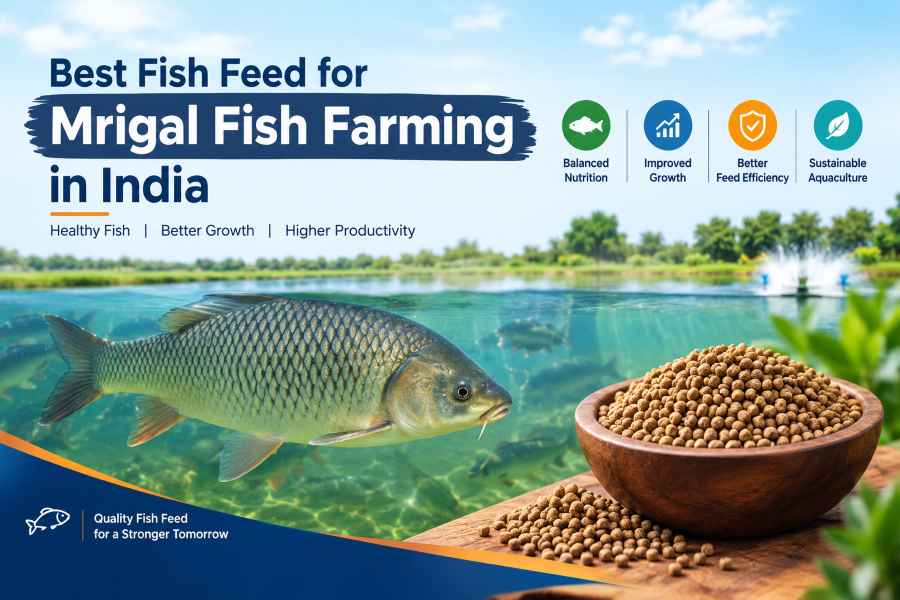
Mrigal fish farming is a part of freshwater aquaculture in India offering opportunities for fish farmers to improve productivity and build a profitable business. Mrigal (Cirrhinus mrigala) is one of the Indian Major Carps (IMC) raised with Rohu and Catla in composite fish farming systems. However successful Mrigal fish farming depends on things, including the quality of fish seed, pond management, water quality, stocking density and access to balanced food. Choosing the fish feed for Mrigal fish farming in India is very important for helping fish grow well improving how they use the food and keeping a steady production level.
Traditionally many Indian fish farmers have used natural pond food and added feed mixtures that include things like rice bran and oilcake. These can add some nutrition. Commercial fish feed pellets offer a more reliable and easier way to feed when chosen based on the fishs growth stage and farming conditions. High-quality fish feed gives proteins, fats, vitamins, minerals and other nutrients that fish need. For farmers looking to improve their aquaculture picking the Mrigal fish feed can help with better feeding management and longer-term farm success.
Understanding the Nutritional Needs of Mrigal Fish
Mrigal is mainly a feeding fish that naturally eats organic matter and other food found at the lower parts of a pond. Its feeding style makes it an important species in composite fish farming, where different fish species use parts of the pond. Catla usually feeds near the top of the water Rohu uses the middle and Mrigal mainly feeds at the bottom. This helps farmers use pond resources effectively.
Natural food alone may not be enough for fish stocked at commercial levels. Adding food becomes especially important when farmers want steady growth and better production. A good fish feed should give protein for growth fats for energy carbs in the right amount and vitamins and minerals for normal body functions.
Protein is very important because it helps with muscle growth and overall development.. The right amount of protein depends on the fishs age, size, stage of growth how much they eat and the farming environment. Younger fish usually need protein compared to bigger fish. So farmers should choose feed based on what the maker says and get help from aquaculture experts if needed.
The size of the feed pellets is another thing to consider. Big pellets may be hard for small fish to eat while the right size can make feeding easier and reduce waste. As Mrigal fish grow farmers should change the size and amount of feed based on how the fish get and what they eat.
Good quality fish feed should also be easy to digest and stay in the water without breaking too quickly. If feed falls apart it can release nutrients into the water making the water worse and adding waste. Choosing a feed from a trusted fish feed company in India can help farmers keep feeding consistent and meet the needs of their fish.
How to Choose the Best Fish Feed for Mrigal Fish Farming in India
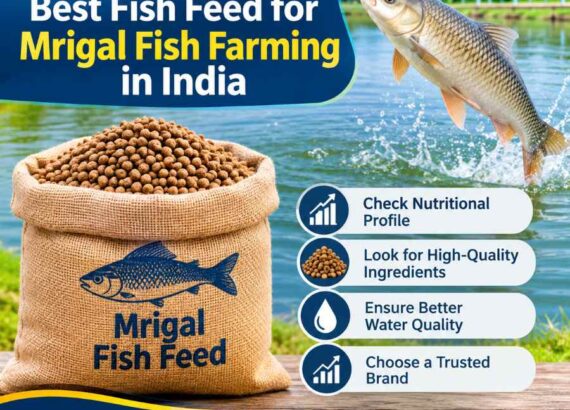
Choosing the fish feed is not just about comparing prices or protein levels. Farmers need to look at the content the quality of the pellets if its right for Indian Major Carps how easy it is to digest and what their farming setup needs.
A good choice is fish feed made for Indian Major Carps, including Mrigal, Rohu and Catla. These feeds offer a steady nutrition than unbalanced added mixtures. When choosing a product farmers should check the label for protein, fat, fiber, moisture, pellet size and the fish its meant for. The feed should match the fishs growth stage and the conditions they’re in.
Happy Feeds has fish feed options for freshwater aquaculture including floating feed and feed made for Indian Major Carps. Their range for IMC fish is meant for species like Rohu, Catla and Mrigal. Farmers can look at the options on their website at https://www.happyfeeds.co.in/ to learn more about their fish feed products.
Floating fish feed can help farmers see how fast the fish eat. This makes it easier to guess how much they eat change the amount and spot any changes in how they eat.. Because Mrigal is mostly a bottom feeder farmers should make sure that floating feed and how they use it is right for their system. Access to feed is important in ponds where several fish species are raised together.
Another thing to think about is the feed conversion ratio (FCR) which shows how much feed is used compared to how much the fish grow. A lower FCR means efficiency but results depend on feed quality, fish health, water conditions how many fish are there and how they are managed. Watching how much feed is used and how the fish grow can help farmers see if their feeding plan is working.
Farmers should not just pick feed because its cheap. Low-quality feed can cause eating, uneven growth or more waste. Instead compare the cost of feeding against how much the fish grow. Keeping feed in a dry well-ventilated place is also important. Use clean storage areas. Follow the makers advice to keep the feed in good shape.
In mixed carp farming the feeding plan should take into account the needs and feeding habits of all the fish in the pond. This is especially important when Mrigal is raised with Rohu and Catla. A good feed and feeding plan can help farmers give the nutrition while reducing competition and extra waste.
Best Feeding Habits for Healthy Mrigal Growth and Better Farm Output
The best fish feed won’t work without good feeding habits. Farmers should make a feeding schedule based on the size of the fish how much they weigh the water temperature, how productive the pond is and how much natural food is there.
The daily food needed should be based on the weight of the fish and changed as they grow. Farmers should follow the makers recommendations. Ask an aquaculture expert to set the right amount. Of using the same amount all the time check the food needs often as the fish grow.
Split the amount into several times to help the fish eat better and make it easier to watch how much they eat. Farmers should check if the fish are eating actively and change the amount if there is food. In ponds with Mrigal the way food is given should make sure the fish can get to the food in their feeding area. Depending on the system a feeding tray or another way of feeding can help farmers see how much the fish eat.
Water quality is also important for Mrigal fish farming. Things like oxygen, temperature, pH and other water factors can change how much the fish eat how they grow and how they feel. Bad water quality can make the fish eat less and get stressed even if the food is good. Checking the water regularly using aeration when needed and taking care of the pond can help keep the environment right for the fish to grow.
Farmers should also keep track of how much food’s used how the fish grow how many die and the water quality. These notes can help spot changes in how the fish grow and how well the food works. If the fish stop eating farmers should check for possible reasons like bad water, disease, stress or bad food instead of just giving more.
Don’t feed much because leftover food and extra waste can hurt the pond.. Don’t feed too little either or the fish won’t grow well. The goal is to give food while keeping the pond balanced.
For farmers working with a reliable feed maker can make it easier to pick the right products and set up a regular feeding plan. Happy Feeds has fish feed options for aquaculture including IMC feed for Mrigal, Rohu and Catla. Farmers can visit https://www.happyfeeds.co.in/ to see what’s available and get info on picking the right feed for their needs.
In the end good Mrigal fish farming needs nutrition along with good fish seed the right number of fish good pond care and checking fish growth often. By picking the feed and using it right farmers can work towards better food use and long-term fish farming success.
Conclusion
Picking the fish feed for Mrigal fish farming in India is an important step toward good fish growth and better pond care. Farmers should look for food that is balanced in nutrients, size for the pellets easy to digest and made for Indian Major Carps. They should also think about how Mrigal eats at the bottom when choosing how to feed in ponds with Rohu and Catla.
Good feeding times checking the water quality often taking care with how many fish’re in the pond and checking how the fish grow can help improve farming. Happy Feeds has fish feed options for Mrigal and other freshwater fish helping farmers find the choices for their fish farming needs. Picking the feed and using it the right way can help with better use of resources and the long-term survival of Mrigal fish farming in India.
Frequently Asked Questions (FAQs)
- Which is the fish feed for Mrigal fish farming in India?
The best feed is one that’s balanced and right for Mrigals stage of growth and the farming conditions. Commercial Indian Major Carp feed may be right if its nutrition, pellet size and way of feeding match what the fish need.
- What nutrients are important in Mrigal fish feed?
Important nutrients include protein, fats, energy sources, essential amino acids, vitamins and minerals. The right amounts change depending on the size, age, growth stage and conditions of the fish.
- Can Mrigal fish be raised with Rohu and Catla?
Yes. Mrigal, Rohu and Catla are often raised together in mixed fish farming because they eat in parts of the pond. Good ratios, the feed and good pond care are important for their growth.
- Is floating fish feed, for Mrigal fish?
Floating fish feed can help farmers watch how feed the fish are eating but Mrigal is mainly a fish that eats from the bottom. Farmers need to make sure the way they feed the fish lets Mrigal reach the feed. They should also ask for help to find out if a certain type of feed is right for their pond system.
- Where can I buy fish feed for Mrigal farming in India?
Farmers can look for Major Carp and other types of fish feed for freshwater fish from Happy Feeds by going to https://www.happyfeeds.co.in/. Call the company to check if the products are available now what the nutrition is like what size the pellets are and if they are good, for the way the farmers are raising the fish.
Thanks for reading
……………………………………………………………………………………………………………………………………………….
Click here to read this: How to Choose the Right Floating Fish Feed
Visit our product page to see all products: Click here to visit
Need help choosing feed? Use our Free Feed Calculator
Visit: Dust Fish Feed Products