
The aquaculture industry is changing quickly as fish farmers use technologies more and more to make their work better. Traditional fish farming methods depend on observation, regular water testing and fixed feeding schedules. These ways are still important. They do not always give timely information about what is happening in the pond. In 2027 Precision Aquaculture is becoming a way that combines Artificial Intelligence, the Internet of Things, automation and smart systems to make fish farming better and better. These tools help fish farmers know what is happening in their ponds watch how the fish behave manage when to feed them and find problems before they get worse. For fish farming in India this kind of farming helps improve how things are run while using feed and water.
Understanding Precision Aquaculture and the Role of AI in Modern Fish Farming
Precision Aquaculture means using tools, sensors, data analysis and smart systems to watch and manage fish farming. Of only using observations made by people farmers can use real-time information to make better choices about feeding, water quality, fish growth and pond care. Artificial Intelligence plays a part in this change by looking at a lot of data from the farm and finding patterns that might not be easy to see with old ways. AI systems can study how the fish move, how they eat and how they behave in conditions to give useful advice for running the farm.
One of the uses of AI in fish farming is smart feeding. Traditional ways use fixed times to feed the fish. The fish might eat more or less depending on the temperature, oxygen levels, size and other things. AI systems can use cameras, sensors and data about how the fish behave to decide how much to feed them. This helps avoid much feeding and reduces waste. Since feed is a cost for fish farming better feeding helps the farm do better financially.
AI is also being used for counting the fish telling what kind of fish they are and finding signs of disease. Computer vision can look at videos and pictures of the fish to see how big they are and how they are moving. Machine learning can use data to find changes that might affect the fish. These tools are especially useful for types of fish like Rohu, Catla, Mrigal, Tilapia and Pangasius.. Ai suggestions should be used together with knowledge about each type of fish and expert help.
IoT Sensors and Smart Water Quality Monitoring in Aquaculture
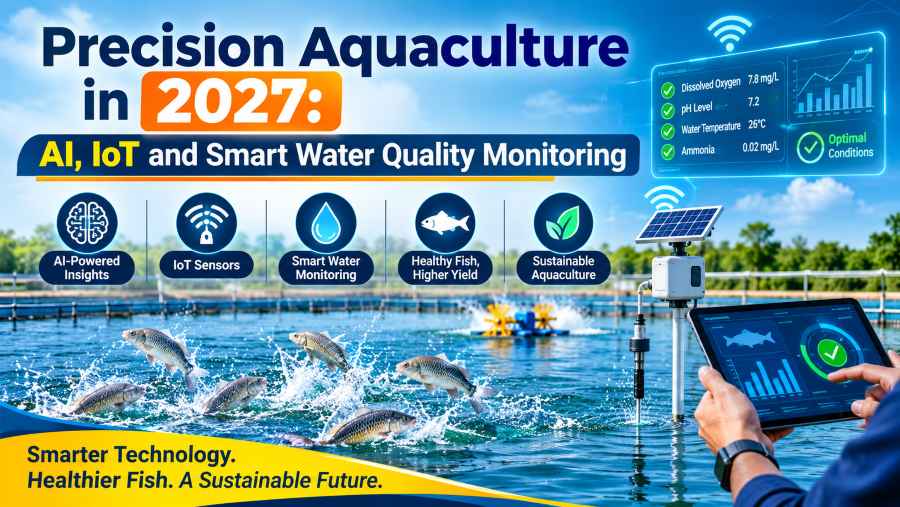
Keeping the water clean is very important for good fish farming. Even if the food is good bad water can make the fish not eat, grow or survive. Things like oxygen levels, temperature, ammonia, cloudiness and salt content need to be checked often. Old ways of testing water usually need people to take samples, which might not show changes. IoT water quality systems help by checking the water all the time or at set times.
IoT means connecting things to digital systems through the internet. In fish farming these sensors can be placed in ponds, tanks or recycling systems to check water parts. The data can go to phones or online dashboards so farmers can see what is happening from anywhere. For example sensors can tell when oxygen is low or when temperature or pH is changing. Some systems also check for ammonia. Predict what might happen next.
Smart water monitoring is even better when it uses AI. AI can look at the sensor data find patterns and send alerts if the water is not good. Predictive systems can also guess what might happen and let farmers act before there is a problem. Some farmers might get alerts to use air pumps check the pond or test again. A study from 2026 in Aquacultural Engineering showed a system that tracks oxygen, ammonia and other parts of the water. These new tools show how digital checking can help make choices for farming.
For farmers in India these tools can help a lot during changing weather. When there are a lot of fish.. The sensors need to be checked and cleaned often to work right. Farmers should still test the water by hand. Keep good records instead of just using the machines.
Smart Feeding, Sustainable Fish Production and the Future of Aquaculture in 2027
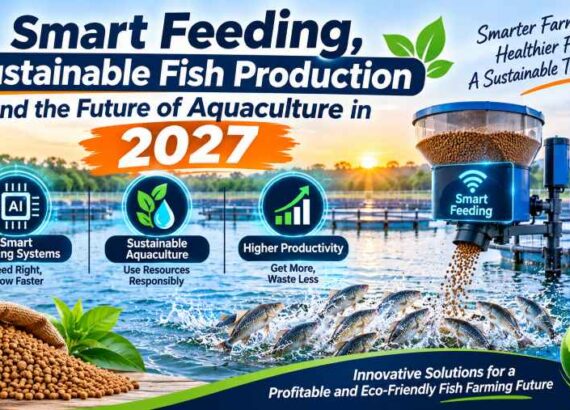
The future of farming depends on using checking with good feeding and how to manage the farm. Smart feeding, sensors and AI can work together to make things better. When farmers know how the fish eat and what the water is like they can decide better how much to feed, how how to take care of the pond. This is very important because feeding much can make more waste affect the water and cost more.. Not feeding enough can make the fish grow slower and not do well.
Good fish food is still the important part of farming. No matter how good the tools are the fish need the food. Fish need the amount of protein, energy, fat, vitamins and minerals to grow well. Different kinds of fish need kinds of food so it is important to pick the right food based on what kind of fish their size and where they are in their life. Floating food can help farmers see how the fish are eating and manage the feeding better. For some fish like Rohu, Catla, Mrigal, Tilapia and Pangasius the right food is very important.
Another important part of farming is Feed Conversion Ratio. FCR measures how much food is needed to get an amount of fish. Good feeding, good food, healthy water and proper groups of fish can make this number better. By using records and sensor data farmers can see how the water affects the food used. This can help find ways to make the farm work better and use food.
Sustainable farming is also very important as people want fish and seafood. New tools can help save water use resources better and plan better.. Farming with more tools does not mean buying expensive machines right away. Small and medium farmers can start with testing equipment, digital records and simple monitoring before using more advanced AI and IoT.
For Indian fish farming in 2027 there is a chance to mix old ways with new tools. Companies like Happy Feeds know that good food is important for farming. By focusing on the food, good nutrition and smart feeding farmers can add to the tools they use. Combining fish food, smart care and new tools can make farming better and last longer in India.
Conclusion
Precision Aquaculture is changing how fish are farmed with AI, IoT sensors, feeding and checking water quality. These tools help farmers make choices watch the fish and make feeding better. In 2027 using tools with good fish food and smart care can help fish farming in India be better and last longer. Choosing the food and keeping the water healthy will always be important for long-term success.
Frequently Asked Questions (FAQs)
- What is Precision Aquaculture in fish farming?
Precision Aquaculture is a way to farm fish that uses AI, IoT sensors, automation and data to watch the fish how they eat and the water for better farming.
- How does AI help in modern fish farming?
AI helps watch how the fish act count how many there are, plan when to feed find things and help find diseases early through smart data.
- What is the role of IoT in aquaculture?
IoT links water sensors and checking tools to systems letting farmers see things, like oxygen, pH, temperature and ammonia.
- Why is smart water quality monitoring important for fish farming?
Smart checking helps farmers see when the water is not good and act quickly helping the fish stay healthy survive and the farm run better.
- How does smart feeding improve fish farming productivity?
Smart feeding systems decide how much to feed based on how the fish behave and what they need. They can cut down on wasted food help use food and help the fish grow well.
Thanks for reading
……………………………………………………………………………………………………………………………………………….
Click here to read this: How to Choose the Right Floating Fish Feed
Visit our product page to see all products: Click here to visit
Need help choosing feed? Use our Free Feed Calculator
Visit: Dust Fish Feed Products