
Tilapia farming is now a part of modern aquaculture because tilapia adapt easily grow fast and thrive in many farming settings. Still healthy growth and high production depend on feeding. Giving tilapia the amount of nutritious feed at the right time keeps tilapia healthy boosts growth and improves farm output. A clear tilapia feeding guide shows farmers what tilapia need at each growth stage.
Tilapia eat foods, such as algae, phytoplankton, tiny aquatic animals and other natural foods. In a fish farm, natural food alone often does not give tilapia nutrition for steady growth. So farmers give tilapia manufactured fish feed that has proteins, carbs, fats, vitamins and minerals. Good tilapia feed helps tilapia build muscle use feed and reach market size faster.
Protein is a nutrient in tilapia diets because it builds tissue supports muscle growth and keeps the tilapia body healthy. Young tilapia need protein than big tilapia because their bodies grow fast. As tilapia grow, their nutrition needs shift so farmers must choose starter, grower and finishing feeds that fit. The protein level should also change with the farming system how many tilapia are. How much natural food is available.
Pellet size is also important. Tiny fingerlings need crumble or micro‑pellets that tilapia can eat and digest easily. As tilapia grow farmers should slowly switch to floating pellets that fit their mouths. Using the pellet size cuts waste and lets tilapia get enough nutrition each day.
Tilapia Fish Feed Quantity and Feeding Frequency at Different Growth Stages
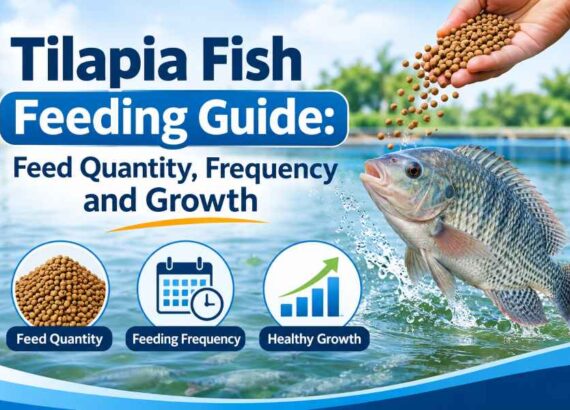
Getting the amount of tilapia feed is a key part of good fish farming. Overfeeding raises costs. Can hurt water quality while underfeeding slows tilapia growth and makes tilapia uneven in size. So farmers must compute feed based on the total tilapia biomass not give the same amount each day.
A simple feeding calculation is to multiply tilapia biomass by the feeding percent. For example if a pond holds about 100 kg of tilapia and the recommended rate is 3% the daily feed needed is 3 kg. That amount should be split into meals based on tilapia size and the feeding plan.
The feeding percent falls as tilapia grow. In the fry and fingerling stages tilapia need small frequent meals because they grow fast and have small stomachs. When tilapia reach the grow‑out stage farmers can feed often while still giving enough daily nutrition.
The following feeding guide provides feeding rates for different tilapia growth stages:
1–5 Grams: Young fingerling tilapia usually need about 6–10% of their body weight in feed each day. Give them about 5–6 meals a day with crumble or micro‑pellets.
5–20 Grams: Tilapia in this range typically need about 4–6% of their body weight each day. Feed them 4 meals a day to meet their growing needs.
20–100 Grams: Tilapia in this range should receive about 3–4% of their body weight each day. Split the ration into 3–4 meals with grower pellets.
100–250 Grams: As tilapia grow larger they need about 2–3% of their body weight each day. Feed them 2–3 times a day.
Above 250 Grams: Big tilapia may need about 1.5–2.5% of their body weight each day depending on size, temperature and farm conditions. Two meals a day usually work.
These percentages are only starting points, not rules. Real feeding needs depend on water temperature, tilapia activity, stocking density, natural food and feed quality. Farmers must watch tilapia eating habits. Change the daily ration as needed.
Feeding frequency is also key for tilapia growth. Than giving all feed at once spreading it over several meals boosts eating and cuts waste. Early morning and late afternoon are times to feed. In weather farmers should watch dissolved oxygen and not feed too much when tilapia are less active.
Floating fish feed is very helpful in tilapia farming because it lets farmers see how tilapia feed, at the surface. They can quickly see if tilapia eat the pellets or leave them. This makes it easier to change the feeding and keep better control of daily feed use.
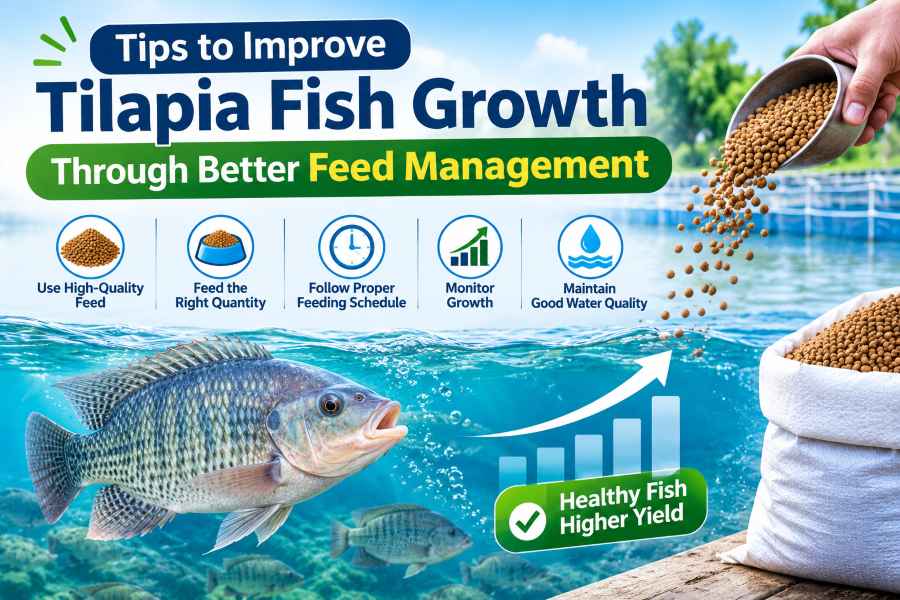
Tips to Improve Tilapia Fish Growth Through Better Feed Management
Tilapia fish growth is not improved by feeding more. Tilapia farmers must keep a feeding program that mixes good nutrition correct feeding habits and proper water conditions. Choosing the commercial fish feed is the first step to steady growth and higher aquaculture output.
First tilapia farmers should pick feed that’s nutritionally balanced and made just for tilapia. Good fish feed must have the amount of protein, energy, essential amino acids, vitamins and minerals. The feed’s makeup must fit the tilapia’s growth stage. If tilapia eat feed the fish will use nutrients poorly grow slower and the farmer will spend more.
Second tilapia farmers must keep a feeding schedule. Feeding tilapia at the same times each day helps tilapia develop regular feeding habits. Tilapia farmers should spread feed over the pond or tank so that smaller and less aggressive tilapia also get enough food. If all feed is put in one spot dominant tilapia can eat much and other tilapia will grow unevenly.
Third tilapia farmers need to sample fish. Tilapia farmers should pick tilapia and weigh them to find the average body weight. These weights help tilapia farmers estimate biomass and check if the current feed amount is enough. As tilapia grow their biomass rises so tilapia farmers must recalculate the daily feed even if the feeding percentage goes down.
Water quality management matters as much for healthy tilapia growth. Temperature, dissolved oxygen, pH and ammonia levels directly affect tilapia appetite, metabolism and how tilapia use feed. Bad water quality can lower tilapia feeding activity. Raise disease risk. Tilapia farmers should check pond conditions often keep aeration and remove waste when needed.
Overfeeding is another problem in commercial tilapia farming. Uneaten pellets break down in the water adding waste and possibly raising ammonia and lowering oxygen. Tilapia farmers should watch tilapia while feeding and cut the ration if a lot of feed is left uneaten. Tilapia farmers should also adjust feeding when temperature is low water quality is bad or tilapia activity is low.
Feed storage also needs care. Commercial fish feed should stay in a dry well‑ventilated area away from moisture and direct sun. Good storage keeps the feed’s nutrition. Lowers fungal risk. Tilapia farmers should always look at the feed smell it and check the expiry date before use.
For aquaculture keeping a good feeding program can boost feed conversion cut needless costs and help with better harvests. Picking a fish feed maker is a key choice for tilapia farmers wanting better long‑term production.
Happy Feeds knows that good nutrition matters for tilapia farming. By using fish feed, balanced nutrition and careful feeding habits tilapia farmers can aim for healthier fish, faster growth and more productive farms.
Conclusion
Proper feeding management is the base for tilapia fish farming. Knowing the feed amount how often to feed and the nutrition needed at each growth stage helps tilapia farmers keep healthy fish and get steady production. Regular biomass checks, floating fish feed, correct pellet sizes and solid water quality control can greatly improve feeding efficiency. By following a tilapia feeding guide and picking nutritious commercial fish feed tilapia farmers can cut waste boost fast growth and raise overall farm productivity. Choosing aquaculture feed from a trusted maker like Happy Feeds can help tilapia farming stay sustainable and profitable.
Frequently Asked Questions (FAQs)
- How feed should I give tilapia fish daily?
The amount of feed a tilapia needs each day depends on the tilapia’s weight and the total tilapia biomass. Tiny fingerlings may need about 6–10% of their body weight each day. Bigger tilapia usually need about 1.5–3% of their body weight each day. Tilapia farmers should change these amounts if tilapia feeding habits or water conditions change.
- How many times should tilapia fish be fed per day?
Tilapia fry and small fingerlings usually need 4–6 or small meals each day depending on their size and the farming system. Bigger fingerlings may be fed 3–4 times per day. Growing tilapia often eat 2–3 meals each day.
- Which feed is best for tilapia fish growth?
The best feed, for tilapia growth is a balanced commercial tilapia feed that has the right amount of protein, fats, vitamins and minerals. Floating pellets are helpful because tilapia farmers can see how much feed tilapia eat.
- Does overfeeding affect tilapia fish growth?
Yes. Overfeeding raises feed costs. Makes too much organic waste in the water. This can lower dissolved oxygen raise ammonia and hurt tilapia health. Tilapia farmers should give the amount tilapia can eat well.
- How can farmers improve tilapia fish growth?
Farmers can help tilapia grow better by giving quality feed and keeping a steady feeding schedule. Farmers should also watch fish biomass. Keep water quality just right. Farmers must adjust the amount of feed each tilapia receives based on the size of the fish and, on the feeding behaviour of each fish.
Thanks for reading
……………………………………………………………………………………………………………………………………………….
Click here to read this: How to Choose the Right Floating Fish Feed
Visit our product page to see all products: Click here to visit
Need help choosing feed? Use our Free Feed Calculator
Visit: Dust Fish Feed Products