
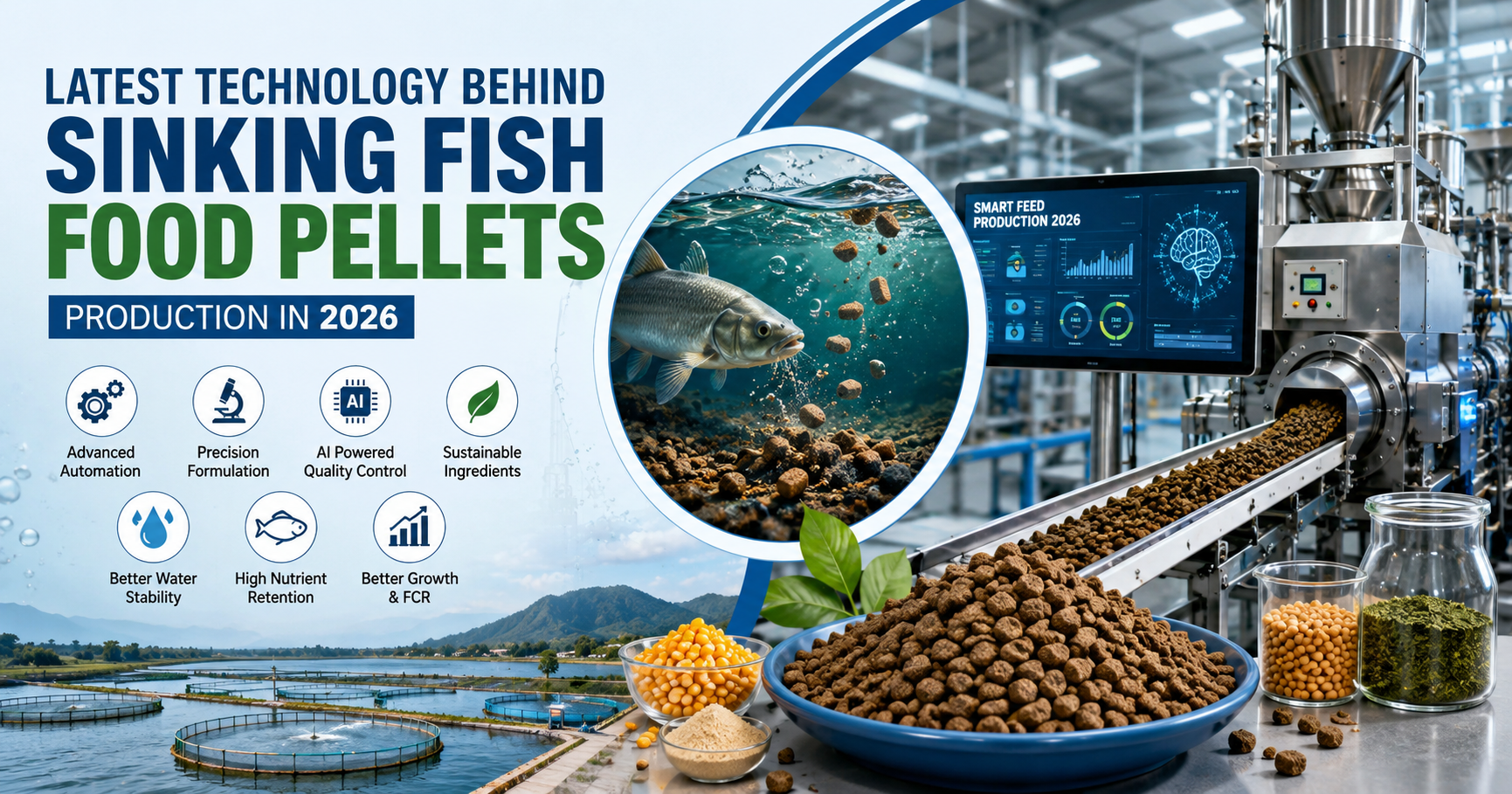
Aquaculture is changing fast, and new techniques in feed technology will help make fish farming more productive than ever before. In 2026, new technology will enable manufacturers to develop higher-quality sinking fish food pellets with greater nutritional value, improved feed performance, and less environmental impact.
Fish farmers want feed solutions that will assist them in maximizing growth and minimizing waste. Improvements in methods of production, optimizing ingredients, and utilizing smart quality control systems are revolutionizing how fish feed is produced. Consequently, the latest design of sinking fish feed is more nutritious, holds its shape better in water, and is more economical than ever before for use by commercial aquaculture operations.
By examining the latest technologies used to produce sinking fish feed, this article will illustrate how these innovations benefit fish farmers around the world, including the US and Canada.
What Are Sinking Fish Food Pellets?
Sinking Fish Food Pellets (SFPP) are specially made food products that are manufactured to slowly sink down toward the bottom of a pond or tank. Sinking Fish Food Pellets are designed for bottom-feeding/mid-water-feeding fish species such as carp, catfish, and several species of freshwater fish. Unlike floating fish food, sinking pellets allow fish to eat according to their natural way of eating, so they do not have to strain themselves trying to eat when they are naturally feed. When sinking fish food is properly manufactured, it will stay intact when it is submerged. This prevents the loss of nutritional value as well as improves the use of food when the water is removed from the fish.
Evolution of Fish Feed Manufacturing Technology
For the past ten years, fish feed has been produced by automated production systems as opposed to traditional methods. The fish feed industry of India is now making significant capital investments into state-of-the-art manufacturing equipment that enhances the consistency and quality of their products as well as their nutritional value.
Major technological innovation can be seen in the fish feed industry with:
Electronic precision mixing of ingredients
Automated production of pelletised fish food
Smart moisture control systems
Real-time quality assurance
Integration of sustainable materials
Artificial intelligence controlled production management
These improvements will allow fish feed producers to create bestselling sinking fish feed products that will support the optimal health of the fish being raised for commercial purposes.
Advanced Ingredient Formulation Technology
Precision nutrition is one of the biggest advances in 2026.
Today, modern feed mills employ computer-based formulation software that identifies the specific nutrient requirements for each species of fish that are being produced. These computer systems can balance and calculate the appropriate amount of protein, fat, carbohydrates, vitamins, minerals and amino acids that need to be included in the manufacture of an optimal fish feed formulation.
The result of using this advanced technology will be some of the highest quality fish feed products available today and substantially reduce the cost of producing fish feed due to diminished utilisation of unnecessary ingredients.
The advantages of utilizing precision nutrition technology into fish feed product formulations include:
Increased fish growth rates
Enhanced fish immunity
Improved feed conversion ratios (FCR)
Decreased feed waste
Smart Grinding and Particle Size Control
Preparing Raw Materials for Sinking Fish Feed
The movement of particles increases in size during the grinding process, which affects the quality of the fish feed produced.
Using the right equipment (advanced hammer mills and micro-grinding systems) ensures that all of the ingredients are ground to the same particle size. This results in improved pellet density and helps to achieve correct sinking characteristics (which means how fast the pellets will sink).
There are many advantages to having controlled particle size distribution, including:
- Better durability for the pellets,
- Improved digestibility of the pellets,
- Even distribution of nutrients within the pellets,
- Consistent sinking performance of the pellets.
This is a very important stage of producing high quality sinking fish feed pellets.
High Performance Pelletizing Equipment
Modern technology used to produce pellets has come a long way since the old days! Today’s machines are fully automated and use precise pressure and temperature controls to create dense and durable pellets. Machines produce uniform high quality pellets.
Some key benefits include:
1. Improved Water Stability:
Pellets stay together longer in water allowing fish to have time to eat the pellets.
2. Uniform Size of Pellets:
Having uniform size ensures that all fish species have equal access to the feed.
3. Reduced Amount of Pellets Lost Due to Dust Generation:
Pellet feed losses also occur when moving pellets during transport or feeding operations.
Automated Moisture and Temperature Monitoring
The management of moisture is an important aspect when it comes to the production of feed. As of the year 2026, digital sensors are being used all throughout the production process by manufacturers. These digital sensors allow for real-time temperature and moisture level monitoring.
The benefits of this type of technology include:
- An increase in shelf life
- A decrease in mold growth
- Improved nutrient retention and preservation.
- Consistent feed quality
How well you manage moisture will affect how well fish food pellets perform when they sink.
AI Quality Control Systems
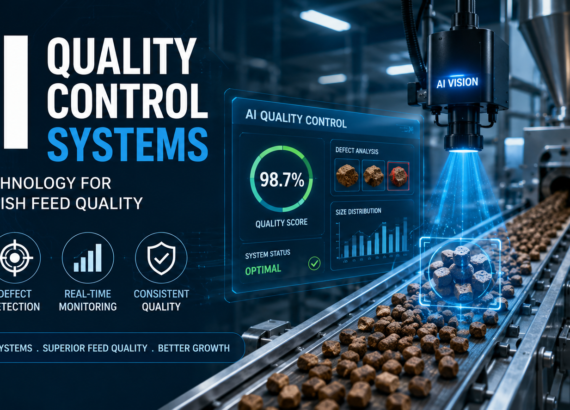
The use of Artificial Intelligence (AI) will continue to grow in importance for those manufacturers true to the aquaculture feed manufacturing industry. With respect to aquaculture feed production, AI systems can:
- Identify any and all defects during production
- Monitor pellet density during production
- Analyze the consistency of ingredients throughout the production process
- Predict when maintenance will be required for production machines
By utilizing these technologies, manufacturers have a better opportunity to maintain their standards while reducing their overall operational costs.
By utilizing AI-based quality control systems, manufacturers will also have a decreased level of human error and improved production efficiency.
Sustainable Ingredients and Alternative Proteins
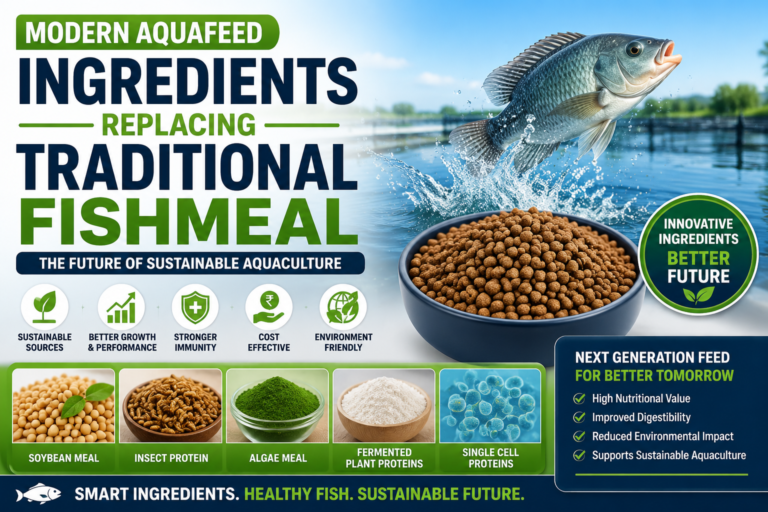
In 2026, sustainability will be not only highly important, but the main concern for the aquaculture industry. Manufacturers are working on drastically reducing their dependence on traditional fishmeal by incorporating alternative protein sources such as:
- Soy protein concentrate
- Insect protein meal
- Algae-based ingredients
- Plant-derived proteins
All of these ingredients will allow the aquaculture industry to incorporate sustainable feeds into their production while allowing for high-quality nutrition.
The majority of India’s leading Top Fish Feed Manufacturers are trying to implement environmentally friendly feed formulations to accommodate the industry’s future needs.
Increased Efficiency through Feed Conversion
Feed represents one of the largest costs associated with fish farming. The use of modern production technology specifically targets improving the Feed Conversion Ratio (FCR) to enable fish to gain more weight from less feed through various means.
By increasing FCR, fish farmers will benefit from:
- Faster fish growth
- Lower feed costs
- Increased profitability of farms
- Reduced environmental impact
This is one reason why the use of high-quality sinking fish feed is becoming so popular with commercial fish farmers.
Smart Feeding Integration
The use of technology in feeding fish is not limited to feed production alone. Many farms now have automated feeding systems that are linked to sensors and software platforms to determine the:
- Timing of fish feeding
- Daily requirements of feed per fish
- Fish behaviour patterns
- Water quality conditions
Having the ability to feed fish accurately will drastically improve growth performance of fish and decrease feed loss. Combining premium quality sinking fish feed with smart feeding technology will create highly efficient fish farming.
How Modern Technology Benefits Fish Farmers
Recent improvements made to the production of sinking fish feeds have provided many benefits to the aquaculture industry, including:
1) Improved growth rates by providing a superior nutritional balance;
2) Reduced environmental impacts from excess feed waste that pollutes ponds;
3) Higher returns to fish farmers through improved growth and lower feed costs; and
4) Use of environmentally sustainable ingredients will help ensure future aquaculture
Choosing the Right Fish Feed Supplier
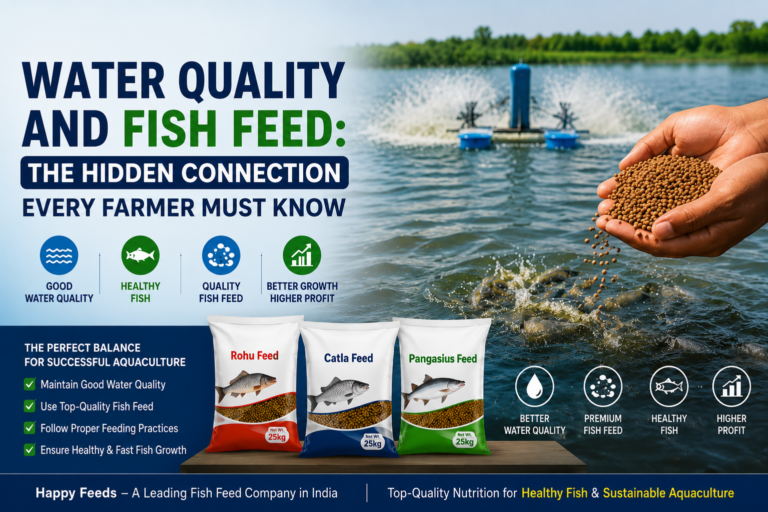
When you are looking to purchase feed for your aquaculture operation, there are five main factors to take into account: product quality, nutritional profile, manufacturing processes, reputation of manufacturer, and delivery service/technical support.
The most reliable fish feed manufacturers employ the latest technology available in the production of fish feed so they can provide farmers with quality and consistent supplies of fish feed throughout the growing season.
Fish farmers often compare a number of different variables when determining which supplier’s fish feed or fish seed to use before they begin their farm operation; however, one of the most critical decisions for long-term success will always be the choice of a premium quality fish feed. All fish keepers (even hobbyists using products like Tetra Bits) understand the importance of quality feed, but when it comes to commercial aquaculture, the need for “high-quality” feeds must be addressed at a much larger scale.
Conclusion
Sinking fish feed pellet production has made great strides since 2026, thanks to new technology and advances like precision nutrition, AI-powered quality assurance, automated pelleting systems, and sustainable raw material sourcing. Innovative methods such as these enable fish farmers to achieve superior growth rates; increased feed efficiency; reduced waste; and improved profitability; therefore; as the future of aquaculture becomes increasingly focused on sustainability and productivity, continued development of advanced sinking fish feed will be a key component in the future success of aquaculture.
Frequently Asked Questions (FAQs)
1. What are sinking pellets for fish feeding?
Sinking pellets can be used to provide food specifically formulated to sink in water so that they can be used to feed both bottom-dwelling fish and mid-water fish species.
2. Why are sinking pellets for fish feeding important to aquaculture?
Sinking pellets provide more directed feeding to the fish, which reduces the amount of feed lost by the fish and provides more complete nutrient absorption so that the fish can achieve greater growth rates.
3. How has modern technology improved the production of fish food using sinking pellets?
The use of modern technological advancements has enhanced the formulation of ingredients in the production of fish feed, the quality of the pellets themselves, their ability to maintain their nutrient content while being submerged in water (and therefore their stability), and the efficiency with which they are able to provide nourishment to fish.
4. When is the best time to feed fish?
The best time to feed fish will generally vary by species and by the water temperature they are housed in; however, it is widely accepted that the best times to feed fish are early in the morning and late in the evening.
5. How do I feed fish successfully when farming them commercially?
When feeding fish commercially, you want to provide them with the correct amount of feed based on their weight, age, water parameters, and how they typically eat, while avoiding overfeeding.
Thanks for reading
……………………………………………………………………………………………………………………………………………….
Click here to read this: How to Choose the Right Floating Fish Feed
Visit our product page to see all products: Click here to visit
Need help choosing feed? Use our Free Feed Calculator
Visit: Dust Fish Feed Products