
One of the most important parts of successful aquaculture farming is proper fish feed storage. A number of fish farmers buy quality floating fish feeds and the highest quality fish Pellet feeds, however due to improper storage procedures, the efficacy of the feeds is reduced. As a result of poor feed quality, fish will not grow as quickly or feed conversion rates will be lower and you have lost income due to not having a healthy fish population, leading to decreased profitability.
An established fish feed manufacturer in India will provide fish farmers with quality fish feeds and educate them regarding the proper storage of the feeds they are buying. By learning about some of the common mistakes associated with fish feed storage, farmers can keep their feeds in good condition and grow healthy fish.
Table of Contents
- Why Proper Fish Feed Storage Matters
- Common Fish Feed Storage Mistakes
- How Poor Storage Affects Fish Growth
- Best Practices for Fish Feed Storage
- Choosing Quality Feed from Trusted Manufacturers
- Conclusion
- FAQs
Why Proper Fish Feed Storage Matters
Fish feed consists of proteins, vitamins, minerals, fats, and other ingredients necessary for fish to grow and develop properly. However, all of these ingredients can break down if exposed to moisture; heat; light; or other contaminants.
Even the highest quality aquaculture fish feed can lose its nutrient value during storage if not properly cared for. This can lead to slower fish growth, lower immune function, and less effective feed use.
In addition, good storage practices will help ensure that floating fish feed pellets and sinking feed products retain their quality throughout their entire shelf lives.
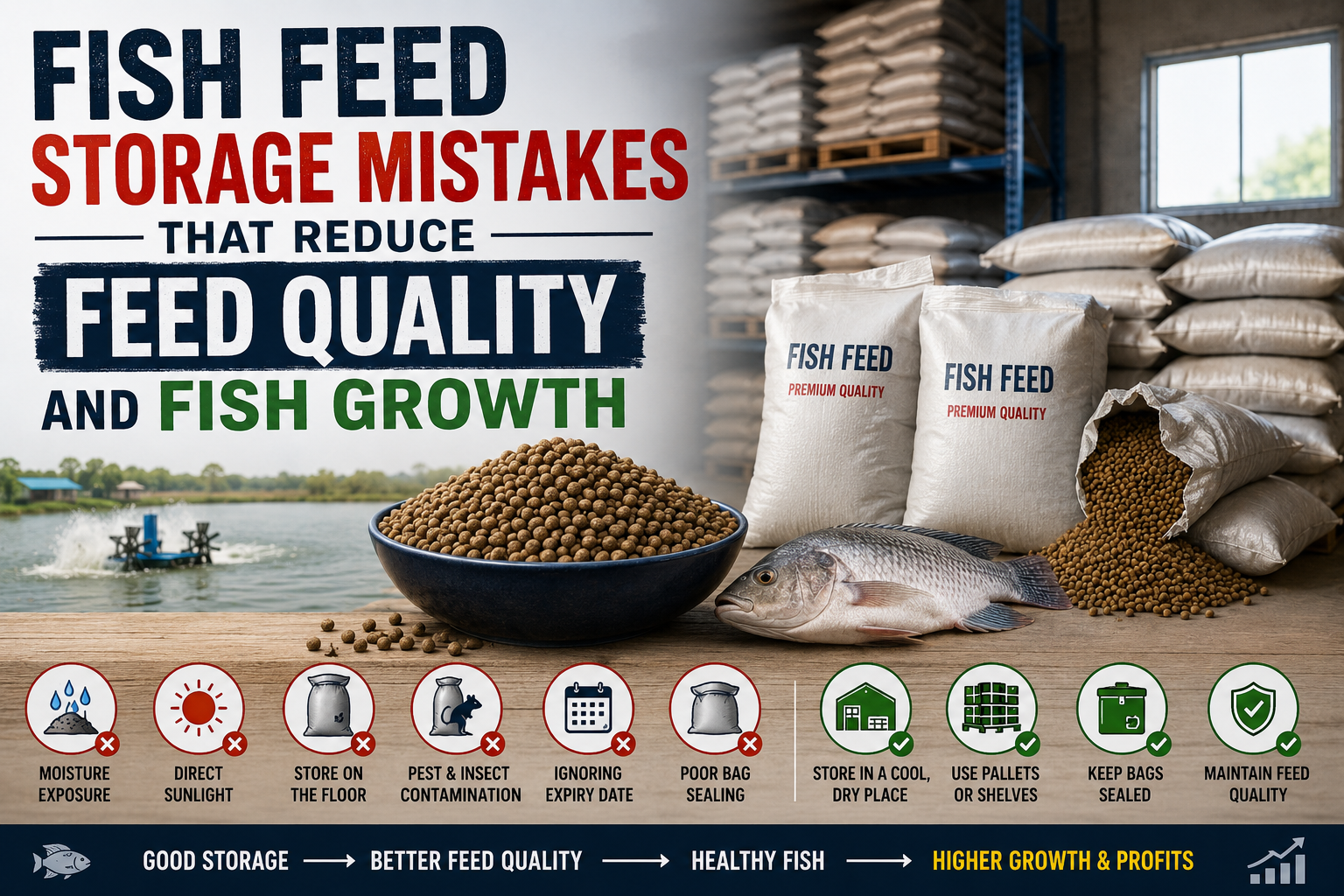
Common Errors When Storing Fish Feed
1. Storing Fish Feed in Humid Areas
Moisture is one of the worst enemies of fish feed.
When fish feed absorbs moisture:
- Mold development will increase
- Nutrient content will be lowered
- Pellets will break down more easily
- Harmful bacteria may form
So always store fish feed in dry locations that have good air circulation.
2. Storing Fish Feed Where There is Direct Sunlight Exposure
A lot of farmers keep their fish feed where there is an opening that lets sunlight in directly.
However, heat will:
- Deplete vitamin content
- Oxidize fat content
- Ruin freshness of the feed
- Reduce overall quality of the pellet.
In turn, the fish will not get sufficient nutrition to achieve optimal growth.
- Keeping Feed Directly on the Floor
Placing feed bags directly on concrete floors is a common mistake.
Floors often contain moisture that can transfer into feed bags over time. Therefore, feed should always be stored on wooden pallets or raised platforms.
This simple practice helps maintain the quality of fish feed pellets and floating fish feed products.
- Purchasing Excess Feed Inventory
Purchasing feed in bulk can help you save money right away; however, the longer you store your purchased feed the more diminished its nutritional value becomes after a certain period of time. High-quality floating aquaculture feed will perform best if used within the recommended shelf-life.
As such, it’s best to purchase feed based on the needs of your aquaculture farm, rather than unnecessarily maintaining stocks over time.
5) Improper Sealing of Feed Bags.
Once opened, fish feed bags must be kept clean, dry and sealed tightly because exposed products become susceptible to:
- Moisture
- Pests
- Rodents
- Contamination from the air
Once the feed becomes exposed to any of these elements, the feed’s quality diminishes quickly.
You should seal opened feed bags in airtight containers or properly reseal them to maintain the feed’s freshness.
6) Not Checking Feed Expiration Dates.
Even the highest quality of fish feed has a limited shelf life. Old fish feed can:
- Lose Nutritional Value
- Go Rancid
- Negatively Impact Fish Health
To avoid feeding your fish poor-quality feed, you should always check the production and expiration dates before feeding them.
- Mixing Old and New Feed
Some farmers combine new and old feed to maximize feed value.
While this makes sense; however, it can lead to contamination of both old feed and new feed, and therefore reduce overall nutritional quality.
Use First in First out (FIFO) practices to keep old feed ahead of new feed.
Effects of Improper Storage on Fish Growth
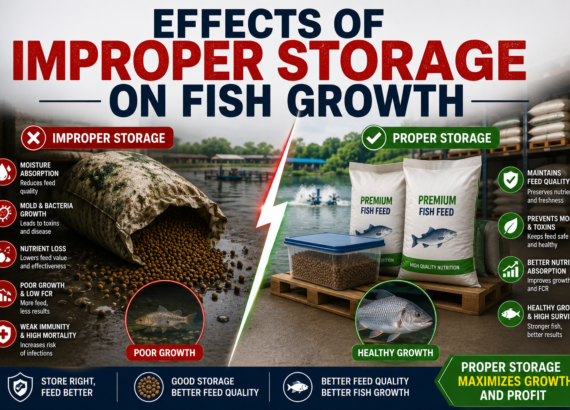
Poor storage practices of fish feed have a direct effect on the productivity of the aquaculture industry
Decreased Nutritional Value
Nutrients such as protein, vitamins, and micronutrients deteriorate due to poor storage conditions.
As result; fish are not receiving all the vitamins and other nutrients they need to sustain good health.
Longer Time to Grow Fish
Loss of nutrients due to inadequate feed conditions means that fish will consume feed with inadequate or low levels of nutrient that help in their growth.
As such, the required production cycles to produce fish will increase and profitability from those fish will decrease.
Lower Feed Conversion Rates (FCR)
FCR is considered one of the primary attributes of aquaculture.
Damaged or inferior quality feeds result in reduced FCR, meaning that more feed is required to achieve one pound of body weight of fish.
Higher Risk of Disease
Fish fed with good quality fish feeds have a greater degree of immunity from disease.
Conversely, moldy and/or contaminated feed can increase the incidence of disease and mortality in fish.
Optimal Storage Methods for Fish Feed
Follow these best storage practices for fish feed to achieve optimal nutrition, maximize productivity, and ensure long-term sustainability: Keep fish feeds in dry and cool places.
Store Feed in a Cool and Dry Area
Maintain low humidity and proper ventilation.
Use Wooden Pallets
Keep bags off the ground to prevent moisture absorption.
Protect Feed from Sunlight
Store feed indoors away from direct heat.
Follow FIFO Method
Use older stock first before opening new bags.
Seal Bags Properly
Prevent exposure to air and contaminants.
Monitor Storage Conditions Regularly
Check for moisture, pests, and damaged packaging.
Buy from Trusted Suppliers
Choose reputable fish feed manufacturers in India that provide quality packaging and clear storage guidelines.
Choosing Quality Feed from Trusted Manufacturers
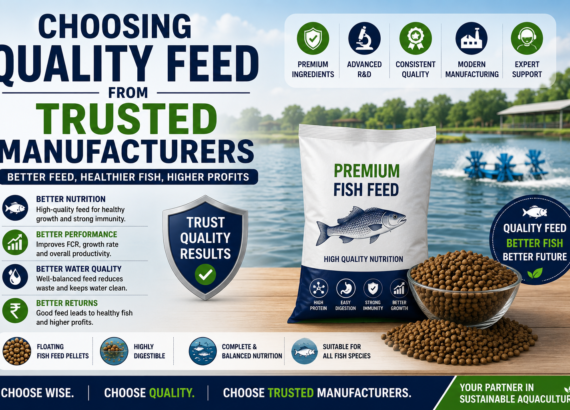
Fish Feed Quality Starts with Manufacturers
Fish feed quality starts with feed manufacturers; lead manufacturers in India invest in leading-edge production technologies and quality control systems to develop feed pellets that maintain their nutritional values and allow fish to grow as healthy as possible.
If you’re looking for:
- Premium floating fish feed
- Private Label Floating Fish Feed
- Contract Manufacturing floating fish feed
- Commercial Aquaculture floating fish feed
When you select a reputable fish feed company, you are likely to receive consistent results from your farm.
Happy Feeds is dedicated to providing healthy fish feed solutions to promote optimal growth, healthy immune systems, and maximum profitability for fish farmers in India.
Conclusion:
An ideal storage method won’t simply keep fish feed high-quality; correct storage practices can also play an extremely important role in maintaining the quality of the feed after it has been manufactured and delivered to you.
Excessive moisture, lack of ventilation, direct sun exposure, lack of properly sealed containers, and long-term storage of your fish feed are 5 possible reasons for the reduced effectiveness of the feed; therefore, farmers should follow the correct storage practices to ensure their investment is protected and can best utilize their production.
When the right practices are used and combined with premium fish feeds from reputable fish feed manufacturers, farmers will have the potential benefits of having healthier fish, increased feed conversion rates, and ultimately increased profit.
Frequently Asked Questions (FAQs)
Why is storing fish feed important?
Properly storing fish feed will ensure that its nutritional value, avoid contamination and encourage the development of healthy fish.
What is the shelf life of fish food?
Most fish feeds will have a set shelf life as specified by the manufacturer. It is advised that the feed be consumed within a few months if it has been stored correctly.
Can moisture cause damage to fish food?
Yes, moisture will allow the fish feed to grow mould, lose some of its nutritional values, or spoil.
What is the ideal place to keep fish feed?
Fish feed should be stored in a location that is cool, dry, and has plenty of air flow, that does not receive direct sunlight, or have access to and or moisture.
How will premium floating fish feed pellets benefit fish farming?
Premium floating fish feed pellets will increase feeding efficiency, decreased amount of feed wasted, assist in the development of healthy fish while maintaining water quality.
Should you purchase feed in bulk?
Only if you have the ability to store it properly, and can use it prior to the expiration date. The length of time that food is stored for also has the potential to affect the quality of the fish feed.
Thanks for reading
……………………………………………………………………………………………………………………………………………….
Click here to read this: How to Choose the Right Floating Fish Feed
Visit our product page to see all products: Click here to visit
Need help choosing feed? Use our Free Feed Calculator
Visit: Dust Fish Feed Products