
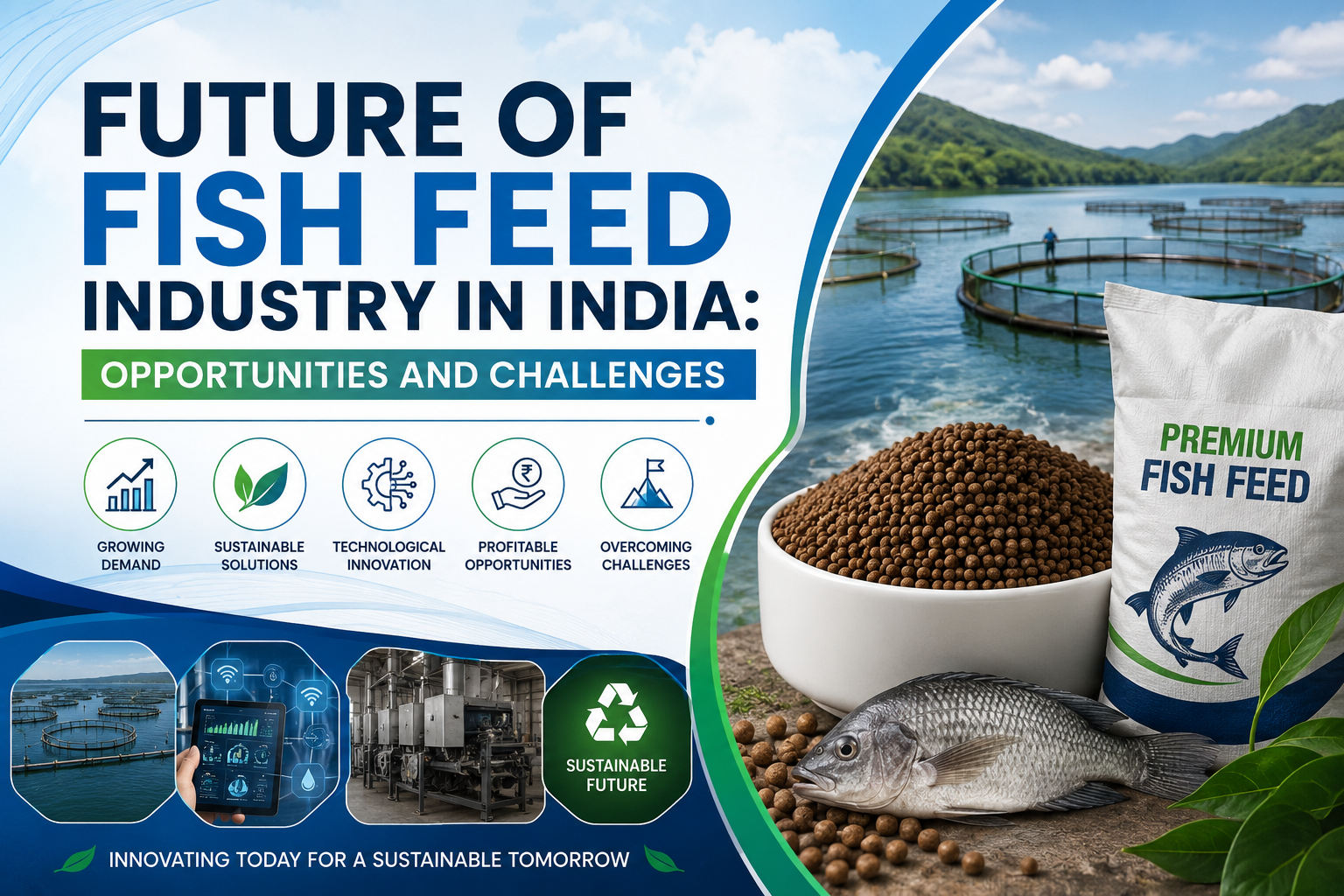
Future of Fish Feed Industry in India India has rapidly become one of the top-growing global markets for aquaculture, resulting in a significant increase in demand for quality fish feed products. With the development of fish farming throughout the country (especially in states such as Andhra Pradesh, West Bengal, Odisha, Uttar Pradesh and Bihar), the fish feed industry has also shown tremendous growth. The increase in food fish consumption; the growing understanding of the nutritional benefits fish provide; and the evolution of technology in aquaculture, will continue to shape the Indian fish feed industry well into 2026 and beyond.
Fish feed manufacturers will be instrumental in promoting sustainable fish production while enabling fish farmers with improved growth rates, greater feed conversion efficiencies, and improved overall profitability. However, the fish feed industry also faces major obstacles, ranging from high prices for raw materials; to concerns around environmental sustainability; to ongoing changes in supply and demand within the global marketplace.
This article offers an overview of the opportunities and challenges that will drive the future of the fish feed industry in India, as well as suggestions for how fish feed manufacturers and fish farmers can develop strategies to successfully navigate the next phase of growth for the industry.
Technological Innovations Transforming the Industry
The fish feed sector is beginning to adopt new formulations and methods of producing fish feeds due to an evolution in fish feed production. This evolution is mainly due to advances in technology which have been a large driving force behind growth. More and more feed manufacturers are employing automated processes and the use of more sophisticated equipment to increase the production of fish feeds while improving the overall quality and consistency of the products being produced.
Today’s feeds are now formulated according to scientific research, and the nutritional needs of different fish species, and further supported by a comprehensive analysis of the protein, amino acid, vitamin, and mineral requirements of specific fish. A few of the key benefits of using this scientific approach to fish feed formulation include:
- Increased fish growth rates
- Improved feed efficiency
- Enhanced fish immune system
- Reduced feed wastage
- Increased production efficiency
Using automated processes in the production of fish feeds will result in increased volume of product production while providing greater consistency of quality. Production of feed will also allow for consistent quality by having automated monitoring of the following during the production of fish feeds:
- Ingredient mixing
- Pelletizing
- Moisture content during the feed production process
- Quality checks during the production of fish feeds
- Packaging
Through these types of technologies being utilized for the production of fish feeds, the producers will see an increased ability of produce more product as well as increased reliability and therefore reduction in operating costs.
Two records of technology that will be key to transforming aquaculture feeding practices, especially in the very near future, are: Artificial Intelligence (AI) and Data Analytics. Manufacturers will be able to use Data to generate feeding formulas for increased feed performance and maximize the use of feed mixtures.
The anticipated advancements will include:
- Smart Plant and/or Vegetable-based feeding recipes
- Predictive Nutrition Algorithms
- Automated Quality Assurance of Products
- Accurate Feed Application
The advancement and implementation of these technologies will help accelerate the growth of aquaculture in India as well as all other fish feed manufacturers in the world.
Globally, there is much interest in Sustainable Fish Feed Solutions, as they are rapidly becoming popular in the fish feed manufacturing industry.
Contract Manufacturing Services
Contract manufacturing is becoming increasingly popular in the feed industry. Businesses looking to launch their own fish feed brands can partner with established manufacturers to reduce investment costs.
Benefits include:
- Faster market entry
- Lower capital investment
- Access to advanced manufacturing facilities
- Professional quality control
This segment is expected to grow significantly in the coming years.
Value-Added Feed Products
Farmers are seeking products that deliver measurable performance improvements. This creates opportunities for:
- Functional feeds
- Growth-promoting feeds
- Immunity-enhancing feeds
- Disease management feeds
- Species-specific nutrition products
Manufacturers that focus on innovation will gain a competitive advantage.
Challenges Facing the Fish Feed Industry
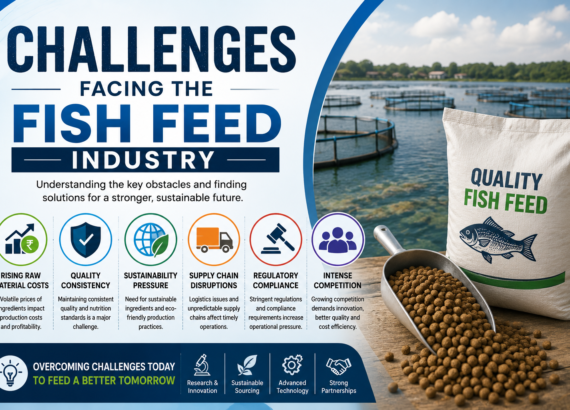
Despite strong growth potential, several challenges continue to affect the industry.
Rising Raw Material Costs
One of the biggest concerns for manufacturers is fluctuating raw material prices. Key ingredients such as soybean meal, fishmeal, vitamins, and oils often experience market volatility.
This can result in:
- Increased production costs
- Reduced profit margins
- Pricing pressure
- Supply chain uncertainty
Companies must develop efficient procurement strategies to manage these risks.
Quality Control and Standardization
As the market grows, maintaining consistent product quality becomes increasingly important.
Challenges include:
- Variable ingredient quality
- Counterfeit feed products
- Lack of standardization
- Quality assurance requirements
Manufacturers must invest in testing laboratories and quality management systems to maintain customer trust.
Environmental Regulations
Governments and regulatory bodies are introducing stricter environmental standards for feed production and aquaculture operations.
Companies may need to invest in:
- Waste management systems
- Sustainable sourcing programs
- Energy-efficient production technologies
- Environmental compliance initiatives
Although these investments increase costs, they also support long-term sustainability.
Digital Transformation in Aquaculture
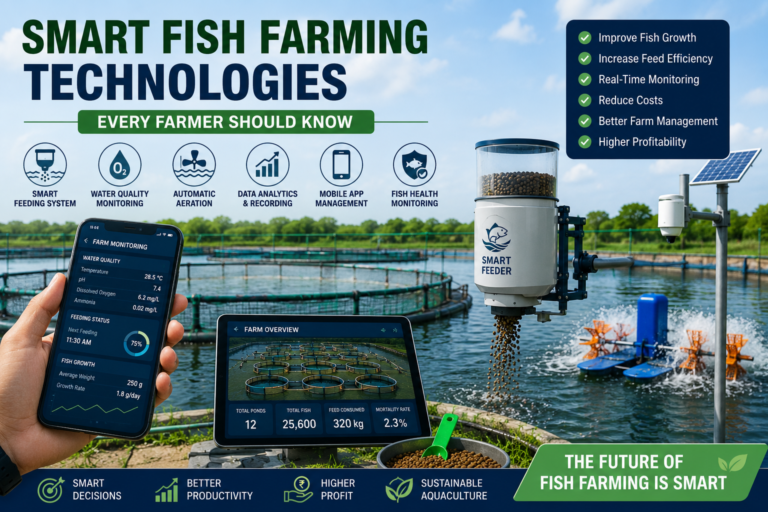
Digital advancements are transforming aquaculture farming practices throughout the country of India. More than ever, farmers are finding ways to implement new technologies in their farming operations in order to enhance both productivity and profits.
There are many developing digital technologies available for aquaculture farmers, including:
• Mobile applications for farm management
• Water quality measurement systems
• Automated feeding technologies
• Internet-connected technology for aquaculture
• Cloud-based analytics for farm monitoring
By implementing digital technology-based support services into their products, fish feed manufacturers will be in a position to form stronger relationships with their customers and create greater value.
The Role of Research & Development
The role of research and development is vital for the future of the fish feed industry in India.
Through research and development investments, manufacturers can:
• Formulate innovative products
• Increase the efficiency of their feed
• Decrease overall production costs
• Increase the health of fish raised using their feeds
• Develop more sustainable solutions
Manufacturers that continue to invest in innovation will be able to remain competitive in a rapidly changing market.
Future Trends for the Indian Fish Feed Industry
There is a bright future for the fish feed industry in India. Fish consumption will continue to grow, aquaculture production will continue to expand, technological advancements will continue to improve fish nutrition, and consumers will continue to demand fish.
Future trends likely to shape the fish feed industry in India include:
• Increased use of floating feed
• Growth of contract manufacturing services
• Growing use of alternative feed ingredients
• Development of artificial intelligence-driven feed
• Introduction of precision-based nutrition solutions
• Expansion of smart aquaculture to help improve farming operations
• Increased standards of quality
Manufacturers that focus on innovation, sustainability, and their customers will continue to thrive in the global fish feed market.