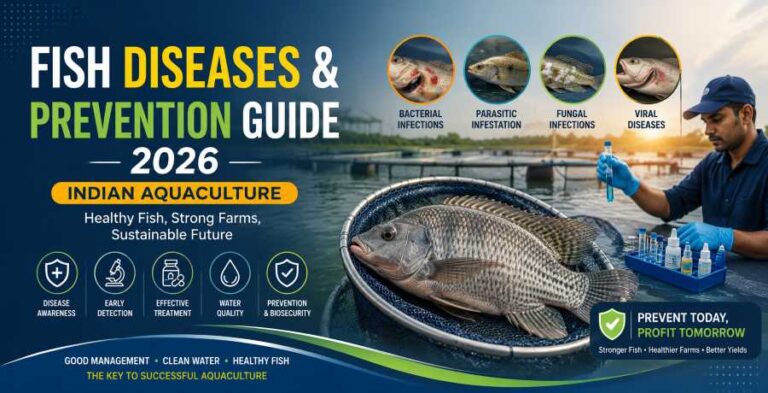

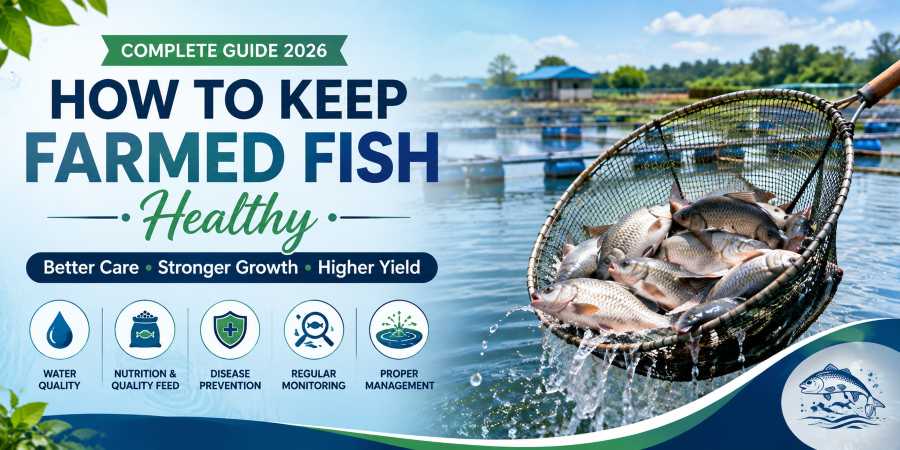
A healthy pond is a profitable pond. It sounds simple, but it’s easy to lose sight of in the day-to-day rush of feeding schedules, water checks, and harvest planning. Disease outbreaks remain one of the biggest threats to fish farms worldwide, capable of wiping out months of investment in a matter of days once conditions turn favorable for pathogens to spread. The good news is that fish health management has shifted decisively toward prevention rather than reaction — and most of the tools farmers need to keep fish healthy don’t require expensive equipment, just consistency and the right habits.
Here’s a practical, farmer-focused guide to keeping fish healthy, whether you’re raising Pangasius, Tilapia, IMC carp, or Trout.
Why Fish Health Should Be Every Farmer’s Top Priority
Beyond the obvious animal welfare argument, fish health is directly tied to farm profitability. Sick or stressed fish grow slower, convert feed less efficiently, and are far more likely to die before reaching market size, all of which hits a farmer’s bottom line hard. Disease events tend to happen because farmed fish live at much higher densities than they would in the wild, which increases contact between individuals and speeds up how quickly an infection can spread once it takes hold. Understanding this risk is the first step toward managing it proactively instead of scrambling to react after fish are already sick.
How to Recognize the Signs of Healthy (and Unhealthy) Fish
Spending a few minutes each day simply observing your fish is one of the most valuable habits a farmer can build. Healthy fish typically show active, coordinated swimming, a strong feeding response, clear eyes, intact fins, and consistent, species-appropriate coloration. Warning signs to watch for include lethargic or erratic swimming, fish gasping at the water’s surface, reduced or absent appetite, visible spots or discoloration on the skin, clamped or frayed fins, and fish isolating themselves from the rest of the group. None of these signs alone confirms a serious problem, but noticing them early — rather than after several fish have already died — makes a real difference in how effectively you can respond.
Practical Steps to Keep Your Fish Healthy
1. Start With Quality, Disease-Free Fingerlings
Healthy fish farming starts before the fish even reach your pond. Source fingerlings only from reliable hatcheries, and inspect them for deformities or visible injury before stocking. Whenever possible, quarantine newly acquired fish in a separate tank for two to four weeks before introducing them to your main pond, since this simple step alone can prevent a huge share of disease introductions.
2. Maintain Strict Water Quality
Water quality is the foundation everything else depends on. Dissolved oxygen, pH, temperature, and ammonia levels should be monitored consistently, with oxygen checks ideally done early morning when levels are typically at their lowest. Before stocking a new pond cycle, draining and drying the pond bottom and applying lime to disinfect it helps reduce pathogen load from the start, and keeping the pond free of dense vegetation limits places where parasites can hide.
3. Feed a Nutritionally Balanced, High-Quality Diet
Nutrition is one of the most powerful, and most controllable, factors in fish health. A well-formulated feed matched to your species and growth stage supports strong immune function, steady growth, and better feed conversion, while inconsistent or poor-quality feed can leave fish more vulnerable to disease and stunt growth. Floating feed offers a practical advantage here too: since it remains visible on the water’s surface, farmers can directly observe feeding activity and catch reduced appetite — often one of the earliest signs of stress or illness — far sooner than they could with sinking feed.
4. Manage Stocking Density Carefully
Overcrowding is one of the most common, and most avoidable, contributors to disease outbreaks. Higher densities mean more physical contact between fish and faster disease transmission once an infection appears. Stocking at an appropriate density for your species, pond size, and water quality capacity gives fish room to thrive and significantly reduces overall disease risk.
5. Practice Strong Biosecurity
Biosecurity is simply the set of habits that keep pathogens out of your farm in the first place. This includes using clean, tested water sources, disinfecting equipment between ponds, limiting unnecessary visitor access, and disposing of waste and any mortalities responsibly rather than leaving them in or near the pond. None of these measures are expensive, but together they meaningfully lower the odds of an outbreak ever starting.
6. Reduce Stress Wherever Possible
Stress weakens a fish’s immune system just as it does in most animals, making otherwise manageable pathogen exposure far more likely to turn into active disease. Handle fish gently and only when necessary, avoid sudden changes in water temperature or quality, and minimize unnecessary transport or disturbance, particularly during especially hot or cold periods when fish are already under more environmental stress.
7. Monitor Daily and Act Early
Consistency beats intensity when it comes to fish health monitoring. A few minutes of daily observation — checking feeding behavior, water clarity, and general fish activity — will catch far more problems early than an occasional, more thorough inspection. The earlier a problem is identified, the more treatment and management options remain available, and the smaller the eventual loss tends to be.
What to Do If You Notice a Problem
- Isolate visibly sick or dying fish as quickly as possible to limit potential spread to the rest of the pond.
- Avoid guessing at treatments or self-medicating without a proper diagnosis, since the wrong treatment can waste time and sometimes worsen the situation.
- Contact a local aquaculture extension officer, veterinarian, or fish health specialist promptly for an accurate assessment.
- Review recent changes — new fish, feed changes, weather shifts, or water quality readings — that may have contributed, so you can adjust practices going forward.
Common Health Threats in Indian Fish Farms
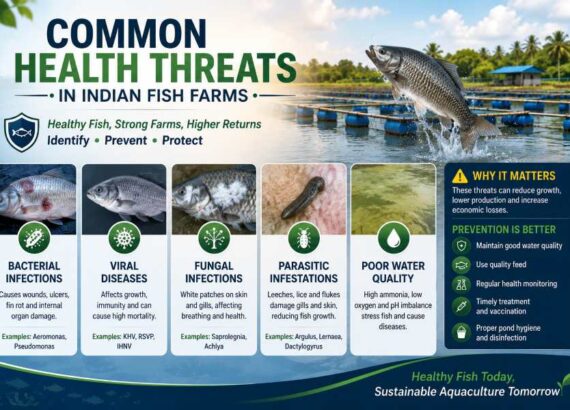
While specific risks vary by species and region, Indian fish farmers commonly encounter a mix of bacterial, fungal, and parasitic challenges, particularly during temperature swings or the monsoon season when water quality can shift quickly. Bacterial infections often show up as skin ulcers, fin rot, or reddened patches, while fungal issues typically appear as cotton-like white or grey growths on the skin or gills. Parasitic problems, such as external parasites causing fish to rub against pond surfaces or nets, tend to spike when stocking density is high and water exchange is limited. Recognizing that different seasons and conditions carry different risks helps farmers stay one step ahead — tightening water quality checks and monitoring more closely during the periods when these issues are most likely to emerge, rather than treating vigilance as a constant, unchanging routine.
The Deeper Link Between Nutrition and Disease Resistance
It’s worth emphasizing just how much of a fish’s disease resistance comes down to nutrition. A fish that’s consistently well-fed with a balanced, appropriately formulated diet builds stronger natural immunity and recovers more effectively from minor stressors that might otherwise develop into bigger problems. This is exactly why industry guidance increasingly treats good nutrition as a frontline defense strategy, alongside water quality and biosecurity, rather than treating disease prevention and feeding as two separate concerns. Cutting corners on feed quality to save costs in the short term often ends up costing farmers considerably more in treatment expenses and lost stock down the line.
Conclusion
Keeping fish healthy isn’t about a single product or a one-time fix — it’s the sum of consistent habits: quality fingerlings, clean water, balanced nutrition, sensible stocking density, solid biosecurity, and daily observation. None of these require large investments, but together they dramatically reduce the risk of the disease outbreaks that can undo months of hard work in a matter of days. For Indian fish farmers raising Pangasius, Tilapia, IMC, or Trout, building these habits into your regular routine is one of the most reliable ways to protect both your fish and your farm’s profitability for the long run.
Frequently Asked Questions (FAQs)
Q1. What are the first signs that fish in a pond are unhealthy?
Common early warning signs include reduced appetite, lethargic or erratic swimming, gasping at the water surface, discoloration or visible spots on the skin, and clamped or damaged fins. Catching these signs early and acting quickly gives farmers a much better chance of preventing a small issue from becoming a full disease outbreak.
Q2. How often should pond water quality be tested?
Ideally, dissolved oxygen, pH, and temperature should be checked daily, especially early morning when oxygen levels are typically lowest. Ammonia and other water quality parameters can be tested weekly under normal conditions, with more frequent testing during periods of high stocking density, heavy feeding, or unusual weather.
Q3. How does feed quality affect fish health?
Feed is one of the biggest levers a farmer has over fish health. A nutritionally balanced, high-quality feed supports strong immune function and steady growth, while poor-quality or inconsistent feed can leave fish more vulnerable to disease and result in slower, uneven growth. Floating feed also lets farmers visually monitor how actively fish are eating, making it easier to spot early signs of stress or illness.
Q4. Why is stocking density important for fish health?
Overcrowding increases physical contact between fish, raises stress levels, and speeds up the spread of disease if one fish becomes infected. Maintaining an appropriate stocking density for your species and pond size gives fish enough space and oxygen to stay healthy and reduces the risk of a localized problem turning into a farm-wide outbreak.
Q5. Should I use antibiotics to keep my fish healthy?
No, antibiotics should be treated as a last resort rather than a routine preventive tool, and their use has been declining industry-wide in favor of prevention-first approaches like good nutrition, water quality management, and biosecurity. Antibiotics should only be used under professional guidance when a specific bacterial infection has been identified.
Q6. What should I do if I notice sick fish in my pond?
Isolate any visibly sick or dying fish as quickly as possible to limit potential spread, and avoid guessing at treatments without a proper diagnosis. Consulting a local aquaculture extension officer, veterinarian, or fish health specialist promptly gives you the best chance of correctly identifying the cause and preventing further losses.
Thanks for reading
……………………………………………………………………………………………………………………………………………….
Click here to read this: How to Choose the Right Floating Fish Feed
Visit our product page to see all products: Click here to visit
Need help choosing feed? Use our Free Feed Calculator
Visit: Dust Fish Feed Products
Visit: High Protein Floating Fish Feed