
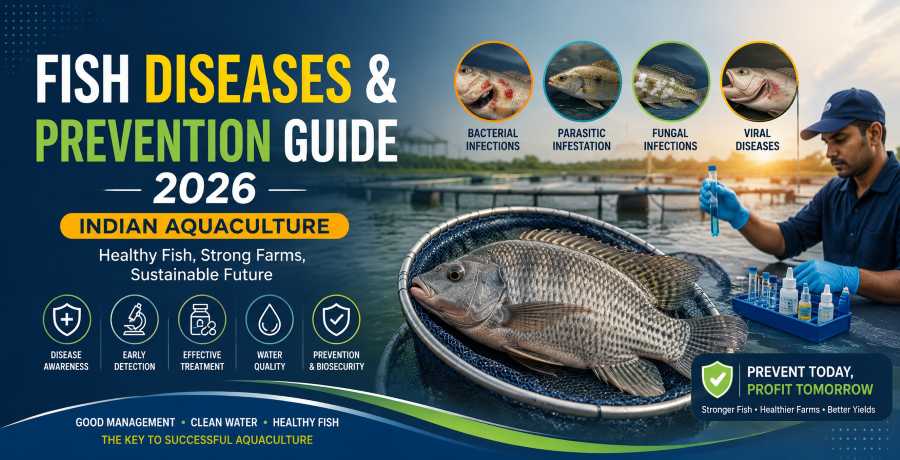
Disease is known to be the thing that prevents sustainable fish farming from working well. Every year the world loses about six billion dollars because of this. On fish farms, disease-related costs are about 10 to 15 per cent of total spending. In India, fish diseases usually happen because of things that’re already in the pond. These are bacteria, fungi and parasites. These things are there all the time. Only cause big problems when the fish are already in bad shape because of bad water, too many fish or not enough food.
Knowing what these diseases look like and how to stop them before they happen is a useful skill for any fish farmer. Here is a simple list of the common types of diseases in Indian fish farming.
Why Fish Diseases Are a Problem in Fish Farming
Most times, disease outbreaks happen in a pattern. Something happens that makes the fish weak, like too many fish in the water, changes in temperature or not enough food. When the fish are weak, the germs that are already in the pond can take over. This is why keeping fish healthy is the same as taking care of them. Keeping the water clean, giving food and not putting too many fish in the pond are the first steps in stopping diseases.
Bacterial Diseases: The Most Common Problem
Bacterial diseases are often reported in Indian fish farming. Germs like Aeromonas hydrophila, Edwardsiella and Flavobacterium are the ones. They can cause things like skin disease, fin rot and gill disease. Signs include bleeding spots on the skin, open sores, torn fins, being slow, and not eating well. These bacteria are usually in the water. Only cause real problems when the fish are already weak or hurt. That is why keeping the water clean and not overcrowding the pond helps prevent problems from starting.
Fungal Diseases: Happen After Other Problems
Fungi, mainly types like Saprolegnia, Achlya and Aphanomyces, are the cause of a condition called saprolegniasis. It looks like grey cotton on the skin or fins. A big disease in India and South Asia is Epizootic Ulcerative Syndrome (EUS). It causes sores on the fish and has caused a lot of financial loss. EUS happens more when the weather gets cooler, and the water is not good. Since the fungi come after problems, keeping the fish from getting hurt and the environment from being stressful is the best way to stop it.
Parasitic Infections: Easy to Control
Parasites like Argulus, also called fish lice, and other tiny creatures live on the fish. They can cause sores, bleeding and other problems if not taken care of. Look for fish rubbing on the pond walls, things on the skin or strange behaviour. These are the signs of a parasite problem. Cleaning the pond well between each time you add fish, keeping fish away for a while, and making sure the pond is clean helps stop parasites from coming in.
Viral Diseases: Not Common But Important
Viral diseases are not as often reported in Indian fish farming as bacterial or parasitic diseases. They are still something to watch out for. As farming gets more intense and fish move more, the risk goes up. Once a virus is in the pond, it is hard to treat. That is why keeping fish and equipment away from the pond is important to stop the virus from coming in.
Seasonal Disease Patterns to Know
Diseases in fish farming change with the seasons. Fungal diseases like EUS tend to get worse after the weather gets cooler or after the rains change the water. Bacterial problems often happen when it gets very hot or when the water gets bad. Parasites build up slowly over time, especially when there are many fish and the pond gets dirty. Knowing when each disease is likely helps farmers watch more closely and check the water more often during those times.
Species-Specific Facts
The diseases listed above are common in fish farming, but some fish get sick more than others. Indian Major Carps like Rohu, Catla and Mrigal are often reported with EUS and fish lice in older ponds. Pangasius and Tilapia, which are often farmed in groups, get sick more quickly when the water is not good. Trout, which live in water, face different problems, like low oxygen and temperature changes. These differences don’t change the ways to stop disease, but they are important to think about when checking for problems.
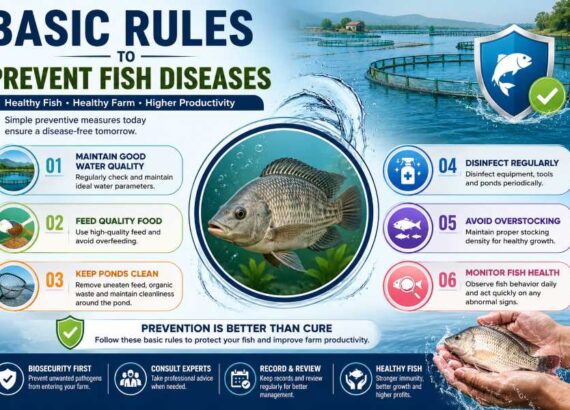
Basic Rules to Prevent Fish Diseases
- Keep the water clean by checking things like oxygen, pH, temperature and ammonia.
- Use rules to stop diseases from coming in, like keeping new fish separate and cleaning tools between ponds.
- Feed fish so their bodies can fight off sickness.
- Don’t put many fish in the pond because this causes stress and disease spreads faster.
- Check the fish every day. Spotting problems early gives time to fix them before they get worse.
When to Get Help
Most of the time, prevention works. Sometimes it is best to get professional help. If many fish die quickly, if many fish show the problem or if the signs do not fit normal stress, it is best to call an expert. Getting the right answer is important. Guessing at treatments can waste time. Lead to more problems.
Conclusion
Diseases are a problem for fish farming in India, but most of the time they come from things that can be fixed. Knowing what each disease looks like and seeing the early signs helps farmers stop problems before they get bad. With checks and knowing when to ask for help, the best way to protect fish is to prevent problems from happening.
Frequently Asked Questions (FAQs)
Q1. What are the common fish diseases in Indian fish farming?
Bacterial diseases like Aeromonas and fin rot. Parasitic diseases like fish lice are the most common. Fungal diseases like EUS are also a problem, especially after temperature drops. Viral diseases are less common.
Q2. What is Epizootic Ulcerative Syndrome (EUS) in fish?
EUS is a disease that causes sores on the skin. It happens more when the weather cools down, and the water quality is not good. It can spread quickly if the right conditions are there.
Q3. How can I tell if my fish have an infection?
Signs include spots, sores, torn fins, being slow and not eating. These often happen when the fish are already stressed by the water or too many fish.
Q4. Are fish parasites dangerous? How do I spot them?
Parasites like fish lice can hurt the fish. Cause sores. Watch for fish rubbing on pond walls or things, sores on the skin or strange behaviour.
Q5. Can fish diseases be prevented without using chemicals or antibiotics?
Most diseases can be prevented with water quality, the right number of fish, good food and strict rules to stop disease from coming in. Chemicals should only be used if a professional says to.
Q6. When should I call a fish health expert instead of treating the problem myself?
If many fish die quickly, if many fish show the problem, or if the signs do not fit normal stress, it is best to call an expert. Using the treatment can make things worse.
Thanks for reading
……………………………………………………………………………………………………………………………………………….
Click here to read this: How to Choose the Right Floating Fish Feed
Visit our product page to see all products: Click here to visit
Need help choosing feed? Use our Free Feed Calculator
Visit: Dust Fish Feed Products