
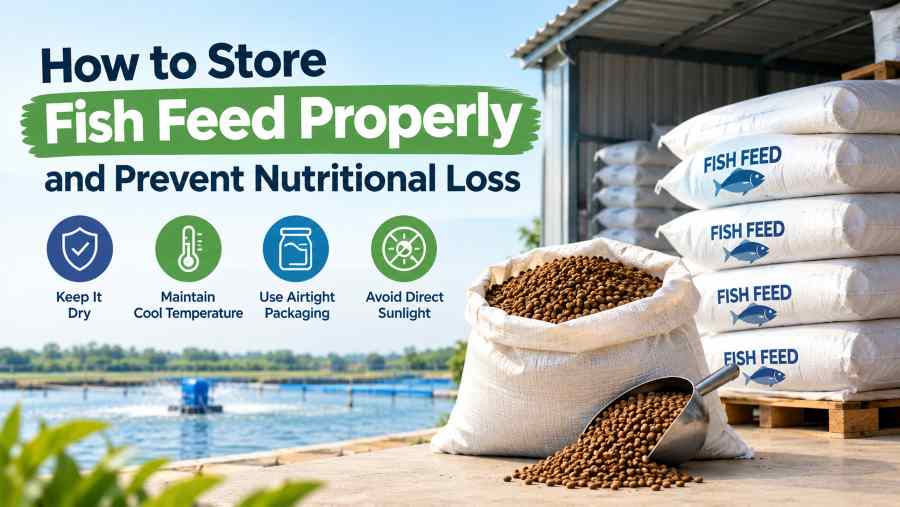
Storing fish feed correctly is a part of running a successful fish farm. Farmers buy good fish feed so that the fish get the protein, fats, vitamins, minerals and other nutrients needed for growth. Even the best fish feed can go bad if it gets wet too hot, exposed to sunlight visited by pests or kept in a place. When fish feed loses nutrients the quality drops more of it is. The whole fish farm runs less efficiently.
Whether you run a fish farm or a big commercial operation knowing how to store fish feed properly can protect your money. Floating fish feed, sinking pellets and other special aquafeeds need handling to keep their quality for the time they are meant to last. Good storage also cuts the chance of mould, contamination and damage to fish feed pellets.
If you buy fish feed from a trusted fish feed maker in India keeping the quality after delivery is as important as picking the feed. By using storage tips fish farm people can keep fish feed quality cut useless losses and keep feeding fish the same every time.
Why Proper Fish Feed Storage Is Important for Nutritional Quality
Fish feed holds key nutrients that help fish grow develop and stay healthy. Protein makes body parts grow fats give energy and vitamins and minerals help body jobs. These nutrients can change when fish feed sits long or in bad conditions. Things like temperature, humidity, oxygen and light can make fish feed worse over time.
Moisture is a problem when storing fish feed. When fish feed takes in moisture from the air the pellets can soften, lose shape or grow mould. Damp air can also let germs grow and raise the chance of contamination. In places farmers should keep storage rooms dry and stop rain or cleaning water from touching fish feed bags.
Much heat can also lower the quality of fish feed. Higher heat speeds up chemical changes that hurt some vitamins and fats. When fats oxidise they can smell bad. Turn rancid making fish feed not good to use. Direct sunlight can raise the temperature of fish feed bags especially if they sit near windows or open spots.
Pests are another worry. Bugs mice and birds can break packaging eat fish feed and bring in germs. A storage area that is not kept clean can lead to both loss and extra money loss.
Good storage keeps the quality of fish feed pellets too. When pellets stay dry and whole they are easier to handle move and give to fish. Bad or ruined pellets can make waste and make feeding harder.
It is also key to know that nutrient loss can happen when fish feed looks fine. Fish feed that looks normal might still lose some vitamins or fats after storage. So farmers should not rely on looks. Follow the maker’s storage rules check the date made and the expiry date and buy as much as can be used before the deadline to keep fish feed quality.
Best Practices for Storing Fish Feed and Preventing Nutritional Loss
The step to good fish feed storage is picking a right spot. Keep fish feed in a dry and well-ventilated room that is safe from rain too much heat, direct light and pests. The spot should stay away from standing water leaking roofs damp walls and machines that get hot. A clean room cuts the chance of germs and fish feed loss.
Another big tip is to keep fish feed bags off the floor. Bags on floors can soak up wetness especially in damp weather. Use pallets or raised platforms to lift the bags and let air move around them. Keep fish feed far from walls and leave enough room to look at the bags and clean around them.
Check temperature and humidity often. Even though the best level can change with the fish feed type and the maker’s advice, a cool and dry space is usually best for fish feed. Do not store bags outside in places or, in rooms that get hot. In weather and monsoon look at the storage room more often for leaks, condensation and wet build up.
During weather and monsoon check the storage room more often for leaks, condensation and wet build up.
When a feed bag is opened the feed bag must be resealed properly after each use. The opening should be kept closed or the fish feed should be transferred into a clean dry food‑grade container that has a secure lid only if this follows the manufacturer’s instructions. Clean dry scoops must always be used when handling fish feed. Fresh fish feed should never be mixed with fish feed that may have become contaminated or deteriorated.
Stock rotation is equally important. Apply the First In, First Out (FIFO) method, which means using fish feed before newer fish feed only if the older fish feed is still within its recommended shelf life and in good condition. Recording purchase dates, batch numbers and expiry dates clearly helps manage inventory and avoids keeping fish feed for long periods.
Farmers should avoid buying quantities of fish feed just to lower the cost per bag. Buying in bulk is practical when the available storage facilities are suitable and the fish feed can be used within its recommended shelf life. Smaller frequent purchases can help keep fish feed fresh when storage capacity is limited.
Regular inspection should be part of every farm’s feeding routine. Look for fish feed bags, insects, unusual odours, discoloration, clumping, visible mould or signs of water exposure. If fish feed looks mouldy smells rancid. Has been contaminated, do not feed it to fish. Drying spoiled fish feed does not reliably make it safe because some moulds can produce toxins that remain after moisture is removed.
By following these precautions farmers can protect the quality of floating fish feed and other aquaculture feed products while cutting wastage.
How Proper Fish Feed Storage Improves Aquaculture Efficiency
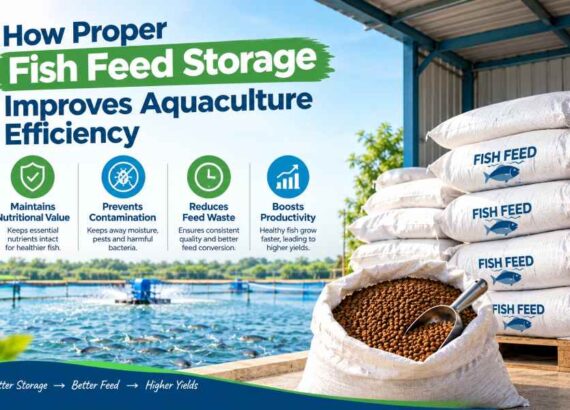
Proper fish feed storage helps feed management by preserving the nutrition and physical characteristics of fish feed until it is used. When fish feed is stored correctly farmers can reduce the risk of deterioration and use the nutrients in the fish feed more effectively.
One major benefit is cost management. Fish feed is an operating expense in commercial fish farming. When fish feed bags become wet infested or contaminated the affected fish feed may need to be discarded, which increases production costs. Preventing storage‑related damage reduces waste. Lets farmers manage their fish feed inventory more efficiently.
Proper fish feed storage also supports feeding practices. Floating fish feed pellets that keep their intended characteristics are easier to distribute and monitor during feeding. Farmers can observe feeding behaviour. Make informed decisions about feeding quantities even though fish growth also depends on species, water quality, stocking density, temperature and overall farm management.
Maintaining fish feed quality is especially important for farms raising species such as tilapia, pangasius and Indian major carps, including Rohu, Catla and Mrigal. These species have nutritional requirements so choosing the right fish feed formulation is essential. Correct fish feed storage preserves the quality of the selected product. Does not replace the need for species‑specific nutrition and suitable feeding schedules.
Choosing a fish feed supplier is another part of a strong feed‑management strategy. Farmers should look for fish feed products that have packaging information, batch identification, manufacturing and expiry dates and storage instructions. A reputable fish feed company should also give guidance on the handling and use of its fish feed.
Happy Feeds recognises the importance of quality aquaculture nutrition for fish farming operations. By combining the fish feed selection with responsible storage practices farmers can protect their fish feed investment and keep a more organized feeding system.
Ultimately fish feed quality depends on both manufacturing standards and the conditions in which the fish feed is stored after delivery. Even premium fish feed pellets need handling to keep their quality. Keeping fish feed dry avoiding heat protecting it from pests rotating stock and following manufacturer recommendations are practical steps that every aquaculture farmer can adopt.
Conclusion
Proper fish feed storage is essential for preventing loss cutting fish feed wastage and keeping aquaculture feed quality. Moisture, excessive heat, direct sunlight, pests and long storage can damage the nutrition and physical characteristics of fish feed pellets. By storing fish feed in a cool, dry and well‑ventilated area keeping fish feed bags elevated, resealing opened packages and following the FIFO method farmers can preserve fish feed quality.
Choosing quality fish feed products from a fish feed manufacturer, in India is an important first step but correct fish feed storage is needed to protect that quality after purchase. Regular inspections and following the manufacturer’s recommended shelf life can further reduce the risk of fish feed deterioration.
To run an aquaculture operation, quality fish feed and proper storage practices must work together. I appreciate that Happy Feeds encourages feed management so that farmers can keep product quality cut avoidable losses and support efficient fish farming operations.
Frequently Asked Questions (FAQs)
- What is the best way to store fish feed?
Store fish feed in a cool, dry and well‑ventilated area that is free from direct sunlight, moisture and pests. Keep fish feed bags on raised pallets. Reseal each opened bag properly after every use.
- How does moisture affect fish feed quality?
Moisture can soften pellets cause clumping encourage mould growth and raise the risk of contamination. Fish feed can also contribute to the deterioration of fish feed quality. Always keep fish feed protected from rain, leaks and damp storage conditions.
- Can fish feed lose its value during storage?
Yes. Prolonged storage and exposure, to heat, moisture, oxygen and light can affect certain vitamins, fats and other nutritional components of fish feed. Following the manufacturers storage instructions and the recommended shelf life helps minimise these risks.
- How long can fish feed be stored?
The recommended storage period depends on the feed formulation, packaging, manufacturing date and storage conditions of fish feed. Always check the manufacturers instructions and the expiry date. Avoid storing fish feed than recommended, especially in hot or humid environments.
- How can farmers identify fish feed?
Warning signs include mould, unusual or rancid smells, discolouration, clumping, insect infestation and moisture‑damaged packaging of fish feed. Do not feed visibly spoiled or contaminated fish feed to fish. Contact the supplier if you suspect a product‑quality problem.
Thanks for reading
……………………………………………………………………………………………………………………………………………….
Click here to read this: How to Choose the Right Floating Fish Feed
Visit our product page to see all products: Click here to visit
Need help choosing feed? Use our Free Feed Calculator
Visit: Dust Fish Feed Products