
Fish farming is now a part of India’s aquaculture business. It gives food, jobs and helps farmers grow their business. But fish farming works only when a few things are right. Water quality, pond care how many fish are put in. Especially what they eat are all important. Picking the fish feed can change how fast fish grow how healthy they stay how well they use the feed and how productive the farm becomes. That is why knowing the ingredients in fish feed matters for farmers who want results in their fish farms.
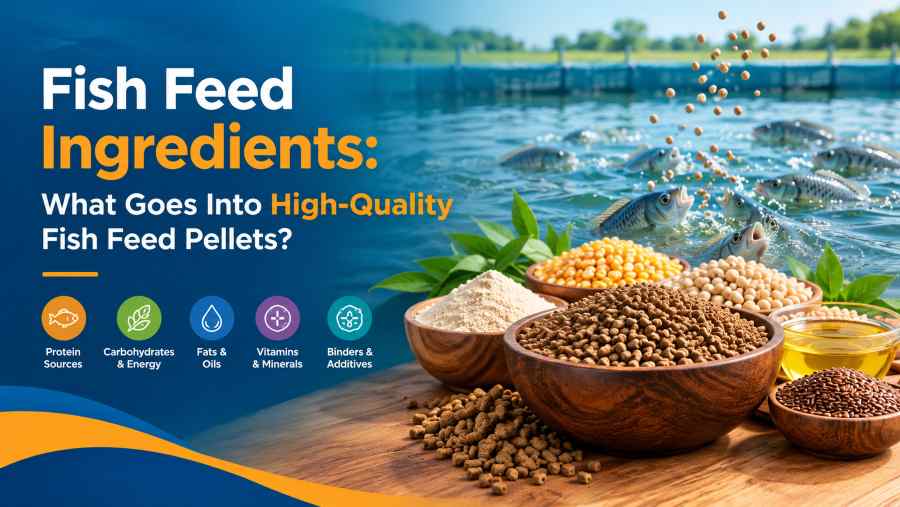
Good fish feed pellets are made with a mix of materials that are chosen carefully. These materials give the nutrients that different fish need. They can be protein, carbs, fats, vitamins, minerals, amino acids and special additives. Every ingredient has a job. It may help muscle growth give energy boost body functions or make the pellets stronger.
Not every fish feed pellet has the same nutrition. The quality of the materials how well fish can digest them the way the feed is made and what the fish species need all affect how good the final product is. Farmers who raise Rohu, Catla, Mrigal, Tilapia, Pangasius and other popular fish must choose feed that’s nutritionally balanced. That step is key for an profitable fish farm.
In this guide we look at the ingredients that go into good fish feed pellets. We explain why they are good for fish and show farmers how to judge fish feed quality when buying for their farms.
Protein Sources: The Foundation of High-Quality Fish Feed Pellets
Protein is an important part of fish feed. It gives the amino acids that fish need for muscle growth fixing tissues making enzymes and overall growth. Fish must have the mix of essential amino acids to keep their bodies working and to grow well. That is why choosing the protein sources is a basic part of making good fish feed pellets.
Fishmeal is a protein ingredient used in fish feed. It gives protein, essential amino acids and is easy for fish to digest if it comes from good raw materials. It also adds minerals and other nutrients to the mix.. Fishmeal is not the only good protein for fish. Depending on the fish species how the feed is made what is available and how much it costs makers of feed may mix animal and plant proteins to get the nutrition mix.
Soybean meal is also an ingredient in fish feed manufacturing. It gives plant protein. Can be used in diets for many freshwater fish. Other plant proteins that can be used are groundnut cake, sunflower meal and some pulse ingredients. Whether they work well depends on their nutrition how easy they are to digest how well they are processed and if they contain antinutrients that could reduce nutrient use. These ingredients are used in fish feed.
In India the best protein mix depends on the fish species and how old the fish are. Fry and fingerlings need nutrition than bigger growing fish. Tilapia also need food than Pangasius or major Indian carps like Rohu, Catla and Mrigal. So a trustworthy fish feed maker in India should make feed that matches the fish’s needs not just use one protein source. Farmers need to choose the fish feed.
Protein quality is as important as how much protein’s in the feed. A feed with lots of protein may not work well if the protein is hard to digest or does not give the amino acids. Good formulations give protein that fish can digest and give the amounts of essential amino acids. This helps fish use the nutrients. Good fish feed should have digestible protein.
Fish farmers should read the nutrition facts on the feed package. Choose products that are made for the fish species and the age of the fish. This helps the fish grow consistently and use the feed better.
Energy Sources, Healthy Fats, Vitamins and Essential Minerals
Protein helps fish build tissue. Fish also need energy to do daily body work keep normal functions and use nutrients well. Carbs and fats are energy sources, in fish feed. A good mix of these nutrients lets fish grow while letting the protein be used for building tissue of being eaten for energy. Fish feed should balance carbs and fats.
Common carbohydrate-rich ingredients include wheat flour, maize, rice-derived ingredients and other suitable cereal products. These carbohydrate-rich ingredients give fish feed pellets energy. Help give the pellets the right texture and binding. Proper processing is important because the digestibility of carbohydrate ingredients changes with their source and how they are treated. Manufacturers must also control the amount of carbohydrates to match the needs and digestive capacity of the target fish species.
Fats and oils are important parts of high-quality fish feed pellets. They provide energy and essential fatty acids that fish need for normal growth, cell function and other body processes. Depending on the formula fish feed may use fish oil or chosen vegetable oils. The oil choice depends on the fish species’ fatty acid needs the availability of ingredients and the overall balance of the feed.
Adding much fat does not automatically make the feed better. The formula must keep a balance between protein, fat and other nutrients. Oils also need handling and protection against oxidation which can cause rancidity and lower feed quality. Fresh raw materials, antioxidants when needed and good storage help keep the finished product nutritious.
Vitamins and minerals are needed in amounts but they play vital roles in fish health. Vitamins help with metabolism, immune function, growth and normal body development. Minerals such as calcium, phosphorus, zinc, iron and magnesium support bone growth, enzyme work and mineral balance.
Commercial fish feed usually adds vitamin and mineral premixes to give a supply of these essential micronutrients. The right levels depend on the fish species the growth stage, the ingredients in the diet and the farm conditions. A lack of or many micronutrients can hurt fish growth and health.
Amino acids may also be added when needed to improve the balance of the formula. Because different protein sources have amino acid profiles careful formulation can meet the fish’s needs. The goal is to make a feed that gives all essential nutrients in the right proportions not just to raise the amount of one ingredient.
For farmers knowing these parts shows why a balanced fish feed formula is often better than choosing feed that only claims a nutrient. A good mix of protein, energy, fats, vitamins and minerals can help fish grow healthy and make aquaculture work efficiently.
Pellet Quality, Binding Ingredients and Sustainable Fish Feed Manufacturing
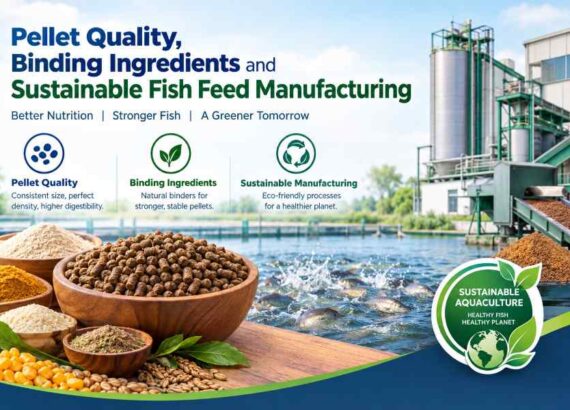
The mix of fish feed matters but the physical quality of the pellets also affects feeding. Even a balanced formula can fail if the pellets break apart quickly hold much moisture or are not suitable for the fish’s feeding style.
High-quality fish feed pellets are made with the processing to give a good shape, size, texture and consistency. Depending on the product the feed may be made as floating or sinking pellets. Floating fish feed lets farmers watch feeding at the surface making it easier to see how much fish eat and to spot changes, in appetite. Sinking feed may work better for species or systems where fish eat below the surface.
Pellet size must match the fish’s mouth size and growth stage. Small fish may have trouble eating pellets while very small pellets can be hard for larger fish to handle. Choosing the size helps fish get the nutrients and reduces wasted feed.
Binding ingredients keep the pellets together. Give them strength. Good starch-rich ingredients and other approved binders help hold the feed during processing and handling. Good pellet stability is crucial because if the pellets fall apart nutrients can wash away before the fish eat them.
Manufacturing quality control is a part of good fish feed. Raw materials must be checked for consistency, freshness, contamination risks and suitability. Ingredients that have mold, rancidity or poor storage can hurt the quality and safety of the feed. Good manufacturing practices need raw material handling, controlled processing and checks on the final product.
Sustainability is becoming more and more important in the aquaculture feed industry. As the need for fish feed increases manufacturers are looking for protein sources and better ingredient mixes to ease the strain on scarce resources. Good plant proteins, ingredients that are sourced responsibly and other options that have been carefully checked can help make fish feed more varied. Still each new ingredient must be checked for how fish can digest it whether it has the right balance of amino acids if its nutrition is steady and if it is safe before it is used in commercial diets.
For fish farmers picking a fish feed supplier in India means looking past the price of the product. Key points to think about are the details, how well the feed fits the fish species the quality of the pellets how consistently the feed is made the packaging, how the feed should be stored and how reliable the supplier is.
Happy Feeds knows how important fish nutrition is in today’s aquaculture. Farmers can look at fish feed products on the company’s website and choose options that match their farming needs. Using the fish feed together with good pond management, frequent watching and responsible feeding habits can help farmers build healthier fish stocks and run production more efficiently.
In the end the best fish feed pellets are the ones that give the nutrition keep good physical quality and meet the needs of the fish being raised. A well‑made diet, backed by manufacturing and good farm management is a strong base for productive and sustainable fish farming.
Conclusion
Understanding fish feed ingredients helps farmers make choices when picking feed for their aquaculture work. High‑quality fish feed pellets mix protein sources, energy‑rich carbohydrates, healthy fats, essential vitamins, minerals and other parts that give balanced nutrition. The quality how well fish can digest them and the amounts of these parts decide how well fish use the feed for growth and everyday body functions.
Besides the nutrition mix, pellet size, how the pellets stay in water the quality of processing and safe storage also impact how well fish eat. Farmers who raise Rohu, Catla, Mrigal, Tilapia, Pangasius and other farmed fish should pick feed that matches each species’ nutrition needs and its growth phase.
Working with a fish feed manufacturer in India can give farmers access to well‑made products that fit their farming needs. By pairing quality fish feed with feeding times good water care and steady watching farmers can use feed better and help run aquaculture more efficiently.
To learn more about fish feed solutions visit Happy Feeds at https://www.happyfeeds.co.in/. Look at options that suit your fish farming needs.
Frequently Asked Questions (FAQs)
- What are the main ingredients used in high‑quality fish feed pellets?
High‑quality fish feed pellets usually have protein sources like fishmeal and soybean meal carbohydrate sources such as wheat and maize, fats and oils, vitamins, minerals and other parts that give nutrition. The exact mix depends on the fish species and the growth stage of the fish.
- Why is protein important in fish feed?
Protein gives the amino acids that fish need for muscle building, tissue repair and normal growth. The quality and how well fish can digest protein are important because fish require the balance of essential amino acids to use nutrients well.
- Which ingredients are commonly used in fish feed manufacturing, in India?
Common ingredients are fishmeal, soybean meal, groundnut cake, cereal‑based parts, suitable oils, vitamin premixes and mineral supplements. Manufacturers. Mix ingredients based on nutrition needs ingredient quality, availability and production factors.
- How can farmers identify high‑quality fish feed pellets?
Farmers should look at the product label, nutrition details species that the feed is meant for, pellet size, manufacturing and expiry dates packaging condition and storage instructions. Consistent pellet quality, nutrition and a trustworthy supplier are also key points.
- How do fish feed ingredients affect fish growth and farm productivity?
Balanced fish feed ingredients provide the protein, energy, essential fatty acids, vitamins and minerals that fish need for growth. Good formulations can help fish use nutrients and keep growth steady while proper feeding habits reduce waste and keep farm work more efficient.
Thanks for reading
……………………………………………………………………………………………………………………………………………….
Click here to read this: How to Choose the Right Floating Fish Feed
Visit our product page to see all products: Click here to visit
Need help choosing feed? Use our Free Feed Calculator
Visit: Dust Fish Feed Products