
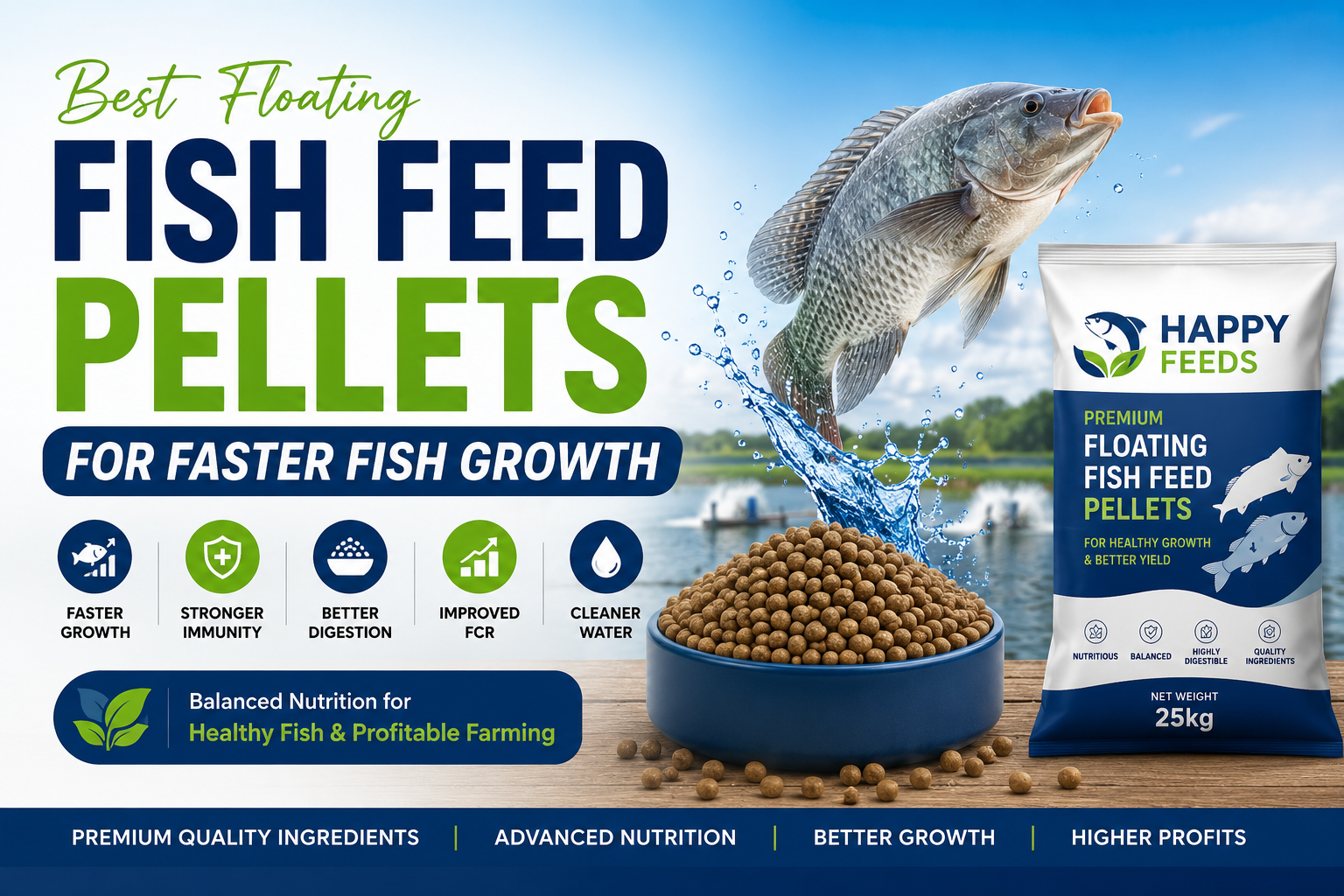
Best Floating Fish Feed Pellets are becoming increasingly important in commercial aquaculture farming because proper fish nutrition directly affects fish growth, feed conversion ratio (FCR), immunity, and farm profitability. Modern fish farmers now prefer premium floating fish feed because it helps maintain cleaner water quality and reduces feed wastage. Moreover, floating fish feed pellets allow farmers to monitor feeding behavior more effectively. Consequently, fish farming operations become more productive and sustainable.
Aquafeed manufacturers in India are developing and producing sophisticated aquafeed products that are particularly well suited to tilapia, pangasius, carp, and IMC production. Well-nourished fish also enjoy higher growth rates and digest food more efficiently; hence, it is essential to choose the right company to produce fish feed to maximize the potential of commercial aquaculture.
Commercial aquaculture is also reliant on proper feeding schedules and appropriately balanced nutritional management (i.e., proper feeding intervals and feed formulation). High-quality floating fish feed pellets also enhance the ability of fish to absorb nutrients and leads to healthier fish, which then leads to a higher rate of weight gain. Advanced feed technology has enabled Indian feed manufacturers to produce high-quality fish feed that has increased nutritional value and water stability.
Table of Contents
- What are Floating Fish Feed Pellets?
- Importance of Floating Fish Feed in Aquaculture
- Benefits of Best Floating Fish Feed Pellets
- Types of Floating Fish Feed
- How Floating Fish Feed Improves Fish Growth
- Best Time to Feed Fish
- How to Feed Fish Properly
- Fish Feeding Chart
- Choosing Top Fish Feed Manufacturers in India
- Common Fish Feeding Mistakes
- Conclusion
- FAQs
What are Floating Fish Feed Pellets?
Aquafeeds designed for fish farming, referred to as floating fish feed pellets, are designed so that they stay on the surface of the water longer before sinking. As a result, fish farmers can observe how well the fish are eating and avoid wasting any feed that the fish do not consume before sinking to the bottom.
Most modern floating fish feed contains protein, amino acids, vitamins, minerals, carbohydrate, or fat that is essential for growing fish. Furthermore, the floating pellets of fish feed are designed to help fish digest food and have a stronger immune system. Therefore, fish tend to be more active and healthy during the entire production cycle.
Many feed manufacturing companies will now manufacture floating fish feed in a variety of sizes of pellets to meet the needs of different fish species and growth stages. Additionally, different manufacturers will formulate their feed based upon the nutritional requirements of the fish and the production conditions.
Importance of Floating Fish Feed in Aquaculture
Modern commercial aquaculture uses floating fish food as an important factor in aquaculture farming. Nutrition has a direct effect on fish development, health, survivability, and ultimately will determine the quality of the finished product produced by the farmer.
In addition, floating fish food (floating pellets) helps to maintain the pond water quality because the remaining uneaten food can be seen at the surface of the water. By using this visual guidance, a farmer can easily see when to remove uneaten food to avoid polluting the water.
The use of nutritious fish feed has also been shown to improve the feed conversion ratio, so by feeding nutritious fish feed, fish farmers can reduce their costs of production and increase production amounts. Additionally, by feeding a properly balanced aquafeed to fish, fish are able to more effectively absorb nutrients from their food.
As of now, several feed manufacturers operating in India are producing advanced floating fish feed products through the use of extrusion technology. Moreover, premium floating fish feed products provide better stability in the water and retaining nutrients.
Benefits of Best Floating Fish Feed Pellets
Faster Fish Growth
Balanced fish feed supports rapid fish development and muscle growth. Moreover, proteins and amino acids help fish gain weight naturally. Consequently, fish reach market size faster.
Better Feed Conversion Ratio
Premium floating fish feed improves nutrient absorption and digestion efficiency. Therefore, fish utilize feed properly and produce better growth results.
Less Feed Waste
Because floating feeds are visible on the surface of the water, fish farmers can monitor how much they are feeding their fish and adjust accordingly as necessary for overfeeding purposes.
Cleaner Water Quality
By removing uneaten feed quickly from the pond, fish farming results in lower pollution levels in the pond while maintaining stable oxygen levels.
Stronger Fish Immunity
Fish that receive healthy (balanced) nutrition will have a greater chance of being disease-free due to their high levels of essential vitamins and minerals.
Easier Management of Feeding
Farmers can better utilize floating feeds for managing how and when their fish are fed by providing them with a visible sign of the amount of feed they are consuming as well as how long it takes to consume all of it.
Different Types of Floating Fish Feeds
Starter feed: For fingerling and juvenile fish and has a high protein content in order to support fast growth.
Grower feed: For medium-sized fish that are going through the growing stage; a grower feed helps to improve digestion and gain weight.
Finisher feed: For mature fish before being harvested; will help the fish reach better market size and weight than if using any other type(s) of feed.
Medicinal (medicated) feeds: Contains medications/additives to prevent diseases and improve immune function in fish.
How Floating Fish Feed Improves Fish Growth
Best Floating Fish Feed Pellets contain balanced nutrition required for proper fish metabolism. Proteins help build muscles, while vitamins and minerals strengthen immunity.
Moreover, floating fish feed improves digestion because fish consume feed more naturally from the water surface. Consequently, nutrient absorption becomes more effective.
Modern fish feed manufacturers in India now use extrusion technology for better feed quality. In addition, advanced processing improves pellet stability and floating capacity.
Premium aquafeed also supports healthier pond ecosystems by reducing feed wastage. Therefore, fish remain stress-free and active. As a result, commercial fish farmers achieve higher productivity.
Best Time to Feed Fish
The best time to feed fish depends on fish species, water temperature, and pond conditions. However, most commercial fish farmers feed fish during morning and evening hours.
Morning Feeding
Morning feeding supports active metabolism because oxygen levels remain stable during this period. Moreover, fish consume feed efficiently in cooler temperatures.
Evening Feeding
Evening feeding helps fish digest nutrients overnight. Consequently, fish growth improves naturally.
Farmers should avoid feeding fish during extremely hot afternoons because fish activity decreases in high temperatures.
Properly Feeding Fish
There are many fish farmers who are confused about the best way to get their fish to grow the most quickly. Feed management is a key part of managing fish successfully for aquaculture purposes.
Feed Fish in Small Quantities
Feeding fish small amounts at once helps with digesting the food and reduces the amount of food wasted.
Use a Feeding Chart for Reference
Using a feeding chart allows you to give fish the right amount according to their size and how old they are.
Watch for Signs of Feeding
Farmers should constantly monitor their fish for signs of eating. If fish stop eating than the amount this particular fish receives should be decreased.
Do not Overfeed Fish
Overfeeding fish creates pollution in the pond and adds to the cost of fish production.
Maintain Water Quality
Keeping the water clean is key to the health of your fish and helping them to digest food properly as well as stay active.
Fish Feeding Chart
| Fish Stage | Feed Quantity | Feeding Frequency |
| Fingerlings | 5–8% body weight | 3–4 times daily |
| Juvenile Fish | 3–5% body weight | 2–3 times daily |
| Adult Fish | 1–3% body weight | 2 times daily |
Moreover, feeding schedules may vary depending on climate, fish species, and farming systems.
Choosing Top Fish Feed Manufacturers in India
Choosing reliable fish feed manufacturers is extremely important for profitable fish farming. Top fish feed manufacturers in India focus on balanced nutrition, advanced feed technology, and product consistency.
Important Factors to Consider
- High-quality ingredients
- Balanced nutrition
- Floating stability
- Better FCR performance
- Water quality management
- Technical farming support
Furthermore, trusted feed companies in India provide customized aquafeed solutions for different fish species.
Happy Feeds is becoming a trusted fish feed company offering premium floating fish feed pellets and healthy aquaculture nutrition products for commercial fish farming success.
Visit:
Happy Feeds Official Website
Common Fish Feeding Mistakes
Overfeeding Fish
Overfeeding increases feed wastage and pollutes pond water. Consequently, fish health may decline.
Poor Quality Feed
Low-quality fish feed reduces digestion efficiency and fish growth.
Irregular Feeding Timing
Inconsistent feeding schedules negatively affect metabolism and productivity.
Ignoring Water Conditions
Poor water quality reduces oxygen levels and increases disease risks.
Wrong Feed Size
Improper pellet size affects feed intake and digestion.
Conclusion
Best Floating Fish Feed Pellets are essential for healthy fish growth, better digestion, improved FCR, and profitable aquaculture farming. Premium floating fish feed helps maintain cleaner water quality while reducing feed wastage. Moreover, balanced nutrition supports stronger fish immunity and faster development.
Commercial fish farmers should always choose trusted fish feed manufacturers and follow proper feeding schedules for better farming results. In addition, healthy aquafeed solutions improve productivity and long-term sustainability.
By using high-quality floating fish feed pellets and proper feed management practices, fish farmers can achieve successful and profitable aquaculture production naturally.
FAQs
Which floating fish feed is best for commercial fish farming?
Premium floating fish feed with balanced protein, vitamins, and minerals are considered best for commercial aquaculture farming.
Why is floating fish feed better than sinking feed?
Floating fish feed reduces feed wastage and allows easy feed monitoring.
What is the best time to feed fish?
Morning and evening are considered the best feeding times for most fish species.
How many times should fish be fed daily?
Fingerlings should be fed 3–4 times daily, while adult fish usually require feeding twice daily.
How do fish feed manufacturers improve feed quality?
Modern fish feed manufacturers use advanced extrusion technology and balanced nutrition formulas for better fish growth and feed efficiency.
Thanks for reading
Click here to read this: How to Choose the Right Floating Fish Feed
Visit our product page to see all products: Click here to visit
Need help choosing feed? Use our Free Feed Calculator
Visit: Dust Fish Feed Products