
Introduction
Premium Floating Fish Feed premium floating fish feed is becoming one of the most important parts of modern aquaculture farming in India. Today, fish farmers are focusing on healthy fish growth, better feed efficiency, and higher farm profitability. Therefore, choosing high-quality floating fish feed is essential for successful fish farming.
premium floating fish feed Unlike traditional feed, pellets stay on the water surface for a longer time. As a result, farmers can easily monitor fish feeding activity and reduce feed wastage. Moreover, healthy fish feed provides balanced nutrition, improves fish immunity, and supports faster weight gain.
Premium Floating Fish Feed A trusted fish feed company in India always focuses on developing scientifically formulated fish feed pellets that improve feed conversion ratio and maintain better pond water quality. Additionally, floating pellet fish feed helps reduce farming costs while increasing production efficiency.
Happy Feeds is one of the trusted fish feed manufacturers in India offering top-quality fish feed solutions for modern aquaculture farming. With advanced nutritional technology and high
Table of Contents
- What Is Premium Floating Fish Feed?
- Importance of Healthy Fish Feed
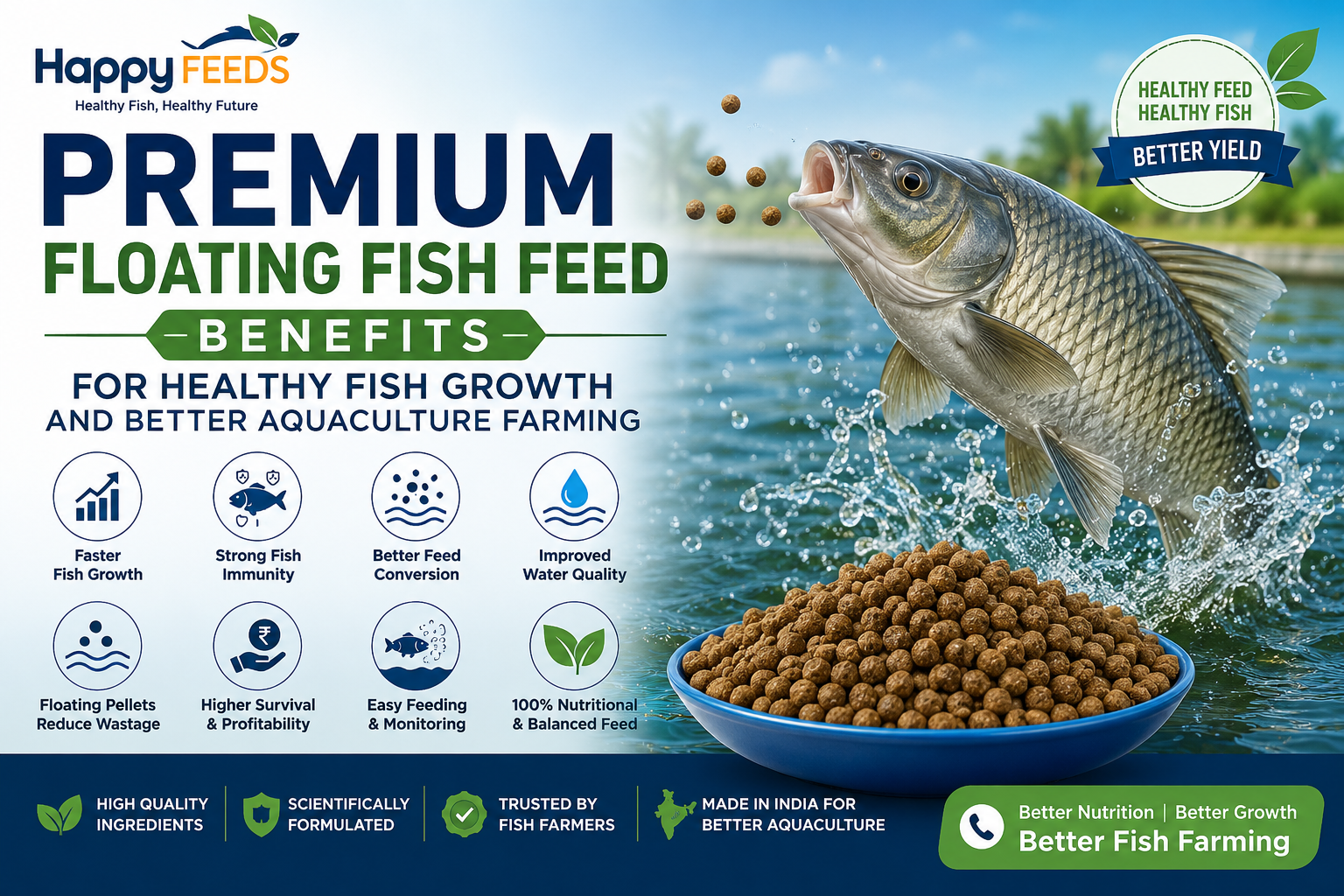
- Benefits of Floating Fish Feed Pellets
- Faster Fish Growth and Weight Gain
- Better Feed Conversion Ratio (FCR)
- Reduced Feed Wastage
- Improved Water Quality
- Strong Fish Immunity
- Easy Feeding Observation
- Fish Feeding Chart and Feeding Tips
- Best Time to Feed Fish
- Types of Fish Feed Available
- Why Choose Happy Feeds?
- Future of Aquaculture Feed in India
- Conclusion
- FAQs
What Is Premium Floating Fish Feed?
Floating fish feed pellets are a type of aquaculture feed that floats on the surface of the water. They are specially formulated to contain the right amounts of protein, vitamins, minerals, amino acids, and essential nutrients that fish need for proper growth and development.
Moreover, floating fish feed pellets allow fish farmers to easily observe when and how their fish eat. As a result, farmers can monitor feeding behavior more effectively and reduce unnecessary feed wastage.
Additionally, floating fish feed pellets retain more nutrients and remain on the water surface for a longer period compared to sinking pellets. Therefore, fish receive better nutrition, while farmers maintain improved feeding management and water quality.
Floating fish feed pellets are commonly used for:
Rohu
Catla
Pangasius
Tilapia
Grass Carp
Common Carp
Floating fish feed pellets are also designed to improve digestion and nutrient absorption, which contributes to healthier fish and contributes to the overall growth of the fish.
Importance of Healthy Fish Feed
In modern aquaculture farming, one of the most important things that fish farmers can provide for their fish is healthy fish feed. If a farmer feeds their fish with low-quality fish feed, the negative effects can include:
• Slow fish growth
• Weak immune systems
• Higher mortality rates
• Poor water quality
• Financial losses
On the other hand, high-quality fish food will provide the fish with a balanced diet needed for overall health and growth.
When fish eat healthy fish feed, they will also be able to better fight off disease and environmental stress. Because of this, fish farmers can expect better production and greater profitability.
Float Feed Pellets as an Advantage
Floating fish feed pellets provide several advantages over traditional sinking feed.
Examples of Major Benefits Include:
- Better feeding management
- Faster fish growth
- Improved feed efficiency
- Cleaner pond water
- Lower feed wastage
- Better profitability
- Easy fish monitoring
As aquaculture farming continues to modernize, floating pellet fish feed is becoming increasingly popular among fish farmers across India.
Faster Fish Growth and Weight Gain
One of the primary advantages of using premium floating fish feed is maximizing fish growth rates. The mobility of fish in ponds allows them to ingest large quantities of floating feed, which consists of the proper balance of nutrients and high-quality sources of protein. In addition, the improved digestibility from using premium fish feed results in more effective nutrient absorption, thus aiding in body growth and rate of growth. As a result, fish can be harvested in much less time.
Using high-quality fish feed also enhances:
• The development of muscle mass,
• The activity of fish,
• Consistency in growth rates, and
• The number of production cycles.
Because of these factors, farmers are able to increase their overall harvest success and income on a yearly basis.
Improved Feed Conversion Rate (FCR)
The feed conversion ratio is used to determine how efficiently a fish uses feed to create body weight. The lower the FCR number, the better the fish utilizes the feed; therefore, the less expensive it is to run a fish farm.
Aquaculture farmers are able to improve FCR by feeding their fish premium floating fish feed because the fish in large bodies of water are able to consume the vast majority of the feed before it loses buoyancy and sinks to the bottom. Additionally, because premium floating fish feed provides improved digestibility; fish are able to utilize it more efficiently.
Because of this, fish farmers will have:
Less fish feed to buy,
money spent on fish feeding, and A greater level of production efficiency.
Together these factors all lead to sustainable profitability in the aquaculture industry.
Reduced Feed Wastage
One of the main problems in fish farming today is feed loss. Traditional sinking fish feed continuously sinks to the bottom of the pond and is often not completely consumed by the fish. As a result, this creates unnecessary feed waste and increases farming costs.
However, one major benefit of floating fish feed is that the pellets remain visible on the water surface. Therefore, fish farmers can accurately control the amount of feed given and avoid overfeeding more effectively.
Additionally, this feeding method offers several important advantages:
- Reduced feed waste
- Improved pond cleanliness
- Lower operating costs
- Better feeding management
- Higher farming efficiency
Consequently, floating fish feed helps improve overall aquaculture productivity and profitability.
Less feed loss also promotes sustainable aquaculture practices.
Improved Water Quality
The management of water quality is essential to healthy aquaculture production. If any feed is not eaten by fish, the result is increased ammonia levels and harmful bacteria in the pond water.
Using high-quality floating fish feeds significantly reduces feed accumulation because fish will eat floating fish feeds directly from the surface of the water (where they float).
This keeps:
water in the pond cleaner. The oxygen levels in the water more balanced.
• The level of disease fish in the pond lessened.
strength of the fish’s immune systems increased.
As a result, the use of high-quality floating fish feed helps to create better and easier water quality management.
Strong Immunity in Fish
Fish feeds designed with vitamins, minerals and immune-boosting ingredients will improve the strength of the immune system of the fish and therefore their resistance to disease.
Strong immune systems will help fish survive:
Climate or weather changes
Environmental stress.
Bacterial infection.
Changes in water quality.
In addition, the fish will be more physically active and more likely to survive. This leads to significantly fewer deaths in the fish population.
Fish Feeding Chart and Feeding Tips
Proper feeding management is extremely important in aquaculture farming.
Basic Fish Feeding Tips:
- Feed fish 2–3 times daily
- Avoid overfeeding
- Feed during cooler hours
- Monitor fish activity regularly
- Store feed properly in dry conditions
Fish Feeding Depends On:
- Fish species
- Size Fish of
- Water temperature
- Pond conditions
- Growth stage
Following a proper fish feeding chart improves fish growth and reduces feed loss.
Best Time to Feed Fish
The best time to feed fish is generally:
- Early morning
- Evening hours
During these periods, water temperature and oxygen levels remain more suitable for feeding.
Moreover, fish digest feed more efficiently during cooler hours. Therefore, proper feeding timing improves growth performance.
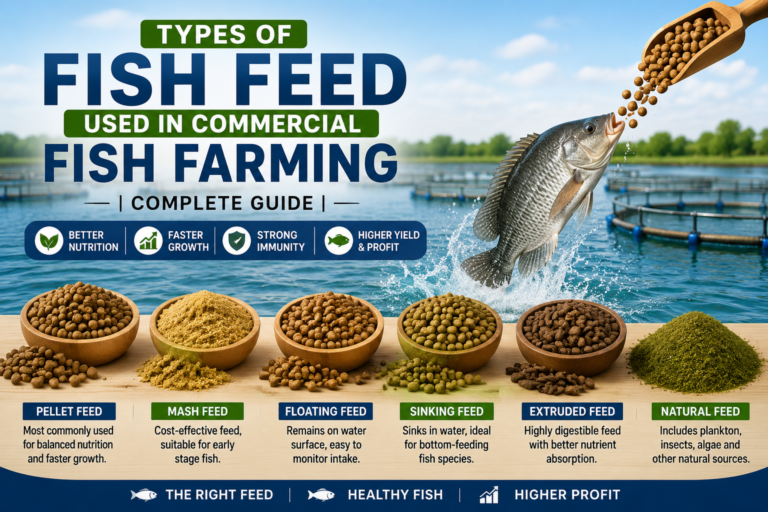
Types of Fish Feed Available
There are several types of aquaculture feed available to support the growth and health of fish in captivity. There are many different species of fish that require different types of nutrition and, therefore, have unique formulations of the feed they require. Some of the more common
Types of aquaculture feeds include:
- Floating fish feed
- Sinking fish food pellets
- Starter feed
- Grower feed
- Finisher feed
- Aquarium fish food
- High protein fish feed
Selecting the right type of fish feed will enhance both the productivity and health of fish farms.
Happy Feeds is one of the most respected manufacturers of fish feed in India and provides premium fish feed solutions to support healthy fish farming. The benefits that Happy Feeds provides include:
– Premium quality floating fish feed
– Balanced nutrition Premium Floating Fish Feed
– Leading edge manufacturing techniques
– Healthy fish feed solutions
– Very high-quality fish feed products
– Contract manufacturing of fish feed
– Private label floating fish feeds
Happy Feeds is committed to helping farmers increase growth and profitability by providing feed products based on scientific research.
Future Growth of Aquaculture Feed in India
Premium Floating Fish Feed Aquaculture farming in India is expanding rapidly as demand for seafood grows and technology improves. As a result, farmers are seeking premium quality floating fish feed, healthy fish feeds, high quality aquatic feed, and sustainable feed manufacturing.
Modern day fish farmers are investing in feed manufacturing technology to improve their productivity and profitability in the future.
Conclusion
High-quality floating fish feeds are crucial to the success of modern fish aquaculture. The benefits of high-quality fish feeding can help aquaculture farmers with faster growth rates, increased water quality within the fish ponds, improved feed conversion rates, reduced feed waste, improved immune systems in the fish, and increased profits from fish farming.
Happy Feeds continues to supply aquaculture with high-quality fish feeding products to produce healthy fish and support the growth of sustainable aquaculture practices. By supplying aquaculture farmers with high-quality feeds, advanced nutritional formulations for each feed product line, and guaranteed feed quality, aquaculture farmers will have the ability to produce the highest quality fish, improve their fish’s health, and achieve long-term success in their aquaculture business.
As a result, an investment in premium floating fish feed is one of the best investments for profitable fish farming in India.
FAQs
1. What are the benefits of premium floating fish feed?
Premium floating fish feed improves fish growth, reduces feed wastage, maintains water quality, and increases farm profitability.
2. Why is floating fish feed better than sinking feed?
Floating fish feed stays on the water surface, allowing farmers to monitor feeding behavior and reduce unnecessary feed loss.
3. Which fish species can use floating fish feed?
Rohu, Catla, Pangasius, Tilapia, Grass Carp, and many freshwater fish species can use floating fish feed.
4. How many times should fish be fed daily?
Most fish species are generally fed 2–3 times daily depending on fish size, farming conditions, and water temperature.
5. Why is healthy fish feed important?
Healthy fish feed provides balanced nutrition, improves immunity, supports faster growth, and reduces disease risk.
Thanks for reading
Click here to read this: How to Choose the Right Floating Fish Feed
Visit our product page to see all products: Click here to visit
Need help choosing feed? Use our Free Feed Calculator
Visit: Dust Fish Feed Products