
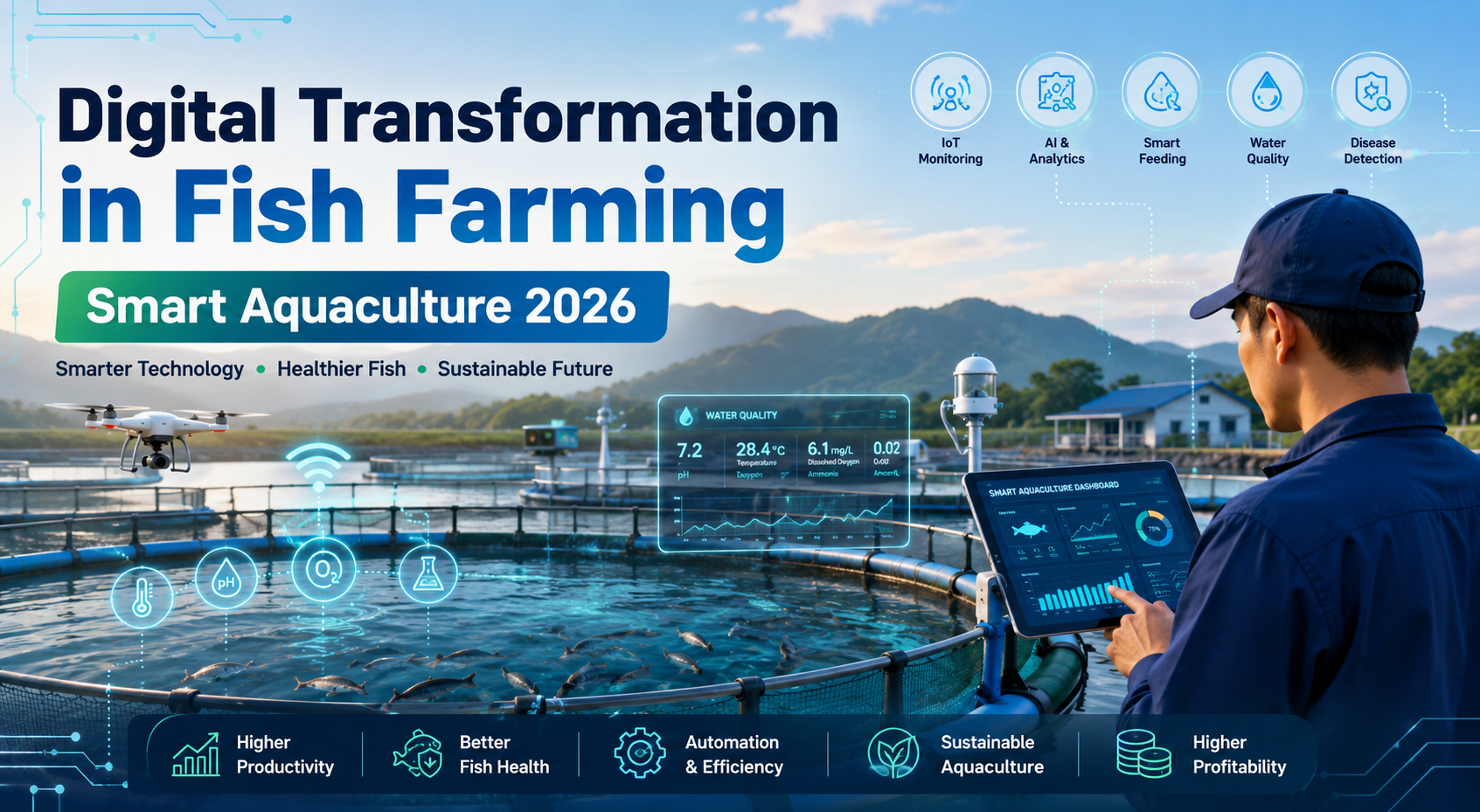
The aquaculture industry is going through a change. As more people want to eat fish and other seafood, fish farmers are using tools to make their work better. These tools help them make fish spend less money and take care of the environment. Digital transformation in fish farming brings together devices, artificial intelligence, Internet of Things, automation, cloud computing and data analysis to make every part of raising fish better.
Old ways of farming fish depend on people checking things by hand and using their experience to make choices. These methods work. They can cause problems like bad water, sick fish, too much food and less money. Technology helps fix these problems by giving real-time help and better ways to manage the farm.
In 2026, using technology in fish farming is becoming really important. Whether it is a farm or a big business, technology is making fish farming smarter and better for the planet.
What is Digital Transformation in Fish Farming?
Digital transformation in fish farming means using tools to change how people raise fish. This helps workers assess the environment, review data, and make informed decisions.
These tools help farmers check:
Water quality
Fish health
When to feed
Oxygen levels
Temperature
level
How fast fish grow
Risk of disease
What supplies are available
Rather than just looking with their eyes, farmers can check farm data on their phone or computer.
Why Digital Transformation Matters
Fish farming has a lot of problems:
Changes in the weather
Water getting
More money to make fish
Diseases that spread quickly
Food that gets wasted
Not enough workers
More people want to eat fish.
Technology helps solve these problems and makes farming better for the environment and for money.
Benefits include:
More fish survive
food use
Less money spent
More work done
Faster choices
Better rules for the environment
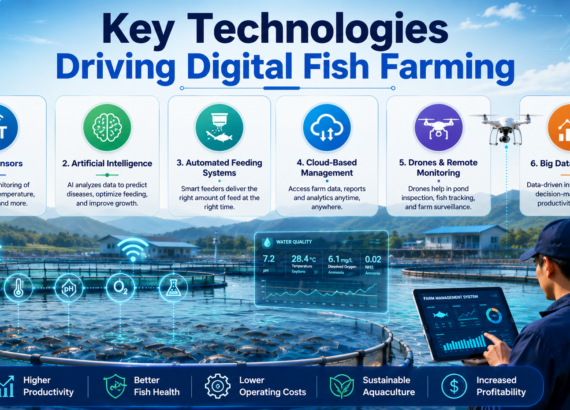
Key Technologies Driving Digital Fish Farming
- Internet of Things (IoT)
IoT sensors measure things in fish ponds and tanks all the time. They check:
Water temperature
Oxygen in the water
pH level
Ammonia in the water
How salty the water is
How clear the water is
If something goes wrong, farmers get a message on their phone.
- Artificial Intelligence (AI)
AI looks at a lot of data from the farm. Guess what might happen next.
AI helps farmers by:
Finding sicknesses
Guessing how fast fish grow
Deciding when to feed
Predicting changes in water
Making fish live longer
AI cameras can watch fish and see if they are stressed before it is too late.
- Automated Feeding Systems
Food is one of the expenses in fish farming.
Smart feeding systems use AI and sensors to decide:
How much fish want to eat
How to feed
How much to give
When to feed
Advantages include:
Less food wasted
Fish grow faster
Better use of food
Less water pollution
- Cloud-Based Farm Management
Cloud systems help farmers manage their work from afar.
Farm owners can:
Watch production
Check pond conditions
Manage workers
Keep track of supplies.
Make reports
See how well the farm is doing.
Old data helps plan for the future.
- Drones and Remote Monitoring
Drones are helpful in fish farms.
They help with:
Looking at ponds
Checking the top of the water
Watching where the fish go
Looking at buildings
Watching for problems
This cuts the need for workers. Makes checking better.
- Big Data Analytics
Fish farms today provide a lot of information.
Big data helps farmers understand:
What happens in seasons
How fast fish grow
When diseases appear
How well food works
What to expect in the future
Using this data helps plan better for the future.
Benefits of Digital Fish Farming
Better Water Quality
Checking all the time stops changes that could hurt fish.
Farmers get a warning before things get bad.
Better Fish Health
AI helps find sicknesses early.
Quick treatment means fewer fish die and less money lost.
Higher Productivity
Smart tools help:
Grow
Use food better
Plan when to catch fish.
Manage fish better
This means more fish without making the farm bigger.
Lower Operating Costs
Automation cuts:
Money spent on workers
Food wasted
Money for cleaning water
Costs of treating sickness
This makes the farm more profitable.
Sustainable Aquaculture
Digital tools help the environment by:
Using water
Using fewer chemicals
Making less waste
Using less energy
This helps fish farming that is good for the planet.
Challenges of Digital Transformation
Even though technology is helpful, fish farmers might have some problems.
High Initial Investment
Putting in sensors, machines and software takes money up front.
The savings over time are often bigger.
Technical Skills
Farmers need to know how to use tools.
Training programs are helping more people learn.
Internet Connectivity
Some farms are far from the internet.
Tools that work without the internet and better connections are helping.
Data Security
As farms use technology, protecting business info is important.
Secure cloud systems and regular updates help keep everything.
Future Trends in Digital Fish Farming
Aquaculture will get even better with tools.
Expect ideas like:
AI that predicts sickness before it shows up
Robots that check ponds and take care of fish
Blockchain that lets people see where fish come from
Systems that recycle water and help the environment
Virtual models that help farmers plan better
Best Practices for Implementing Digital Fish Farming
To use digital tools well, farmers should:
Start with simple water sensors.
Add feeding step by step.
Teach workers to use the tools.
Keep records on a computer.
Check numbers often.
Use software.
Take care of equipment before it breaks.
Use data to make choices.
A slow and careful plan helps make the change easier and cheaper.
Conclusion
Digital transformation is changing how people raise fish. It makes farming smarter, more efficient and better for the planet. Tools like IoT, AI, cloud computing, automation, drones and data analysis are helping farmers make fish healthier, use food better, spend less and produce more.
As more people want to eat fish, using tools is important for staying competitive and doing well. Whether it is a pond or a big factory, using digital tools can help make better choices, get more fish and farm better for the future.
The future of fish farming is about tools and using data, where technology and taking care of the planet work together to feed more people.
Frequently Asked Questions (FAQs)
- What is digital transformation in fish farming?
Digital transformation in fish farming is using tools like IoT, AI, automation, cloud computing and data analysis to make fish farming better and spend less money.
- How does IoT help fish farmers?
IoT sensors check water conditions like temperature, pH, oxygen and ammonia. This means farmers can act quickly when things change.
- Is AI in aquaculture?
Yes. AI helps guess sickness, decide when to feed, watch fish make them grow better and keep them alive longer. This makes farming
- What are the biggest benefits of smart fish farming?
Big benefits include healthier fish, less waste, lower costs, better water and farming that is good for the planet.
- Is digital fish farming for small-scale farmers?
Yes. Small farms can start with tools like water sensor apps on phones and automatic feeders. They can add tools as they grow.
Thanks for reading
……………………………………………………………………………………………………………………………………………….
Click here to read this: How to Choose the Right Floating Fish Feed
Visit our product page to see all products: Click here to visit
Need help choosing feed? Use our Free Feed Calculator
Visit: Dust Fish Feed Products