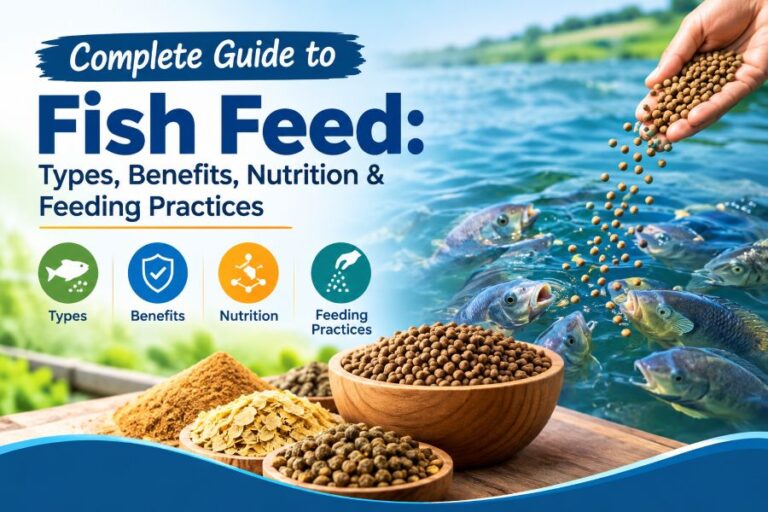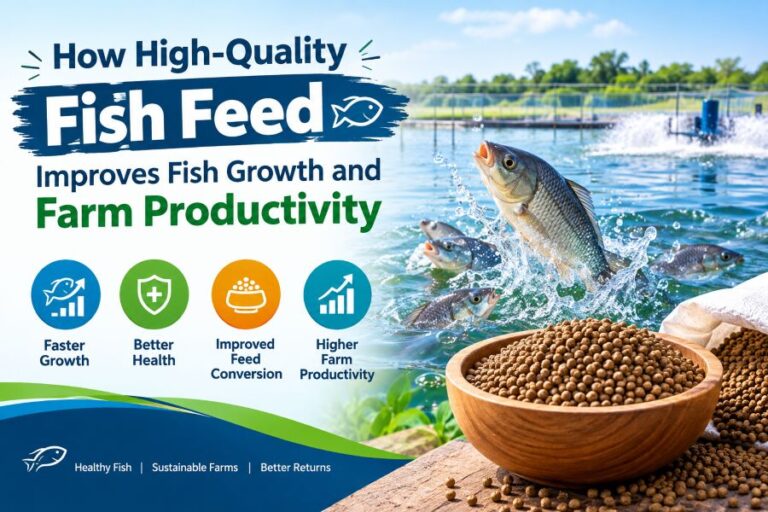

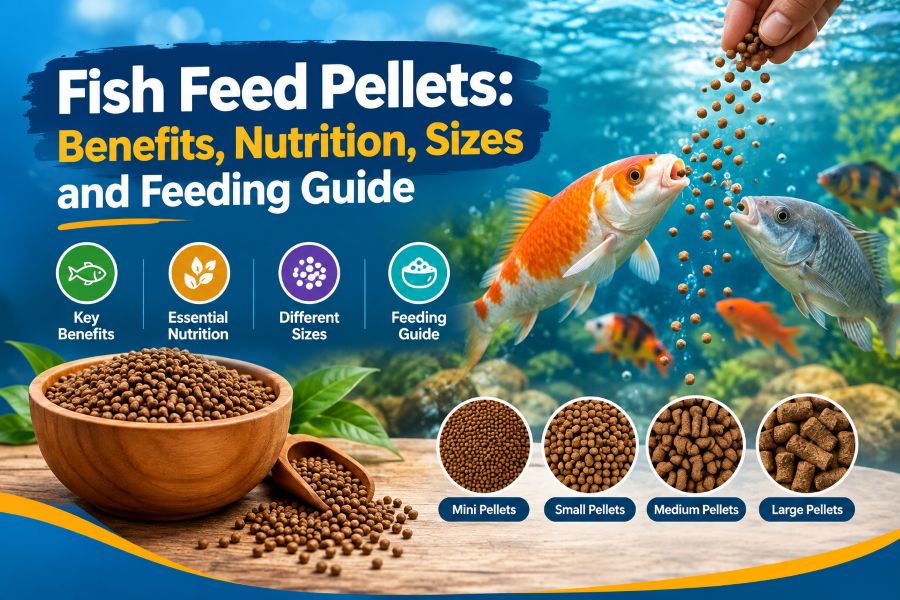
Fish Feed Pellets are one of the important parts of modern aquaculture. Whether farmers are raising Rohu, Catla, Mrigal, Tilapia, Pangasius or other farmed fish the right Fish Feed Pellets can have a major impact on growth, health, feed efficiency and overall farm productivity. Unlike unsuitable feed quality Fish Feed Pellets are formulated to provide essential nutrients in a convenient and easy‑to‑manage form.
For fish farming selecting the right pellet size, nutritional composition, feeding quantity and feeding frequency is just as important as choosing healthy fish seed and maintaining good pond conditions. Floating Fish Feed Pellets can also make feeding activity easier to observe because farmers can monitor how actively fish are consuming the feed.
What Are Fish Feed Pellets?
Fish Feed Pellets are formulated feeds manufactured by combining ingredients that provide essential nutrients for fish growth and development. Depending on the species and growth stage a formulation may contain proteins, fats, carbohydrates, vitamins, minerals, amino acids and other nutritional components.
Pellets are manufactured in sizes so that fish can consume them comfortably according to their mouth size and developmental stage. FAO guidance notes that pellet size should be matched with fish size because large pellets can be difficult for smaller fish to consume while larger fish can efficiently consume appropriately sized pellets.
Floating pellets are particularly useful in pond aquaculture because farmers can observe feeding behaviour and adjust the quantity accordingly. This can help reduce feed wastage and support better feed management.
Benefits of Fish Feed Pellets for Aquaculture
Quality Pellets offer advantages when they are properly formulated and used according to the requirements of the species.
Better Fish Growth and Development
Protein is one of the important nutrients in fish diets because it supports tissue formation, muscle development and growth. A balanced feed provides fish with the nutrients required during stages of their production cycle.
Happy Feeds offers formulations according to fish size and application. Its published specifications include pellet sizes from 1.5 mm to 5.0 mm with crude protein levels ranging from 24 % to 32 % across these products.
Improved Feed Efficiency
Feed represents an operating cost in commercial aquaculture. Therefore farmers need feed that delivers nutrition without excessive wastage.
Well‑formulated pellets with digestibility can help fish make better use of the nutrients they consume. Efficient feeding can contribute to improved feed conversion and lower unnecessary feed costs.
Easier Feeding Management
Floating Fish Feed Pellets make it easier to observe fish feeding activity. Farmers can see whether fish are actively consuming the feed and adjust feeding quantities accordingly.
This is particularly useful for identifying changes in appetite that may occur because of conditions, fish health, water quality or changes in growth stage.
Reduced Feed Waste and Better Pond Management
Excess feed that remains uneaten can deteriorate water quality. Floating pellets allow farmers to monitor consumption before adding feed.
Happy Feeds highlights floating ability, reduced feed residue, digestibility and feed management as characteristics of its fish feed products.
Fish Feed Pellet Nutrition: What Should It Contain?
Good Fish Feed Pellets should provide nutrition rather than focusing on only one nutrient. The exact nutritional requirement depends on fish species, size, farming system, water conditions and production objectives.
Protein
Protein supports growth, muscle development, tissue repair and overall fish performance. Younger and rapidly growing fish often require dense diets.
Fats
Dietary fats provide energy. Help support normal physiological functions. However the appropriate amount depends on the fish species and feed formulation.
Carbohydrates
Carbohydrates can provide energy. Contribute to efficient utilization of dietary nutrients when included at suitable levels.
Vitamins and Minerals
Vitamins and minerals support metabolism, skeletal development, immunity and other biological functions. A balanced commercial feed is designed to provide these nutrients in proportions.
Amino Acids
Fish require amino acids for protein synthesis and growth. A well‑formulated aquafeed considers amino acid requirements along with protein content.
The nutritional composition should therefore be selected according to the fish species than simply choosing a feed based on its protein percentage.
Fish Feed Pellet Sizes: Which Size Is Right?
Choosing the pellet size is essential for efficient feeding. Fish should be able to consume the pellets without excessive competition or wastage.
Happy Feeds currently lists the pellet‑size applications:
| Pellet Size | Typical Application | Crude Protein |
|————-|———————|—————|
| 1.5 mm | Small fry & juvenile fish | 32 % |
| 2.0 mm | Juvenile & growing fish | 30 % |
3.0 mm | Medium‑sized fish | 28 % |
| 4.0 mm | Large fish nearing harvest | 28 % |
| 5.0 mm | Mature fish & breeders | 24 % |
These specifications are a product reference but farmers should always consider fish species, actual fish size, feeding behaviour and farming conditions when selecting Fish Feed Pellets.
As fish grow pellet size can gradually be increased. Providing appropriately sized Fish Feed Pellets helps fish consume feed effectively and can improve feeding management.
Fish Feed Feeding Guide: How Much Should You Feed?
There is no feeding rate that works for every fish farm. Feeding requirements change according to fish species, average body weight, biomass, water temperature, water quality, growth stage and farming intensity.
A practical feeding program should begin with the recommended feeding rate for the species and feed formulation. Farmers should then monitor consumption. Adjust the quantity.
For example FAO guidance for tilapia provides pellet sizes and feeding rates according to fish weight demonstrating why feeding programs need to be adjusted as fish grow.
A simple feeding approach is:
- Calculate fish biomass
- Determine the feeding rate
- Divide the quantity into suitable feeding sessions
- Observe consumption
- Adjust as required
Avoid increasing feed just because fish appear active. Similarly uneaten feed may indicate overfeeding or a problem that requires investigation.
Feeding should also be adjusted during environmental conditions. Water temperature, dissolved oxygen, fish health and other pond conditions can influence feeding activity.
How to Store Fish Feed Pellets
Even high‑quality Fish Feed Pellets can lose quality if they are stored incorrectly. Keep feed in a dry, clean and well‑ventilated location away from direct sunlight and moisture.
Use feed before newly purchased stock and avoid keeping feed for unnecessarily long periods. Moisture can encourage mould development. Reduce feed quality making proper storage an important part of feed management.
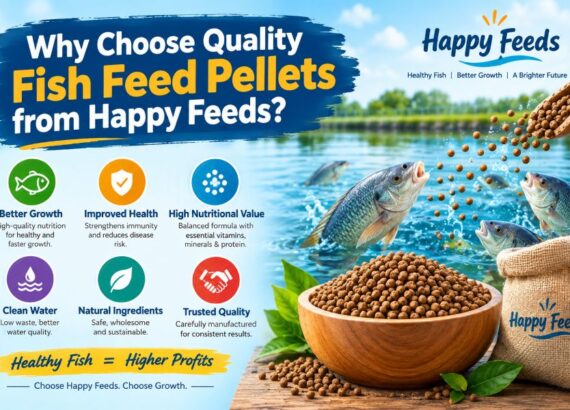
Why Choose Quality Fish Feed Pellets from Happy Feeds?
Happy Feeds focuses on floating Fish Feed Pellets designed for aquaculture including feeds for Tilapia, Pangasius and Indian Major Carp such as Rohu, Catla and Mrigal. The company states that its Fish Feed Pellets are scientifically formulated, highly digestible and manufactured under quality‑control processes.
Its product range includes pellet sizes and nutritional formulations allowing farmers to select Fish Feed Pellets according to fish size and farming requirements. Happy Feeds also offers formulations for different aquaculture needs.
Conclusion
Fish Feed Pellets are a part of profitable and sustainable aquaculture. The right Fish Feed Pellets can support growth, efficient nutrient utilization, better feeding management and reduced feed wastage. However choosing the pellet size and nutritional formulation is just as important as selecting a quality feed manufacturer.
Farmers should consider fish species, growth stage, pellet size, nutritional requirements, biomass, water conditions and feeding behaviour when developing a feeding program. With Fish Feed Pellets selection, controlled feeding and good pond management farmers can work toward healthier fish and improved aquaculture productivity.
FAQs
What are Fish Feed Pellets?
Fish Feed Pellets are formulated feeds containing ingredients such as protein, fats, carbohydrates, vitamins, minerals and amino acids required for fish growth and development.
Which Fish Feed Pellet size is best for fish?
The appropriate pellet size depends on fish species, mouth size, body weight and growth stage. Smaller fish generally require pellets while larger fish can consume larger pellets.
What nutrients are present in Fish Feed Pellets?
Fish Feed Pellets can contain protein, fats, carbohydrates, vitamins, minerals, amino acids and other ingredients formulated according to the requirements of the target species.
Are floating Fish Feed Pellets better, for pond farming?
Floating pellets can make feeding easier to monitor because farmers can observe fish consumption and reduce feeding. Their suitability depends on fish species and farming practices.
How often should fish be fed?
Feeding frequency depends on species, fish size, biomass, water temperature, farming system and feed formulation. Farmers should follow a feeding program and adjust it according to actual consumption and pond conditions.
Thanks for reading
……………………………………………………………………………………………………………………………………………….
Click here to read this: How to Choose the Right Floating Fish Feed
Visit our product page to see all products: Click here to visit
Need help choosing feed? Use our Free Feed Calculator
Visit: Dust Fish Feed Products