
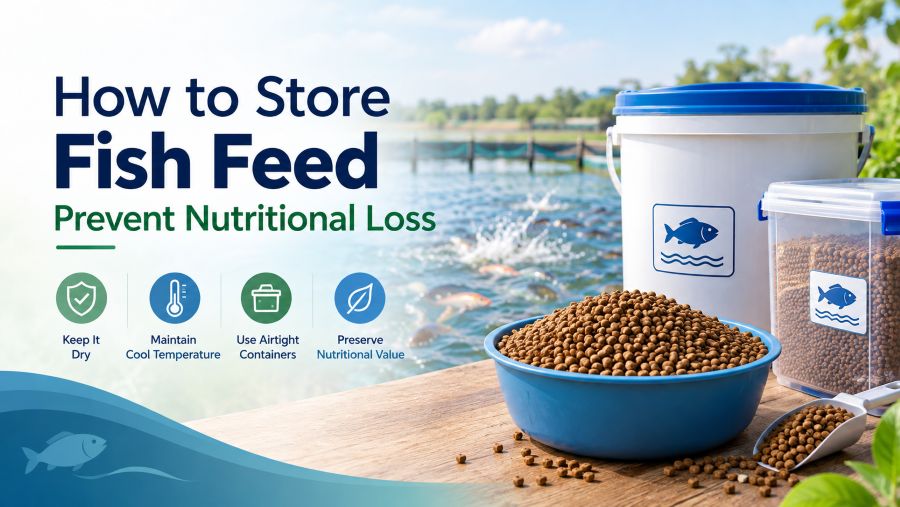
Good-quality feed is one of the most important inputs in successful aquaculture. Farmers may choose a balanced fish feed but improper storage can gradually reduce its quality before it reaches the pond. Moisture, excessive heat, direct sunlight, insects, rodents, mould and prolonged storage can affect the nutritional characteristics of feed. FAO guidance identifies temperature and humidity as factors influencing feed deterioration while oxidation, insects and fungi can further damage stored feed.
For fish farmers proper fish feed storage is therefore not about keeping bags in a warehouse. It is a part of feed management that helps protect protein, fats, vitamins and other nutrients. Whether you are using floating fish feed, pellets or other formulated aquafeeds maintaining storage conditions can help preserve feed quality and reduce unnecessary wastage.
Why Proper Fish Feed Storage Is Important for Nutritional Quality
Commercial fish food pellets are formulated to provide fish with nutrients required for growth, health and efficient production. However nutrients can deteriorate when feed is exposed to storage conditions. High temperature and humidity can accelerate changes encourage fungal growth and increase the risk of insect infestation. Lipids can become oxidized and develop rancidity while some vitamins may lose potency during storage.
Moisture is one of the concerns in aquafeed storage. When feed absorbs moisture from humid surroundings pellets can soften, lose their integrity and become more vulnerable to mould and microbial growth. In humid or tropical conditions careful storage becomes especially important because feed can deteriorate faster. FAO guidance recommends keeping feed cool and dry and minimizing unnecessary storage periods.
Heat can also affect fish feed nutrition. Storing feed in a room near machinery or under direct sunlight can accelerate deterioration. Sunlight and heat can particularly affect nutrients and fats. For this reason feed should be kept in a dry, shaded and well-ventilated storage area.
Another concern is contamination. Rats, mice, birds and insects can damage bags consume feed and introduce contaminants. Insects may also contribute to increased moisture and heat within stored material creating conditions that favour deterioration.
Therefore choosing a fish feed manufacturer in India is only one part of maintaining feed quality. Proper handling and storage after purchase are equally important for preserving the value of the product.
Best Practices for Storing Fish Feed
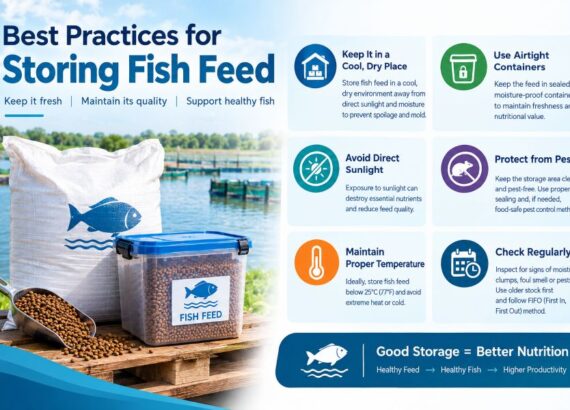
The first step in effective fish feed storage is selecting an appropriate storage location. The room should be clean, dry protected from rain and free from standing water. It should also have ventilation while preventing the entry of birds, rodents and other pests. FAO recommendations specifically emphasize keeping feed stores cool and dry and protecting them against moisture and contamination.
Never place bags of fish food pellets directly on the floor. Use pallets or another suitable raised platform so that bags remain away from damp floors and walls. This also allows air to circulate around the bags and makes cleaning easier. FAO aquaculture guidance recommends storing sacked feed off the ground on pallets and away from sunlight.
Direct sunlight should be avoided. A warehouse may appear dry. Still become excessively hot if sunlight falls directly on feed bags for several hours. Keep bags in an area and avoid storing them near windows, hot machinery, boilers or other heat sources.
Moisture control is equally important. Do not store feed beside water tanks, wet equipment or areas where rainwater can enter. If a bag becomes wet inspect the feed carefully before use. Damp or visibly mouldy feed should not be treated as feed simply because it has been dried again. Proper storage begins by preventing moisture exposure in the place.
Farmers should also follow the in first-out (FIFO) principle. Use feed before newly purchased bags provided the older feed remains within the manufacturers recommended shelf life and shows no signs of deterioration. This reduces the risk of keeping feed for long periods. FAO recommends minimizing storage duration because prolonged storage can contribute to quality losses.
Regular inspection should become part of feed management. Check bags for holes, moisture, insects, unusual odours, discolouration, caking or mould. Keep the storage area clean and remove spilled feed promptly. Old residues can attract insects. Create contamination risks.
It is also useful to maintain stock records. Record the purchase date, feed type, batch information and quantity. This makes it easier to rotate stock and identify any storage-related issues. Always follow the manufacturers storage instructions. Recommended shelf life because different feed formulations and packaging systems can have different requirements.
How Proper Storage Helps Maintain Fish Growth and Feed Performance
The objective of fish feed storage is ultimately to protect the nutritional and physical quality of feed until it is consumed. When pellets remain dry, clean and properly protected farmers can make use of the nutrients incorporated during manufacturing.
Protein, fats, vitamins and minerals all contribute to the value of formulated fish feed. Storage conditions can influence some of these components over time. For example oxidation can affect fats while prolonged storage can reduce the stability of vitamins. FAO sources also note that high temperatures can accelerate deterioration and that lipid oxidation may reduce feed quality and palatability.
Good storage can also help maintain pellet characteristics. Quality floating fish feed should retain its intended properties until feeding. Excess moisture can cause pellets to become soft, damaged or caked making handling more difficult. Proper dry storage helps preserve pellet integrity and makes feeding more consistent.
Another advantage is reduced feed wastage. Spoiled or contaminated feed has to be discarded, increasing production costs. Preventing moisture, pests and mould can therefore protect both feed quality and farm economics. A good storage system also makes daily feeding operations more organized because farmers can easily identify the feed monitor stock and maintain consistent feeding practices.
For aquaculture operations buying from established fish feed manufacturers in India and following recommended storage procedures can provide a more reliable feed-management system. However storage cannot improve poor-quality feed; it can only help preserve the quality of feed that was properly manufactured and packaged in the place.
Conclusion
Happy Feeds focuses on quality aquaculture nutrition and farmers should complement feed selection with responsible storage and handling practices. By keeping feed dry, clean, shaded and protected from pests farmers can help preserve the nutritional value of their premium fish feed and reduce avoidable losses.
Proper fish feed storage is a part of successful fish farming. Moisture, heat, sunlight, insects, rodents and prolonged storage can negatively affect feed quality. Contribute to nutritional losses. Keeping fish food pellets in a dry, shaded and well-ventilated location storing bags off the floor following FIFO stock rotation and regularly checking for spoilage can help maintain feed quality.
For aquaculture performance, quality feed and proper storage should work together. Selecting fish feed manufacturers in India and following the recommended storage instructions can help farmers protect their investment while providing fish with consistent nutritional support.
FAQs
- What is the best way to store fish feed?
Store fish feed in a dry, cool and well-ventilated area away from direct sunlight, moisture, pests and chemicals. Keep bags raised off the floor on pallets.
- Can fish feed be stored in sunlight?
No. Direct sunlight can increase feed temperature. Contribute to nutritional deterioration. Fish food pellets should be stored in an area protected from excessive heat and sunlight.
- Why does moisture damage fish feed?
Moisture can cause pellets to soften or cake and can encourage mould and microbial growth. This can reduce feed quality. May create safety concerns.
- How can farmers prevent loss, in fish feed?
Use dry storage protect feed from heat and sunlight prevent pest infestation keep bags off the ground rotate stock using FIFO and follow the manufacturers recommended shelf life.
- How long can fish feed be stored?
The appropriate storage period depends on the feed formulation, packaging, storage environment and manufacturers recommendations. As a principle aquaculture feed should not be stored unnecessarily long particularly under hot and humid conditions.
Thanks for reading
……………………………………………………………………………………………………………………………………………….
Click here to read this: How to Choose the Right Floating Fish Feed
Visit our product page to see all products: Click here to visit
Need help choosing feed? Use our Free Feed Calculator
Visit: Dust Fish Feed Products