
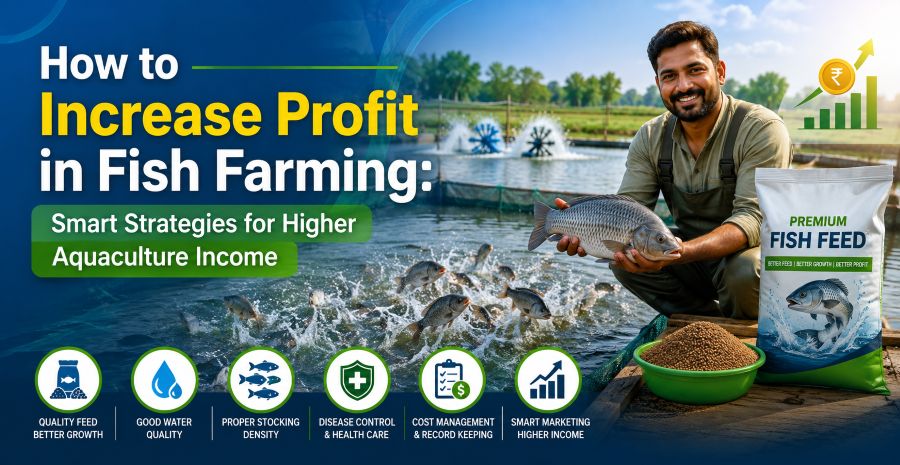
Fish farming has become an agricultural business in India. It allows farmers to earn income from ponds, tanks, and other aquaculture systems. Putting more fish into a pond does not automatically mean higher profits. To make money, farmers must control costs, improve fish growth, lower fish deaths, use fish feed, keep water clean and sell fish at the right price and time.
With rising costs and more competition, farmers are now using science-based methods instead of relying only on traditional ways. Efficient feed use, stocking levels, healthy fingerlings, regular pond checks and better marketing can all boost farm income. Recent efforts by ICAR have focused on feed efficiency, water quality control, disease prevention and better pond output for fish farming.
If you are asking how to increase profit in fish farming, the answer is simple: grow healthy fish while keeping extra costs low.
- Use High-Quality Fish Feed and Improve Feed Management
Feed is one of the expenses in fish farming, especially in intensive and semi-intensive setups. The type of feed used and how it is managed affects profits directly.
Bad feed can slow fish growth, waste feed, harm water quality and raise costs. Good feed gives fish the nutrients they need for growth, strong health and efficient feed use.
Choose feed based on fish species, stage of growth, farming method and nutritional needs. Floating pellets help farmers see if fish are eating well.
Do not overfeed. Leftover feed increases waste in the pond and lowers water quality. Feed amounts should change with fish size, biomass, weather, water quality and how the fish respond.
Feed conversion ratio (FCR) is a measure. A lower FCR means less feed is needed to grow the amount of fish. The FAO says good feed and feed management are essential for aquaculture results.
For farmers who want feed, Happy Feeds offers fish feed products that support healthy growth and efficient feeding.
- Maintain Good Water Quality and Pond Health
Clean water is the base for fish farming. Poor water quality can reduce fish appetite, slow growth, raise stress and lead to disease.
Farmers should regularly check:
Dissolved oxygen
pH
Water temperature
Ammonia levels
Water clarity
Pond condition
Aeration and proper pond care help maintain water conditions for fish. Avoid overfeeding and unnecessary fertiliser. Many nutrients can harm the pond.
ICAR has stressed the need for soil and nutrient control to improve fish production and protect the environment.
A healthy pond means feeding, faster growth, higher survival and better farm results.
- Choose Healthy Fingerlings. Maintain Proper Stocking Density
The quality of young fish affects the final harvest. Buying sick or poor-quality fingerlings leads to slow growth and more deaths.
Always buy fingerlings from trusted hatcheries or suppliers. Pick fish that’re active and similar in size.
Stocking levels must match pond size, fish type, water quality, aeration, feed availability and farm system. Many fish can cause oxygen shortages, feed fights, and make disease and water control harder.
ICAR demonstrations show that proper stocking, feeding, growth tracking and water control lead to results.
- Reduce Fish Mortality Through Regular Monitoring
Every fish lost before harvest means lost money on seed, feed, labour, and pond care. Lowering fish deaths is one of the ways to protect profits.
Check fish every day. Watch for signs like:
Fish near the surface
Less feeding
Strange swimming
Injuries
Sudden deaths
Changes in water colour or smell
Detection helps fix problems before they spread.
Avoid adding fish from sources without checking first. Keep ponds clean and follow biosecurity steps. If disease is suspected, talk to a qualified fisheries expert instead of using medicine randomly.
- Keep Detailed Farm Records
Many farmers only look at profit after harvest. Successful commercial fish farming needs constant money tracking.
Keep records of:
Fingerling cost
Feed purchases
Fertiliser and pond prep expenses
Labour costs
Electricity and aeration costs
Medicine and other inputs
Harvest amount
Selling price
Transport and marketing costs
These records show where money goes and where improvements can happen.
For example, if feed is a cost, the farmer can focus on feeding better and reducing waste instead of just buying cheaper feed.
Recent studies on composite fish farming in India also show that using resources wisely and managing feed well improves fish farming economics.
- Plan Your Harvest and Marketing Strategy
Growing healthy fish is half the job. Farmers also need a selling plan.
Before harvesting, check demand, seasonal prices, preferred fish sizes and possible buyers. Depending on the setup, farmers can sell to wholesalers, retailers, restaurants, local markets, processors or consumers.
Don’t harvest all fish at once unless needed. Partial harvesting can bring in money while letting smaller fish grow.
Building ties with buyers reduces risk from depending on one market.
- Explore Integrated and Value-Added Farming Models
Another way to boost income is to add ways to earn money. Based on conditions, farmers can try integrated models that mix fish farming with crops or animals.
ICAR has supported integrated fishery farming and other models to grow income and make farms more sustainable.
Farmers can also look at value-added options like cleaning, packing, processing or direct selling if the market and facilities are available.
Conclusion
Increasing profit in fish farming is not about growing more fish. The goal should be to grow fish efficiently, control costs and get better prices.
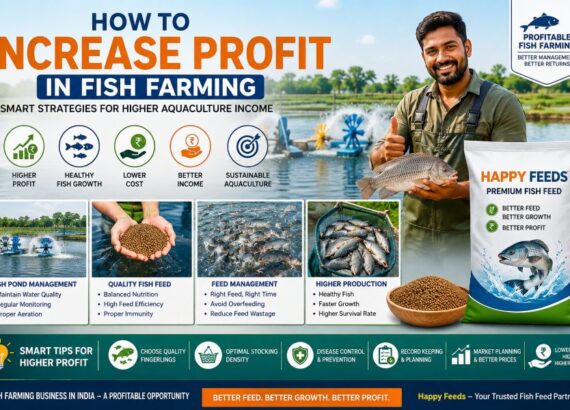
Using fish feed, avoiding waste, keeping water clean, picking healthy fingerlings, managing stocking, stopping disease, tracking money and planning sales can help farmers grow more profitable farms.
Scientific management is key in aquaculture. Indian aquaculture projects show that better feed and smart use of resources cut costs and improve results.
For farmers looking for fish feed, choosing a feed maker focused on nutrition, consistency and fish growth is a smart move toward a better and more profitable farm.
Frequently Asked Questions
- How can I increase profit in fish farming?
You can increase fish farming profit by using quality fish feed, reducing feed waste, keeping water quality good, choosing fingerlings, managing stocking levels, lowering fish death tracking costs and selling fish wisely.
- Why is fish feed important for fish farming?
Fish feed gives fish the nutrients they need to grow and stay healthy. Good feeding helps fish grow and saves money. Feed management is a part of making money in fish farming.
- Does overfeeding reduce fish farming profit?
Yes. Overfeeding increases costs and causes water quality problems when uneaten feed builds up. Farmers should watch how fish eat and adjust feed based on fish size and conditions.
- How does water quality affect fish farming income?
Bad water can stress fish, reduce eating, slow growth and increase disease or death. Keeping water clean supports growth and better survival.
- Is fish farming in India?
Fish farming can be profitable in India if managed scientifically. Success depends on species, market, climate, input costs and farm conditions. Profit comes from production, good feed use, survival rate, selling price and cost control.
Thanks for reading
……………………………………………………………………………………………………………………………………………….
Click here to read this: How to Choose the Right Floating Fish Feed
Visit our product page to see all products: Click here to visit
Need help choosing feed? Use our Free Feed Calculator
Visit: Dust Fish Feed Products