
Fish feed is a key factor in aquaculture growth, health, survival, and profitability. Whether you are raising Rohu, Catla, Tilapia, Pangasius or other farmed fish, providing the right feed in the right quantity can significantly improve production efficiency.
Modern aquafeed is formulated to provide nutrients such as protein, fats, carbohydrates, vitamins, minerals and amino acids. According to the Food and Agriculture Organisation (FAO), aquaculture feeding systems can range from natural pond food and supplementary feeds to complete feeds formulated to provide the nutrients required for fish growth.
For fish farmers, choosing quality fish feed is therefore not simply about price. Feed quality, pellet size, nutritional composition, feeding frequency, storage and proper feeding practices all contribute to fish farming.
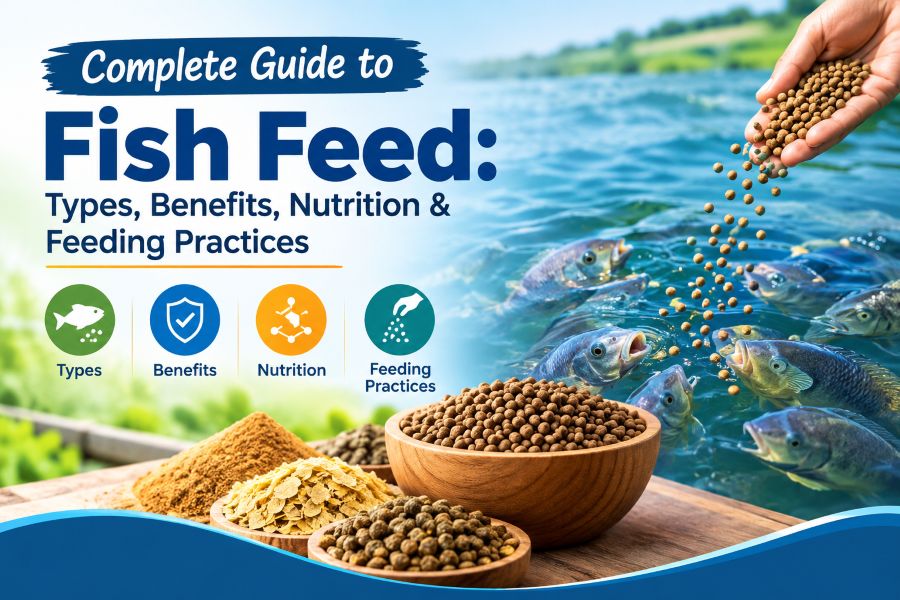
Types of Fish Feed and How to Choose the Right One
Fish feed comes in different forms depending on the fish species’ feeding habits, growth stage, and farming system. Understanding these options helps farmers select a feed for better growth and feed utilisation.
Floating Fish Feed
Floating fish feed pellets remain on the water surface for a period of time, making them easier for farmers to observe and manage. One of the advantages of floating feed is that farmers can monitor how actively fish are feeding and reduce unnecessary feed application.
Floating pellets are widely used in aquaculture and can be formulated for species such as carp, tilapia and other farmed fish. Happy Feeds specialises in floating fish feed and highlights digestion, nutrient absorption and consistent pellet quality as key product characteristics.
Sinking Fish Feed
Sinking feed moves below the water surface. Is useful for fish that naturally feed in lower areas of the pond or water column. However, farmers need to control the quantity because uneaten sinking feed can become difficult to monitor.
Pelleted Fish Feed
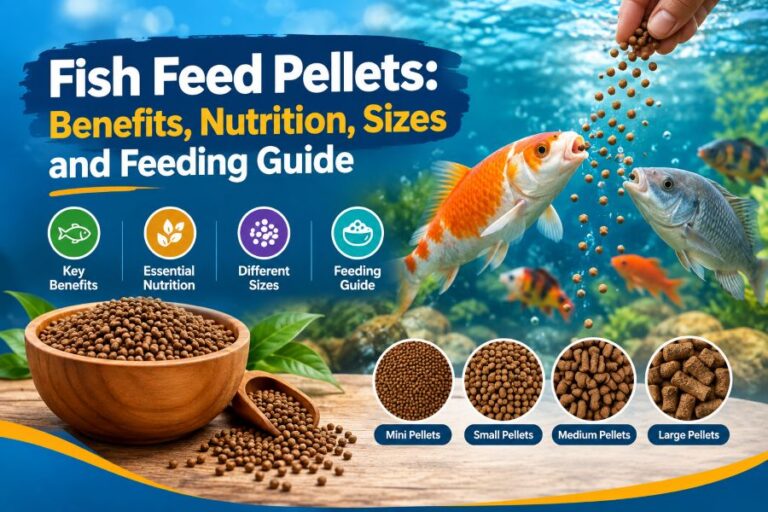
Pelleted feed is one of the common commercial aquaculture feed formats. Pellets are produced in sizes to suit different fish growth stages. Smaller pellets are generally appropriate for fry and juveniles, while larger pellets can be used as fish grow.
For example, Happy Feeds lists pellet sizes ranging from 1.5 mm to 4.0 mm with nutritional specifications for different fish sizes and stages.
Supplementary and Complete Fish Feed
Supplementary feed adds nutrients to available pond food, while complete feed is formulated to provide a more comprehensive nutritional profile. FAO describes food, supplementary feeds and complete feeds as important feeding categories in pond aquaculture.
The right choice depends on fish species, stocking density, pond productivity, growth stage and the farmer’s production goals.
Fish Feed Nutrition: Essential Nutrients and Major Benefits
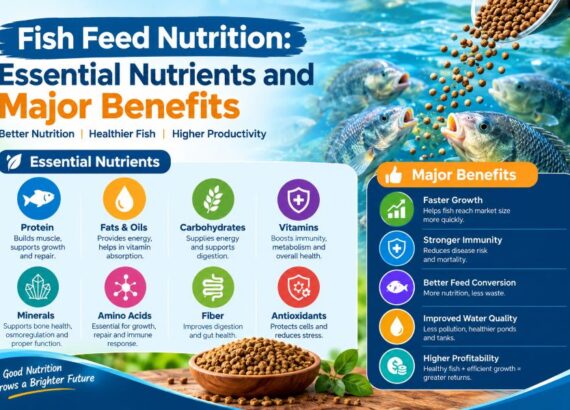
Fish feed should provide balanced nutrition rather than focusing on a single nutrient. Protein, energy sources, fats, vitamins, minerals and amino acids all play roles in fish development and overall performance.
Protein for Growth
Protein is a component of fish nutrition because it supplies amino acids needed for tissue development and growth. Growing fish generally require formulated diets with appropriate protein levels.
The protein requirement can vary according to species, size, life stage, water temperature and farming conditions. Therefore, farmers should select feed based on the needs of their particular fish rather than choosing a feed solely because it has a high protein percentage.
Fats and Energy
Fats provide energy and can help support normal growth and physiological functions. Balanced levels of fat can improve energy utilisation and help spare protein for tissue growth.
Vitamins and Minerals
Vitamins and minerals contribute to metabolism, skeletal development, immunity and overall fish health. A balanced commercial feed is designed to provide these micronutrients in appropriate proportions.
Amino Acids and Digestibility
Amino acids are the building blocks of proteins. The quality of protein ingredients and the overall formulation can influence how efficiently fish utilise nutrients.
Digestible feed can help fish make better use of the nutrients they consume. Happy Feeds emphasises formulated feed and carefully selected ingredients designed to support growth, immunity, digestion and nutrient absorption.
Major Benefits of Quality Fish Feed
Using appropriate quality fish feed can support:
More consistent fish growth
Better feed utilisation and feed conversion
Improved overall fish health
Stronger nutritional support for immunity
Reduced feed wastage when properly managed
Better pond management through controlled feeding
Improved production efficiency and profitability
However, even premium feed can produce poor results if it is stored incorrectly or supplied in excessive quantities. Feed quality and feed management should therefore always work together.
Fish Feeding Practices: How to Feed Fish
Effective feeding is just as important as selecting the right fish feed. Overfeeding increases costs and can contribute to water-quality problems, while underfeeding may limit growth and production.
Feed According to Fish Size
Pellet size should match the mouth size and growth stage of the fish. Large pellets can be difficult for small fish to consume, while excessively small pellets may be inefficient for larger fish.
Farmers should gradually adjust pellet size as fish grow. Happy Feeds provides pellet sizes for small fry, juveniles, growing fish and larger fish approaching harvest.
Control the Feeding Quantity
Avoid feeding more than the fish can consume. Observe feeding activity. Adjust the amount according to fish biomass, water temperature, growth stage and pond conditions.
For aquarium feeding, Happy Feeds recommends giving fish an amount they can consume within approximately 2–3 minutes; commercial aquaculture farms, however, should follow biomass-based feeding programs appropriate to their species and production system.
Maintain a Consistent Feeding Schedule
Regular feeding helps establish feeding behaviour. Depending on species and production conditions, farmers may divide the feed allowance into multiple meals.
Feeding should be adjusted when environmental conditions change. Poor water quality, extreme temperatures, disease or reduced feeding activity may indicate that the feeding rate needs to be reviewed.
Avoid Overfeeding
One of the common feeding mistakes is supplying excess feed. Uneaten feed represents wasted money and can deteriorate water quality.
Floating feed can make feeding observation easier because farmers can see whether fish are actively consuming the pellets. FAO also emphasises the importance of on-farm feeding and feed management for aquaculture production.
Store Fish Feed Correctly
Proper storage is essential for maintaining feed quality. Store pellets in a dry, clean and well-ventilated location away from moisture, direct sunlight, pests and chemicals.
Use older feed before newly purchased stock and avoid keeping damaged or contaminated feed. Good storage practices help preserve quality and reduce unnecessary losses.
Frequently Asked Questions
- What is the best fish feed for aquaculture?
The best fish feed depends on the fish species, growth stage, farming system and nutritional requirements. A quality feed should provide nutrition and appropriate pellet size while being digestible and easy to manage.
- Is floating fish feed better than sinking feed?
Floating fish feed can make feeding activity easier to observe. Can help farmers identify uneaten feed. Sinking feed may be appropriate for species that feed below the surface. The best option depends on fish behaviour and farming conditions.
- What nutrients are important in fish feed?
Important nutrients include protein, fats, carbohydrates, vitamins, minerals and essential amino acids. Their required levels vary according to fish species and growth stage.
- How often should fish be fed?
Feeding frequency depends on species, fish size, water temperature, farming intensity and production objectives. Commercial farms should follow a feeding schedule based on fish biomass and observed consumption rather than applying a universal quantity.
- How can fish farmers reduce feed wastage?
Farmers can reduce wastage by selecting the pellet size, measuring feed accurately, observing feeding behaviour, avoiding overfeeding, maintaining good water quality and adjusting feed according to fish growth and environmental conditions.
Conclusion
Fish feed is at the heart of aquaculture. Choosing the type of feed, providing balanced nutrition, matching pellet size to fish growth and following disciplined feeding practices can help farmers achieve healthier fish and more efficient production.
Floating fish feed, sinking pellets, supplementary feeds and complete commercial feeds each have applications. The ideal choice depends on the species, growth stage, pond conditions and farming objectives.
For farmers looking for formulated aquafeed, Happy Feeds offers floating fish feed designed with different pellet sizes and nutritional specifications for different stages of fish growth.
Ultimately, successful fish farming is not about feeding more—it is about feeding the right feed, in the right quantity at the right time. With nutrition and effective feed management, farmers can improve growth performance, reduce wastage and build a more productive aquaculture operation.
Thanks for reading
……………………………………………………………………………………………………………………………………………….
Click here to read this: How to Choose the Right Floating Fish Feed
Visit our product page to see all products: Click here to visit
Need help choosing feed? Use our Free Feed Calculator
Visit: Dust Fish Feed Products