
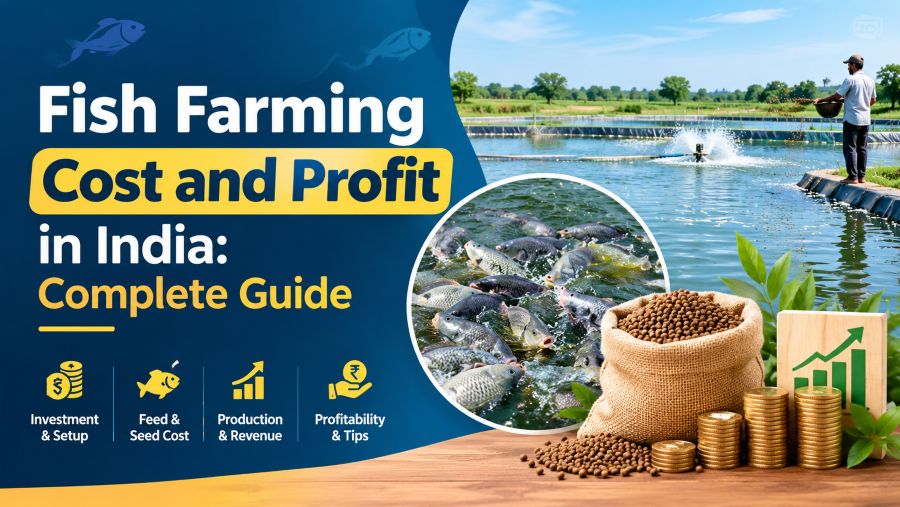
Fish farming is a growing aquaculture activity in India. It allows farmers to earn income using ponds, tanks and other water bodies. The fish farming cost in India varies a lot. It depends on the type of fish, pond size, land preparation, stocking level, seed quality, feed needs, labour, water handling, electricity, medicines and harvesting. So there is no cost that fits all fish farms.
For a farmer the biggest cost is usually building or fixing a pond. If the land is ready and a pond already exists the initial cost can be much lower. Pond preparation includes cleaning draining water when needed adding lime removing fish and weeds filling with water and getting the pond ready before adding fish. The National Fisheries Development Board has shared some cost estimates for aquaculture inputs.. Actual costs can change based on the farming method and the area.
Next comes the cost of fish seed or fingerlings. Farmers usually choose fish like Rohu, Catla, Mrigal, Tilapia or other species. These choices depend on the weather, water conditions and what buyers want. Getting fingerlings from trusted suppliers helps start a strong production cycle. Poor-quality seed can lead to growth more fish dying and lower harvest.
Feed is one of the ongoing costs. It affects how fast fish grow, how efficient the farm. The overall economics. The amount of feed needed depends on the fish species how many fish are in the pond fish size, water temperature, how fish are fed and the quality of the feed. Scientific fish farming means farmers must track fish growth and adjust feeding of giving feed without checking the fish’s needs. ICAR examples show that planned feeding and smart management help achieve results.
Other costs include labour, electricity, pumping water, fertilizers or pond conditioners fish health care, nets, transportation, harvesting and general farm upkeep. Farmers should calculate both fixed and variable costs before starting a fish farming business. Keeping records of every expense helps figure out the actual cost per kilogram of fish produced.
Fish Farming Profit in India and Factors That Affect Income
The profit from fish farming in India depends on how much fish’s produced survival rate, how well feed is used, farming time and the selling price at harvest. A farm that produces fish doesn’t automatically earn more profit if costs for feed, labour and other operations are too high. Profit comes from balancing production controlling costs and getting a price in the market.
For example a NFDB document gives a reference cost of about ₹3 lakh per hectare for fish farming. That includes pond setup, supplies, seed, feed, workers, electricity, fuel, harvesting and other costs. In that example feed is the cost at ₹1.50 lakh per hectare.. Actual costs should not be taken as a standard market rate. Prices and farming conditions change from place to place.
Let’s take an example. A farmer spends ₹3 lakh during a production cycle. Sells the fish for ₹4.5 lakh. The gross surplus, before things like financing, land cost, depreciation or other exclusions is ₹1.5 lakh. If the same farmer grows fish keeps costs under control and gets a better price the surplus will go up. On the hand disease, bad seed, too much fish dying, poor feeding or low market prices can greatly reduce profit.
Scientific farming makes a difference. In one case reported by ICAR a farmer produced 0.48 tonnes of fish from 0.07 acres by using good feeding and management. The gross income was ₹0.96 lakh. The net profit was ₹0.70 lakh under that programme. Another ICAR example with carp- polyculture earned ₹50,480 net profit from a 0.1-hectare pond in seven months. This shows how combining species and managing production well can affect a farm’s economics.
Feed management needs attention. Feed is often a part of operating costs. Farmers should pick feed based on the fish species and growth stage. They should avoid giving much feed. Recent work by ICAR-CIFRI has tested cost- sustainable feed methods. Field trials show feed costs and better production under certain tested systems.
Market planning matters a lot for profit. Before stocking fish farmers should know demand, wholesale prices, nearby markets, transportation costs and likely harvest times. Selling directly to buyers, wholesalers, retailers or local markets may give returns. Harvesting should be timed based on fish size, market demand and farm economics—not just waiting for the fish to grow as large as possible.
How to Improve Fish Farming Profitability and Build a Business
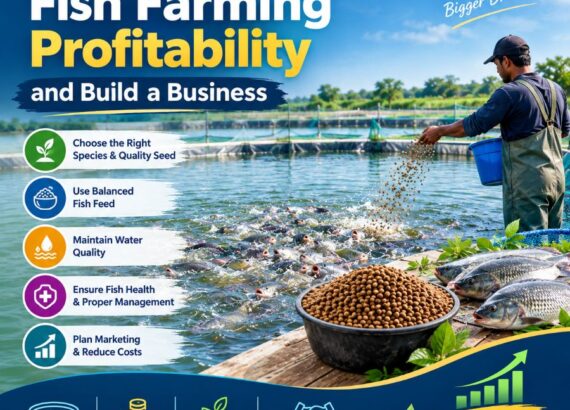
To grow fish farming income farmers should start with good planning. Don’t just focus on the expected selling price. Check the pond for water quality, depth, drainage and access. Make sure it suits the fish species you plan to raise. Stocking density should match the pond’s space and the farmer’s ability to manage. Overstocking can raise oxygen and feed competition. Create more problems.
Quality fish feed should be seen as an investment, not a cost. A good feed helps fish grow if used according to their nutritional needs and feeding schedule. Farmers should watch how fish respond to food and grow regularly. Keeping records of feed used fish samples, deaths and water quality helps spot issues
Water-quality management is just as important. Things like dissolved oxygen, pH, temperature and ammonia affect fish health and growth. Regular checks and quick action can prevent losses. Scientific aquaculture guidance now stresses combining seed, the right stocking, balanced feeding, water quality control and fish health care to boost output.
Farmers can also diversify if it makes sense. Depending on conditions, integrated or polyculture systems can mix compatible species and use pond resources better.. These systems should follow technical advice not just add species without understanding their needs.
Another way to improve farm economics is to lower costs without hurting quality. Farmers can compare suppliers for seed and feed plan purchases based on production needs and reduce feed waste. Good farm safety and regular checks can also lower losses.
Government schemes, help from institutions, training and new aquaculture tools may be available depending on the farmer’s state. Who qualifies. Farmers should check schemes and subsidy rules with their State Fisheries Department or related fishery groups before adding any subsidy to their investment plan.
Conclusion
The fish farming cost and profit in India depend on pond size, fish type, pond condition, seed quality, feed management, labour, production efficiency and selling price. A profitable fish farm needs more than putting fish in a pond. Proper pond setup, fingerlings, balanced feed, correct stocking, water management, health checks and smart market plans all help improve farm economics.
Farmers should make a budget before starting. They should estimate income using local prices. By using scientific aquaculture methods and keeping records farmers can better control costs and find ways to increase fish farming profit in India. For fish feed choosing a reliable fish feed manufacturer in India can support consistent feeding and farm management.
FAQs
- What is the cost of fish farming in India?
The cost depends on pond size, fish species, location, seed, feed, labour and infrastructure. A NFDB reference document lists ₹3 lakh per hectare for a fish farming cost structure.. Farmers should make a budget based on their specific location instead of using one number for all farms.
- Is fish farming in India?
Fish farming can make money if costs, survival, feed use and market prices are managed well. Profit is not. Can differ a lot between farms.
- Which expense is highest in fish farming?
Feed can be one of the ongoing costs. In one NFDB cost structure feed made up ₹1.50 lakh out of a ₹3 lakh per hectare.
- How can farmers increase fish farming profit?
Farmers can focus on seed, proper stocking, smart feeding, water quality, fish health, record keeping and better market planning.
- Why is fish feed important, for fish farming?
Feed directly affects fish growth and production cost. Using the feed and avoiding overfeeding can improve feed use and overall farm profit.
Thanks for reading
……………………………………………………………………………………………………………………………………………….
Click here to read this: How to Choose the Right Floating Fish Feed
Visit our product page to see all products: Click here to visit
Need help choosing feed? Use our Free Feed Calculator
Visit: Dust Fish Feed Products