
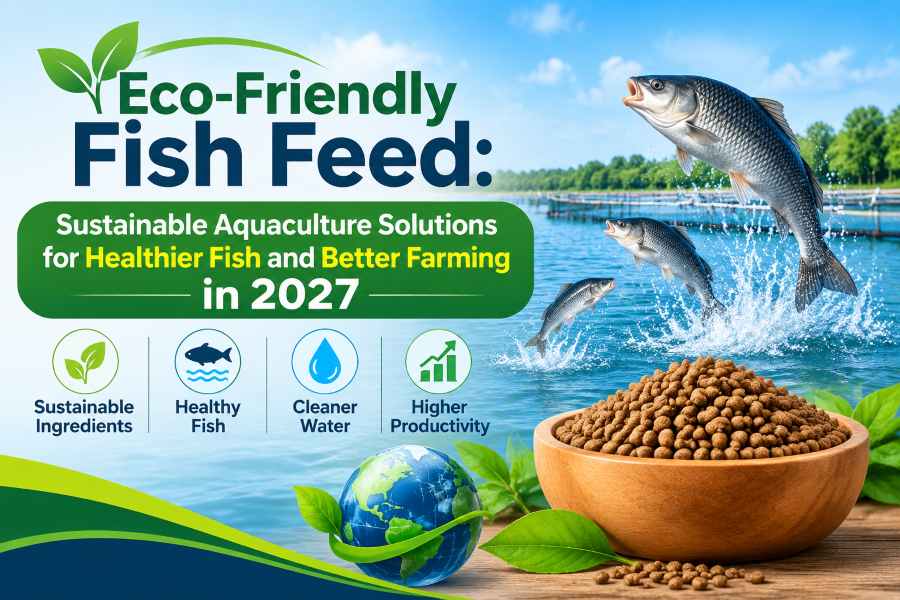
Aquaculture is becoming a major part of the global food industry because people want more fresh, nutritious, high‑quality fish. As fish farming grows, farmers are looking for ways to increase production while still protecting nature. One key factor shaping sustainable aquaculture is the quality and composition of fish feed. Traditional feeding practices can lead to problems with resource use, water pollution, higher costs and fish health. That is why Eco-Friendly Fish Feed is gaining attention as an answer for fish farms in 2027. Eco-Friendly Fish Feed focuses on providing nutrition while promoting responsible ingredient sourcing, better feed use and less environmental damage.
Eco-Friendly Fish Feed is made to help fish grow healthy without putting strain on ecosystems. Eco-Friendly Fish Feed may contain sourced plant‑based proteins, agricultural by‑products, alternative protein ingredients and other food‑suitable resources. By making feed use more efficient and cutting waste, Eco-Friendly Fish Feed helps farmers achieve production results. For aquaculture businesses, picking the feed is not only about making fish heavier; it also keeps water clean, boosts farm efficiency and builds a greener future. Companies such as Happy Feeds see how important good fish nutrition is for the evolving needs of the aquaculture world.
Understanding Eco-Friendly Fish Feed and Its Importance in Sustainable Aquaculture
Eco-Friendly Fish Feed means fish nutrition products that are made with care for the environment, ingredient sustainability, balanced nutrition and smart use of resources. Unlike methods that rely too much on scarce natural resources, Eco-Friendly Fish Feed looks for other ingredients that can provide essential proteins, fats, vitamins and minerals. The goal is to keep fish nutrition good while cutting the strain of making feed. An ingredient is not automatically sustainable just because it is plant‑based or found in nature. Its sourcing, processing, how well fish can digest it, and its overall environmental impact must also be checked.
One major change in aquaculture nutrition is using alternative protein sources. Plant‑derived ingredients, insect meals, microbial proteins, algae and food‑industry by‑products that are processed responsibly are being tested as parts of new aquafeed recipes. These alternatives can cut reliance on some marine ingredients if they are chosen carefully and mixed into balanced diets. Whether they work well depends on the fish species, the nutrients the fish need, the quality of the ingredient and how it is processed.
For freshwater fish farming in India, making the right feed mix is especially important for species like Rohu, Catla, Mrigal, Tilapia and Pangasius. Each fish species needs nutrients, eats in its own way and grows at its own pace. That is why fish farmers must choose feed that fits the species they raise and the conditions of their farms. A balanced mix should provide protein, energy, key amino acids, fats, vitamins and minerals to keep fish growing strong.
Another key part of Eco-Friendly Fish Feed is cutting out waste. If fish get feed that’s hard to digest or does not meet their needs, leftover pieces and extra nutrients pile up in the pond water. That can spoil water quality. This makes pond care harder. High‑quality Eco-Friendly Fish Feed, with pellet size, stable structure and easy digestibility, can use nutrients better and keep waste low. Sustainable aquaculture therefore needs a mix of ingredients, good feed production practices and careful feeding management.
How Sustainable Fish Feed Improves Fish Health, Growth and Farming Productivity
The quality of Eco-Friendly Fish Feed directly affects how fish grow, stay healthy and how productive the farm is. Giving fish nutrition supports normal growth, muscle building, metabolism and the ability to handle stress. Eco-Friendly Fish Feed is designed to give these benefits while making the most of the resources that turn into fish bodies. When Eco-Friendly Fish Feed is made for each species’ needs, farmers can get steadier feeding outcomes and smoother production control.
One of the important signs that a fish farm is efficient is the Feed Conversion Ratio (FCR). The FCR tells how much Eco-Friendly Fish Feed is needed to make an amount of fish body. A lower FCR usually shows efficient use of feed, but the numbers change with species, farm conditions, water quality and how feed is managed. Good feed conversion cuts waste feed and lowers running costs. Keeps organic waste out of the water. That is why feed efficiency matters for both farm profit and the planet.
Floating fish feed pellets and sinking fish feed pellets both play a role in modern aquaculture. Floating fish feed pellets let farmers watch feeding activity at the water surface, making it easier to monitor fish appetite and adjust fish feed amounts. Sinking fish feed pellets are suitable for fish that naturally eat food at water depths. Selecting the type of fish feed pellet helps improve feeding management and ensures that fish receive nutrition according to fish feeding behaviour.
Eco‑friendly fish feed can also support pond management when combined with appropriate feeding practices. Farmers should avoid overfeeding fish feed, maintain stocking densities, monitor dissolved oxygen levels and regularly check water quality. Even high‑quality fish feed cannot deliver the results if fish feed quantities are excessive or pond conditions are unsuitable. Proper storage is equally important because moisture, contamination and poor handling can affect fish feed quality.
In 2027, advancements in fish feed manufacturing are expected to place emphasis on ingredient optimisation, improved digestibility, responsible sourcing and efficient pellet production. Processing technologies such as extrusion and fermentation can help improve ingredient functionality and nutrient availability when appropriately applied. Research into protein ingredients is also creating opportunities for developing more resource‑efficient aquaculture nutrition solutions.
For fish farmers, choosing a fish feed manufacturer in India is an important step towards improving farming performance. Happy Feeds focuses on fish nutrition and quality fish feed solutions designed for aquaculture requirements. Farmers looking for products can explore the available options through the official Happy Feeds website and its fish feed products section.
The Future of Eco-Friendly Fish Feed and Sustainable Fish Farming in India in 2027
The future of aquaculture in India will depend on the industry’s ability to increase fish production while managing resources responsibly. As fish consumption grows and commercial aquaculture expands, the demand for efficient fish feed will continue to increase. This creates opportunities for eco‑friendly fish feed manufacturers to develop formulations that balance fish nutrition, production efficiency and environmental considerations.
One promising area is the development of protein ingredients. Plant proteins, insect‑based proteins, algae, microbial ingredients and sourced by‑products are attracting attention in aquaculture research. These ingredients may help diversify feed resources and reduce dependence on raw materials. However, successful adoption requires nutritional evaluation because different ingredients contain varying levels of amino acids, energy, fibre and other nutritional components. Proper formulation and processing are essential to ensure that alternative ingredients support fish growth without compromising fish feed quality.
Another important trend is precision feeding. Modern fish farmers are increasingly recognising the importance of feeding fish according to their size, age, species, stocking density and environmental conditions. Monitoring fish feeding behaviour and adjusting fish feed quantities can reduce consumption and improve production efficiency. Digital technologies, automated feeders and water‑quality monitoring systems can further support feeding practices.
The concept of an economy is also becoming relevant to sustainable aquaculture. It encourages the use of agricultural resources and suitable processing by‑products to develop valuable fish feed ingredients. When properly evaluated for safety and nutritional quality, these resources can contribute to efficient production systems. At the same time, manufacturers must consider ingredient traceability, food safety, energy consumption and the environmental impact of transportation and processing.
For aquaculture farmers, sustainability should go hand in hand with profitability. Selecting quality fish feed, maintaining feeding schedules, monitoring pond conditions and choosing species‑appropriate nutrition can help improve farming performance. The goal should be to produce fish while reducing avoidable resource consumption and environmental waste.
Happy Feeds aims to contribute to the fish farming and aquaculture industry by providing fish feed solutions that support requirements and modern farming practices. Whether the farmers are raising Rohu, Catla, Mrigal, Tilapia or Pangasius, selecting fish feed is essential for maintaining consistent growth and efficient farm management. To learn more about fish nutrition, fish feed products and aquaculture developments, visit Happy Feeds. Explore its product range. Farmers can also discover information through the Happy Feeds blog.
Conclusion
Eco‑friendly fish feed is becoming a part of the future of sustainable aquaculture. By focusing on nutrition, responsible ingredient sourcing, improved digestibility and efficient fish feed utilisation, the industry can work towards healthier fish and more productive farming systems. In 2027, innovations in proteins, advanced fish feed processing and precision feeding will create new opportunities for fish farmers and fish feed manufacturers across India.
If you want aquaculture, you should prioritise quality fish feed, species‑specific nutrition, proper feeding practices and effective pond management. Choosing a fish feed manufacturer such as Happy Feeds can be a valuable step toward building efficient and responsible fish farming operations.
Frequently Asked Questions (FAQs)
- What is eco‑friendly fish feed?
Eco‑friendly fish feed is made from sourced ingredients that are nutritionally suitable for fish. Eco‑friendly fish feed supports fish growth. Takes environmental sustainability into account. Eco‑friendly fish feed focuses on the use of nutrients, reduces waste and manages resources responsibly.
- How does sustainable fish feed benefit aquaculture?
Sustainable fish feed improves feed utilisation. Sustainable fish feed supports fish growth. Sustainable fish feed reduces feed waste. Sustainable fish feed helps farmers manage production costs and environmental impacts.
- Which ingredients are used in fish feed?
Eco‑friendly fish feed can contain plant‑based proteins, algae, insect meals, microbial proteins and processed agricultural or food‑industry by‑products. The suitability of each ingredient depends on quality and on the requirements of the fish species.
- Is eco‑friendly fish feed for Rohu, Catla and Tilapia?
Eco‑friendly fish feed can be suitable for Rohu, Catla and Tilapia. Yes, formulated feed can be made for Rohu, Catla, Tilapia, Mrigal and other farmed fish species. The composition and pellet characteristics of eco‑friendly fish feed should match the specific requirements of each species.
- How can farmers choose sustainable fish feed in India?
Farmers can choose the best sustainable fish feed in India by looking at nutritional composition, protein quality, digestibility, pellet stability, feed conversion performance, manufacturing standards and the suitability of sustainable fish feed for their fish species. Farmers should check these factors before selecting a fish feed product.
Thanks for reading
……………………………………………………………………………………………………………………………………………….
Click here to read this: How to Choose the Right Floating Fish Feed
Visit our product page to see all products: Click here to visit
Need help choosing feed? Use our Free Feed Calculator
Visit: Dust Fish Feed Products