
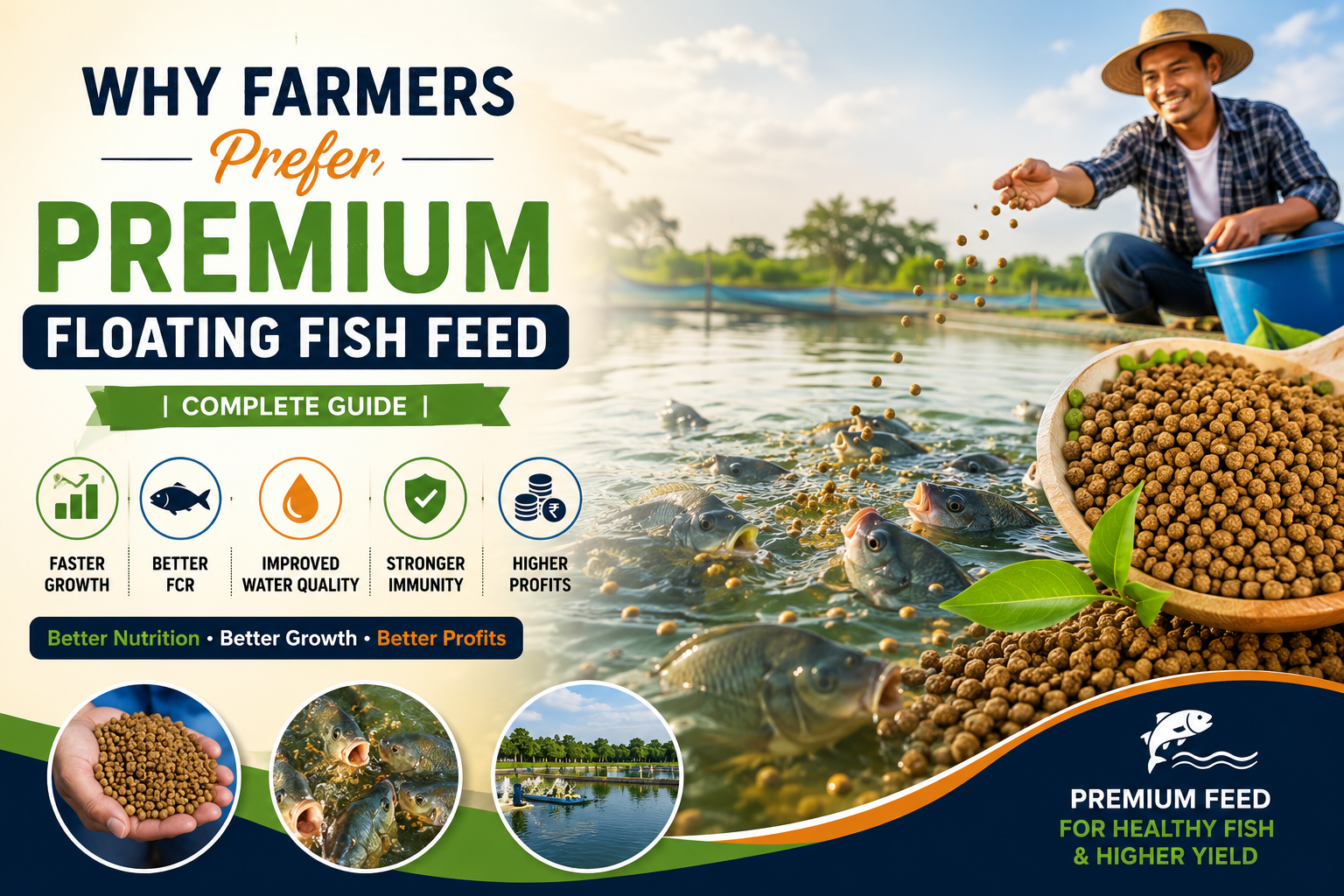
Fish farming has become one of the fastest-growing sectors in modern agriculture. As the demand for high-quality fish continues to rise, farmers are continually seeking ways to improve productivity, reduce costs, and maximise profits. One of the most important factors influencing successful aquaculture is the quality of fish feed.Among the different types of fish feed available today, premium floating fish feed has become the preferred choice for commercial and small-scale fish farmers. Unlike traditional sinking feed, floating fish feed stays on the water surface, allowing fish to consume it efficiently while enabling farmers to monitor feeding behaviour.This article explains why farmers increasingly choose premium floating fish feed and how it contributes to healthier fish, improved feed efficiency, and better farm profitability.
What is Premium Floating Fish Feed?
Premium floating fish feed consists of high-quality ingredients processed using advanced extrusion technology. The feed pellets remain afloat on the water surface for an extended period, making it easier for fish to consume them completely.
These feeds are carefully formulated with the right balance of:
High-quality proteins
Essential amino acids
Healthy fats
Vitamins
Minerals
Digestive enzymes
Natural growth promoters
Premium fish feed is suitable for species such as:
Tilapia
Catfish
Pangasius
Rohu
Grass Carp
Common Carp
Koi
Ornamental Fish
Benefits of Premium Floating Fish Feed
- Faster Fish Growth
Premium floating fish feed provides balanced nutrition to support rapid muscle development and healthy weight gain.
Fish receive the proper amount of:
Protein
Energy
Minerals
Vitamins
As a result, they reach market size more quickly, allowing farmers to harvest sooner and improve annual production cycles.
- Better Feed Conversion Ratio (FCR)
Feed accounts for nearly 60–70% of total aquaculture production costs.
Premium floating feed offers a superior Feed Conversion Ratio (FCR), meaning fish require less feed to gain more weight.
Advantages include:
Lower feed consumption
Reduced production costs
Improved profitability
Better nutrient absorption
This makes premium feed a cost-effective investment despite its slightly higher purchase price.
- Reduced Feed Wastage
One major problem with sinking feed is that uneaten pellets settle at the bottom of ponds.
Floating feed remains visible on the water surface, allowing farmers to:
Observe feeding activity
Adjust feeding quantities
Prevent overfeeding
Reduce wastage
Less wasted feed translates directly into lower operating costs.
- Improved Water Quality
Uneaten sinking feed decomposes underwater and releases harmful substances such as ammonia and nitrites.
Premium floating fish feed minimizes this issue by ensuring that most pellets are consumed before sinking.
Benefits include:
Cleaner pond water
Lower ammonia levels
Better oxygen availability
Reduced water pollution
Lower maintenance costs
Healthy water conditions create a better environment for fish growth.
- Easier Feeding Management
Floating pellets allow farmers to observe fish during feeding.
This helps identify:
Healthy fish
Weak fish
Sick fish
Uneaten feed
Feeding behavior
Monitoring feeding activity enables farmers to detect health issues early and take timely corrective action.
- Stronger Fish Immunity
Premium fish feed contains essential vitamins and minerals that strengthen the immune system.
Common nutritional additions include:
Vitamin C
Vitamin E
Zinc
Selenium
Probiotics
Healthy fish are more resistant to bacterial infections, parasites, and environmental stress.
Lower disease occurrence means reduced spending on medicines and treatments.
- Uniform Fish Growth
Balanced nutrition ensures that fish grow at a consistent rate.
Uniform fish sizes offer several advantages:
Easier harvesting
Better grading
Higher market prices
Improved customer satisfaction
Fish buyers often pay premium rates for consistent size and quality.
- Higher Survival Rate
Fish receiving premium nutrition experience:
Lower mortality
Better stress tolerance
Improved digestion
Stronger immune response
Higher survival rates directly increase total harvest volume and overall profitability.
- Environmentally Friendly
Modern premium floating feeds are designed to reduce environmental impact.
Benefits include:
Lower nutrient discharge
Reduced pond contamination
Cleaner water bodies
Sustainable aquaculture practices
Eco-friendly feeding supports long-term fish farming success.
- Increased Farm Profitability
Although premium floating fish feed costs more initially, it generates higher returns through:
Faster fish growth
Better FCR
Lower mortality
Reduced medicine costs
Cleaner ponds
Higher harvest weight
Overall, farmers earn significantly more profit over each production cycle.
Why Floating Feed is Better Than Sinking Feed
Feature Premium Floating Feed Traditional Sinking Feed
Feed Monitoring Easy Difficult
Feed Wastage Very Low High
Water Quality Better Poor
Fish Growth Faster Moderate
Disease Risk Lower Higher
Feed Efficiency Excellent Average
Harvest Profit Higher Lower
Tips for Choosing Premium Floating Fish Feed
To achieve the best results, farmers should consider the following factors:
Choose feed from a trusted manufacturer.
Check protein levels according to fish species.
Select pellet sizes suitable for fish age.
Store feed in a cool, dry place.
Avoid expired feed.
Follow recommended feeding schedules.
Monitor fish response regularly.
Investing in quality feed is one of the smartest decisions a fish farmer can make.
Common Mistakes Farmers Should Avoid
Many fish farmers unknowingly reduce productivity through poor feeding practices.
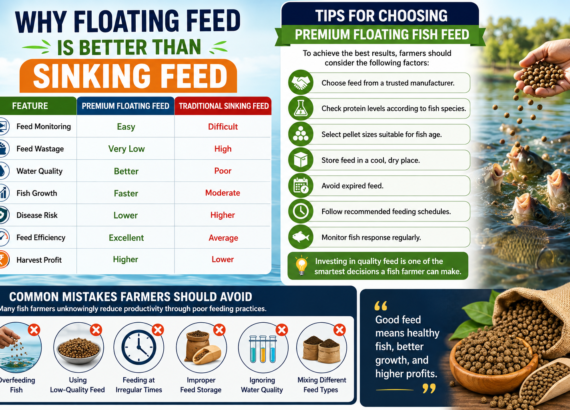
Avoid these mistakes:
Overfeeding fish
Using low-quality feed
Feeding at irregular times
Improper feed storage
Ignoring water quality
Mixing different feed types without guidance
Proper feed management is just as important as selecting premium feed.
Future of Premium Floating Fish Feed
As aquaculture continues to grow worldwide, fish feed technology is also evolving.
Future innovations include:
Precision nutrition
Functional feeds
Probiotic-enhanced pellets
Sustainable protein sources
Smart feeding technologies
AI-based feeding management
These advancements will help farmers produce healthier fish while reducing environmental impact.
Conclusion
Premium floating fish feed has transformed modern aquaculture by improving fish growth, feed efficiency, water quality, and overall farm profitability. Although it may have a higher upfront cost than conventional feed, its long-term benefits far outweigh the initial investment.
By reducing feed wastage, improving survival rates, supporting healthier fish, and simplifying feeding management, premium floating fish feed enables farmers to maximise production while maintaining sustainable farming practices. Whether you operate a small fish pond or a large commercial aquaculture farm, investing in high-quality floating feed is one of the most effective ways to achieve consistent growth and higher profits.
Frequently Asked Questions (FAQs)
- What is premium floating fish feed?
Premium floating fish feed is a nutritionally balanced extruded feed that floats on the water surface, allowing fish to consume it efficiently while reducing feed wastage.
- Why do farmers prefer floating fish feed over sinking feed?
Farmers prefer floating feed because it improves feed conversion, reduces wastage, maintains better water quality, allows easy feeding observation, and supports faster fish growth.
- Does premium floating fish feed improve fish growth?
Yes. Its balanced protein, vitamins, minerals, and essential nutrients promote faster growth, stronger immunity, and better overall fish health.
- Which fish species can be fed premium floating fish feed?
Premium floating feed is suitable for Tilapia, Catfish, Rohu, Pangasius, Grass Carp, Common Carp, Koi, and many other freshwater fish species.
- Is premium floating fish feed worth the extra cost?
Absolutely. Although it has a higher initial price, it reduces feed wastage, improves survival rates, lowers production costs, and increases overall farm profitability, making it a worthwhile investment.
Thanks for reading
……………………………………………………………………………………………………………………………………………….
Click here to read this: How to Choose the Right Floating Fish Feed
Visit our product page to see all products: Click here to visit
Need help choosing feed? Use our Free Feed Calculator
Visit: Dust Fish Feed Products