
In India, fish farming is among the four fastest-growing segments of agriculture due to the growing demand for quality fish. As a result the majority of the fish farmers are trying to increase production levels by maximizing their productivity while at the same time reducing production costs. When it comes to aquaculture, there is no single decision more important than that of fish feed, as one major factor which affects growth and feed efficiency, as well as water quality and overall profitability of a farm, is whether to use high protein fish feed or regular fish feed.
There are many assumptions made by fish producers that all fish feeds provide the same results; however, there are significant differences between the nutritional make-up, protein level, digestibility and product quality between a premium high protein fish feed and a regular feed. By understanding these differences, fish producers can make educated decisions about which of the two types of fish feed to use dependent upon the species of fish being produced, the growth stage of the fish, and the production goal.
This resource compares the differences, benefits, disadvantages and uses of regular fish feed and high protein fish feed to assist in maximizing fish growth and farm profits.
Why Protein Matters in Fish Feed
Fish require a sufficient amount of protein to develop their muscles, repair their tissues and allow for continued healthy growth. In addition to helping fish develop their muscles, fish require protein as a source of energy as compared to terrestrial animals.
By providing fish with enough high-quality protein to meet their nutritional needs it allows them to:
- Grow at a more rapid rate
- Build a stronger immune system
- Use feed in a more efficient manner
- Reach size and weight to go to market sooner
- Decrease mortality
- Produce higher quality flesh
Not providing high-quality protein to fish could result in poor health, growth at a slower rate, low feed consumption and decreased profitability at the farm.
What is High Protein Fish Feed?
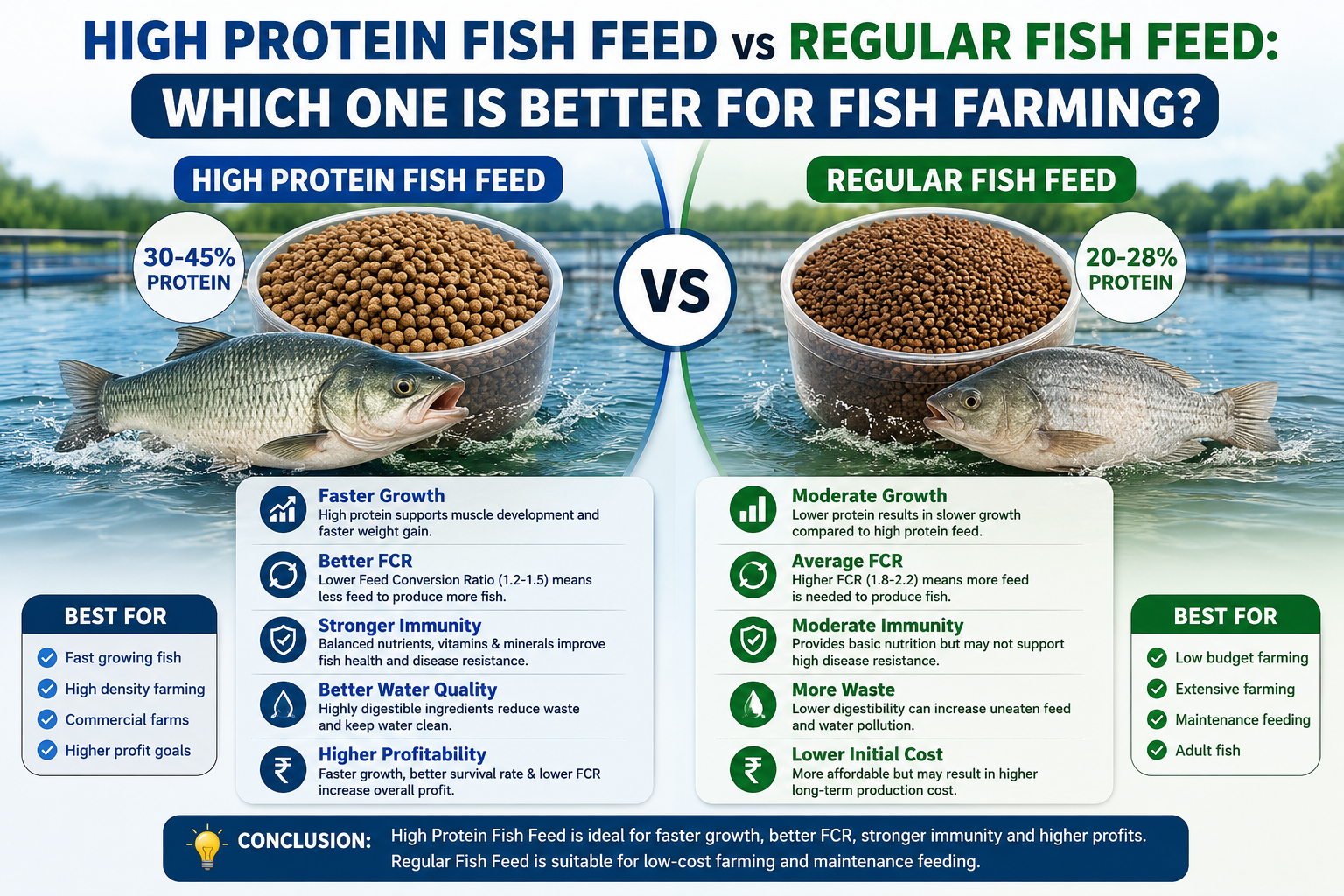
High protein fish feed has a higher percentage of digestible protein than standard fish feed. Generally high protein fish feed is available in either premium or commodity groups that contain between 30% – 45% protein depending on species and stage of growth.
The primary ingredients used to manufacture high protein fish feed are specific ingredients. Some major examples of these types of ingredients include:
- Fish Meal
- Soybean Meal
- Corn Gluten Meal
- Groundnut Cake
- Rice Bran (in balanced proportions)
- Vitamin & Mineral Premixes
- Amino Acids
- Fish Oil
Quality pellets that are used for floating fish feed (given to fish in water) allow cooks or producers to maximize nutrient absorption while minimising feed wastage.
What is Regular Fish Feed?
Regular fish feed contains moderate protein levels, generally ranging between 20% and 28%, depending on the manufacturer and intended use.
These feeds are suitable for:
- Maintenance feeding
- Larger fish requiring lower protein
- Low-input farming systems
- Traditional pond culture
Regular feeds are generally more affordable but may not deliver the same growth performance as premium high-protein feeds.
High Protein Fish Feed vs Regular Fish Feed
| Feature | High Protein Fish Feed | Regular Fish Feed |
| Protein Level | 30–45% | 20–28% |
| Growth Rate | Faster | Moderate |
| Feed Conversion Ratio (FCR) | Better | Average |
| Fish Immunity | Stronger | Moderate |
| Water Pollution | Lower (better digestibility) | Higher if overfed |
| Feed Cost | Higher | Lower |
| Harvest Time | Earlier | Longer |
| Overall Profitability | Higher | Moderate |
Benefits of High Protein Fish Feed
Faster Fish Growth
Higher levels of protein are critical in the development of muscle mass in fish and result in fish gaining weight quicker and a shorter culture period will lead to fish being ready for harvest sooner.
Better Feed Conversion Ratio (FCR)
If the FCR (feed conversion ratio) is lower, this will require less feed to produce 1 kg of fish.
For example:
Higher Protein FCR: approximately 1.2 – 1.5
Regular Feed FCR: approximately 1.8 – 2.2
Also, having a lower FCR will create savings on feed cost over the production cycle.
Improved Fish Immunity
Premium feeds are formulated with balanced levels of vitamins, minerals and amino acids that improve fish immunity and reduce the occurrence and severity of disease and mortality in fish. Healthy fish also require less medical treatment and will grow consistently throughout the production cycle.
Better Water Quality
Using highly digestible ingredients will result in less waste causing problems in the production process.
Less Feed that is Not Eaten Results in:
Low Ammonia Levels
High Levels of Dissolved Oxygen
Cleaner Ponds
Reduced Risk of Disease
Higher Farm Profit
Although the initial cost of premium feed may be greater, farmers usually see increased profits because of:
- Faster production rates
- Better survival rates
- Increased Harvest Weights
- Less Feed Waste
- Better Prices at Market
Advantages of Regular Fish Feed
Regular fish feed still has important applications.
It is suitable for:
- Low-budget farming
- Extensive pond culture
- Adult fish maintenance
- Small-scale fish farms
- Lower stocking densities
When properly managed, regular feed can produce satisfactory results at a lower investment.
Which Fish Need High Protein Feed?
Different fish species require different protein levels.
| Fish Species | Recommended Protein |
| Tilapia Fry | 35–40% |
| Catfish Fry | 38–42% |
| Rohu Fingerlings | 30–35% |
| Pangasius | 30–35% |
| Carp | 28–32% |
| Adult Fish | 24–30% |
Young fish generally require more protein than mature fish because they are growing rapidly.
Cost vs Profit Analysis
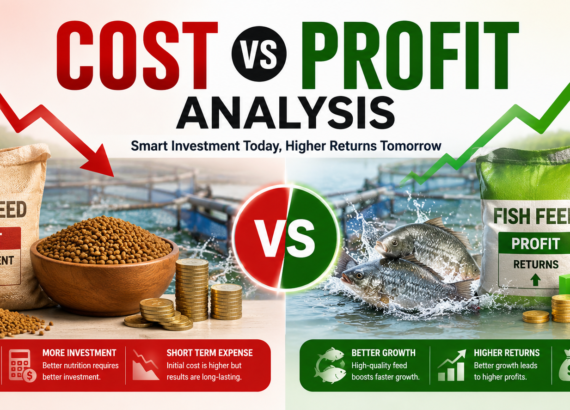
Many farmers base their purchase of fish feed on the cost of feed; however, the true cost to consider should be the cost of producing each kilogram (kg) of fish.
For example, regular feed has:
-Low cost of purchase, but relatively longer farming and slower growth time and more feed will be consumed over time.
Whereas high protein feed has:
High cost of purchase but is much more productive and allows for faster growth, higher survival, earlier harvest and lower cost of production for each kg of fish that are raised. Therefore, many commercial fish producers will use high protein feed, even though the upfront cost is higher.
Mistakes that Producers Make:
Fish producers will also make some common mistakes when it comes to feeding their fish. Here are a few examples of feeding mistakes:
- Only purchasing feed based on price
- Not paying attention to the protein percentage of the feed
- Overfeeding their fish
- Using the same feed for every growth stage
- Storing their fish feed in a wet or moist environment
- Purchasing substandard feed from a supplier that is not trustworthy
Pond management is critical in addition to choosing the best possible feed.
Tips for Choosing Good Fish Feed:
When purchasing fish feed, always verify:
- Protein Percentage
- Floating Pellet Quality
- Ingredient Composition
- Mfg Date
- Shelf Life
- Quality of Brand
- Nutrition/User Value
- Pellet Size
- Water Stability
- Digestibility
A high-quality feed will remain stable in the water without losing its nutritional value.
Why Floating Fish Feed is Often Better
Modern floating fish feed provides several advantages:
- Easy feeding management
- Reduced feed wastage
- Better observation of fish appetite
- Improved water quality
- Accurate feed quantity control
- Higher feed efficiency
These benefits contribute to better farm management and increased profitability.
Why Choose Happy Feeds?
For any fish farm, selecting a reputable manufacturer to produce your fish feed is almost as critical as selecting the right protein level within the feed. Premium fish feed is produced with quality ingredients, advanced manufacturing processes, and nutritionally balanced ingredients, so that fish can develop and grow in a healthy manner, have improved FCR (Feed Conversion Ratio), have a robust immune system, and maximise fish farming activity and results, through the use of a reliable provider. Regardless of whether your fish species is Rohu, Catla, Mrigal, Tilapia, Pangasius or Catfish, selecting a feed that is nutritionally balanced will make a significant impact on the overall fish production and profitability.
Conclussion:
To make an informed decision on whether or not to use high protein fish feed or standard commercial fish feed will depend upon the aquaculture production goals of your operation, the fish species you are raising, the aquaculture production system you have adopted, and your budget. Regular commercial fish feed will provide you with sufficient fish production performance in low input aquaculture and in general maintenance feeding; however, high protein fish feed provides significant advantages in regards to rapid fish growth, feed conversion, fish immune strength, improved water quality, and maximising profit.
When a fish producer makes the profitable decision to invest in high quality, nutritionally balanced fish feed to support a premium aquaculture production system, the result is greater long-term yield and profit by reducing the time for fish production growth, maximise harvest performance, and utilizing the highest quality fish feed through the proper feeding procedures for each size of fish producer will allow you to achieve a profitable and sustainable future.
Frequently Asked Questions (FAQs)
- What is the difference between high protein fish feed and regular fish feed?
High-protein fish feed contains a higher percentage of digestible protein (typically 30–45%), promoting faster growth and better feed efficiency, while regular fish feed usually contains 20–28% protein and is more suitable for maintenance or low-input farming.
- Is high protein fish feed worth the extra cost?
Yes. Although it has a higher purchase price, it often reduces feed conversion ratio (FCR), shortens the culture period, improves survival rates, and increases overall profitability.
- Which fish species benefit most from high protein feed?
Young and fast-growing species such as Tilapia, Pangasius, Catfish, Rohu fingerlings, and Carp fingerlings benefit the most from higher protein diets.
- Can too much protein harm fish?
Excess protein beyond the species’ nutritional requirement may not improve growth and can increase feed costs. It’s important to use the appropriate protein level for the fish species and growth stage.
- Does high protein fish feed improve water quality?
Yes. High-quality, highly digestible protein sources reduce waste and uneaten feed, helping maintain cleaner pond water and lower ammonia levels.
Thanks for reading
……………………………………………………………………………………………………………………………………………….
Click here to read this: How to Choose the Right Floating Fish Feed
Visit our product page to see all products: Click here to visit
Need help choosing feed? Use our Free Feed Calculator
Visit: Dust Fish Feed Products