
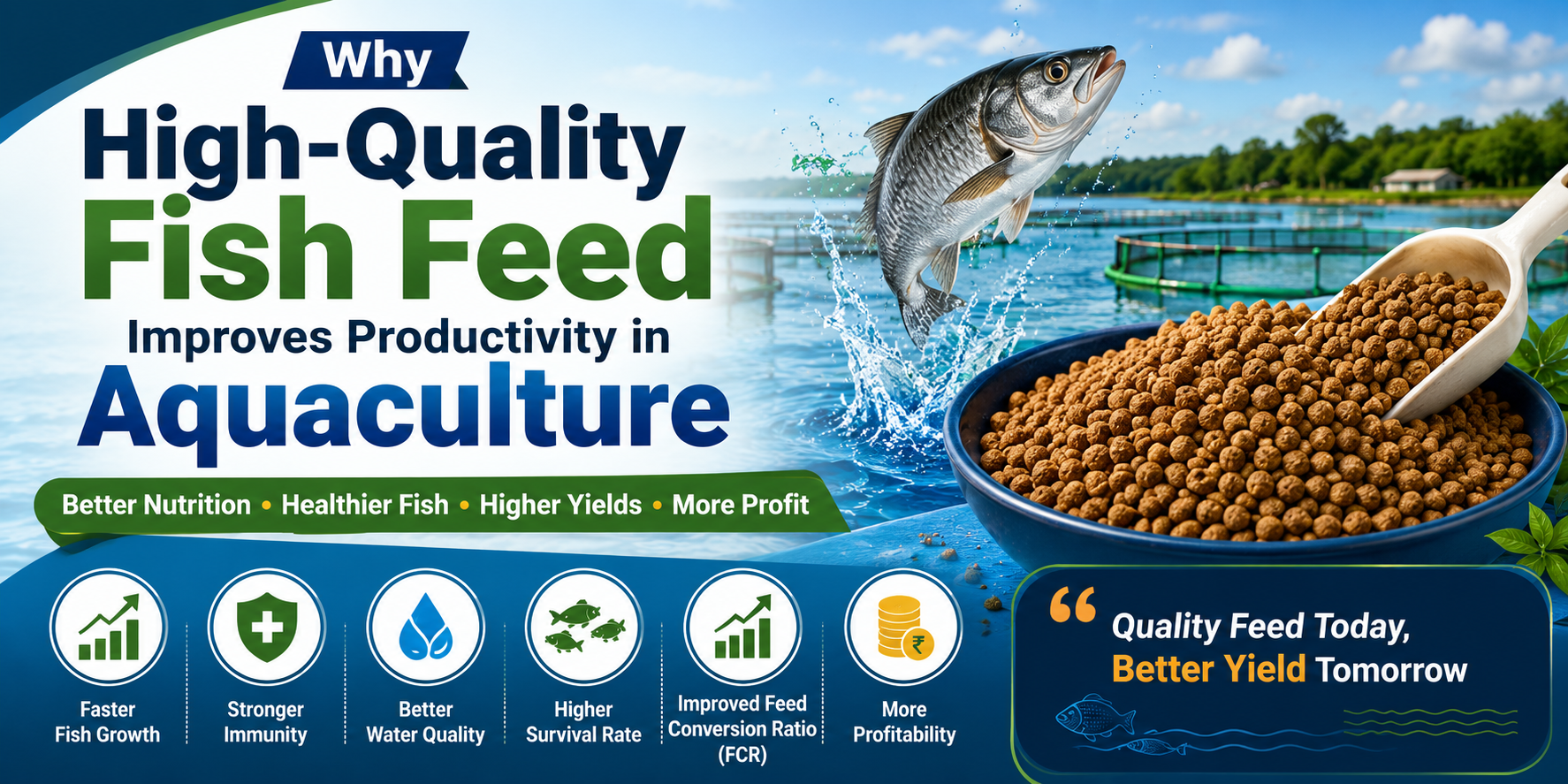
Aquaculture is one of the growing food production industries. As the demand for fish keeps rising, fish farmers want to produce more while keeping costs down. High-quality fish feed plays a role in the success of fish farming.
Fish feed is not food; it’s the main source of nutrition that helps fish grow, strengthens their immunity, improves survival rates and increases farm profitability. Since feed expenses account for 50–70% of the total operational cost, investing in good-quality feed can produce higher returns.
In this guide, we’ll explore why high-quality fish feed is essential, how it boosts productivity and what features to consider when selecting fish feed.
What Is Quality Fish Feed?
High-quality fish feed is made to provide fish with the right balance of proteins, carbohydrates, fats, vitamins, minerals and essential amino acids.
Unlike low-grade feed, premium fish feed offers:
* nutrition
* Better digestibility
* High-quality protein sources
* Essential vitamins and minerals
* Stable floating or sinking characteristics
* feed wastage
* Better water stability
These qualities help fish stay healthy and improve farm performance.
Benefits of High-Quality Fish Feed
- Fish Growth
Good-quality feed helps fish grow faster.
Premium fish feed has the amount of protein and energy for muscle development. Fish that eat nutritious food grow faster and reach market size earlier.
Benefits include:
* Shorter production cycles
* More harvests annually
* Increased farm income
* Better weight gain
Growing fish improves farm efficiency.
- Better Feed Conversion Ratio (FCR)
FCR measures how efficiently fish convert feed into body weight.
A lower FCR means less feed is required to produce one kilogram of fish.
High-quality feed offers:
* Better nutrient absorption
* Less feed waste
* Improved digestion
* Reduced feeding costs
Improving FCR increases profitability.
- Improved Fish Health
Healthy fish are fish.
Premium fish feed includes vitamins, minerals and immune-boosting nutrients that strengthen the fish’s natural defense system.
Healthy fish experience:
* disease incidence
* Better stress tolerance
* Improved recovery
* Higher resistance to infections
Reduced disease means treatment costs and lower mortality.
- Higher Survival Rate
Good nutrition helps fish stay strong.
Quality feed helps maintain:
* immune systems
* Proper organ development
* Better resistance to temperature changes
* fry and fingerling survival
Even a small improvement in survival rate can increase overall farm production.
- Better Water Quality
Inferior feed often disintegrates quickly, polluting ponds.
High-quality feed remains stable in water, reducing:
* Uneaten feed
* Organic waste
* Ammonia buildup
* Water pollution
Cleaner water promotes fish.
- Enhanced Reproductive Performance
For hatcheries and breeding farms, nutrition affects success.
Balanced fish feed supports:
* Better egg quality
* Increased spawning success
* Healthier broodstock
* Improved fry development
Nutrition results in stronger offspring.
- Uniform Fish Growth
Uneven fish sizes make harvesting and marketing difficult.
Premium fish feed provides nutritional value, helping fish grow uniformly.
Uniform growth leads to:
* grading
* Better market prices
* Efficient harvesting
- Reduced Feed Waste
Good-quality feed has pellet durability and water stability.
Benefits include:
* Less feed sinking unused
* Better floating characteristics
* Easier monitoring of feeding
* Reduced production costs
Wasted feed means higher profitability.
Essential Nutrients Found in High-Quality Fish Feed
A premium fish feed should contain:
* Protein for muscle growth
* Lipids (Fats) for energy
* Carbohydrates for energy
* Vitamins for support
* Minerals for bone development
* Amino Acids for protein synthesis
* Omega Fatty Acids for healthy development
The exact nutritional requirements depend on fish species, age and farming system.
How to Choose High-Quality Fish Feed
When selecting fish feed, consider:
* Check Protein Content
* Look for Trusted Manufacturers
* Evaluate Pellet Quality
* Read Ingredient Labels
Avoid feeds with fillers or poor-quality ingredients.
Common Mistakes Fish Farmers Should Avoid
Avoid:
* Buying feed based on price
* Overfeeding fish
* Underfeeding fish
* Using feed
* Improper feed storage
* Ignoring species- nutritional requirements
Proper feeding management is crucial.
Economic Benefits of High-Quality Fish Feed
Premium feed delivers returns through:
* Faster harvests
* Lower mortality
* feed efficiency
* Higher fish quality
In the long run, quality feed reduces production costs.
Best Feeding Practices for Maximum Productivity
To achieve the results:
* Feed fish according to their growth stage.
* Maintain feeding schedules.
* Monitor fish feeding behavior regularly.
* Store feed in a dry place.
Combining quality feed with farm management ensures maximum production.
Frequently Asked Questions (FAQs)
- Why is high-quality fish feed important?
High-quality fish feed provides nutrition for faster growth and better immunity.
- Does premium fish feed reduce farming costs?
Yes, it improves feed conversion. Reduces disease.
- What nutrients should quality fish feed contain?
A good fish feed should include proteins, fats, carbohydrates, vitamins and minerals.
- How does fish feed affect water quality?
Quality feed remains stable in water, reducing pollution.
- Can poor-quality feed reduce fish production?
Yes, poor-quality feed can lead to slow growth and higher mortality.
Conclusion
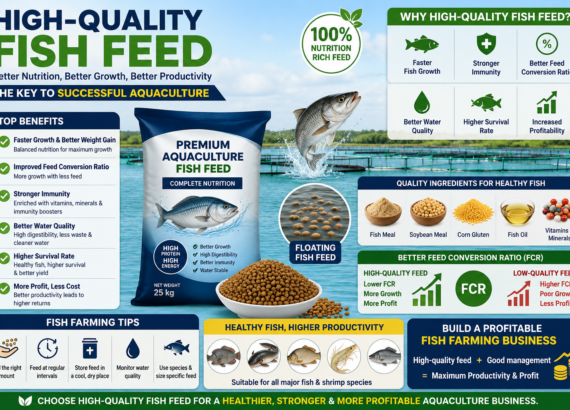
High-quality fish feed supports growth, improves feed conversion efficiency and strengthens fish immunity. While premium feed may seem expensive, its long-term benefits far outweigh the initial cost. Fish farmers who prioritise nutrition and proper feeding practices can achieve consistent yields and sustainable growth.
Thanks for reading
……………………………………………………………………………………………………………………………………………….
Click here to read this: How to Choose the Right Floating Fish Feed
Visit our product page to see all products: Click here to visit
Need help choosing feed? Use our Free Feed Calculator
Visit: Dust Fish Feed Products