
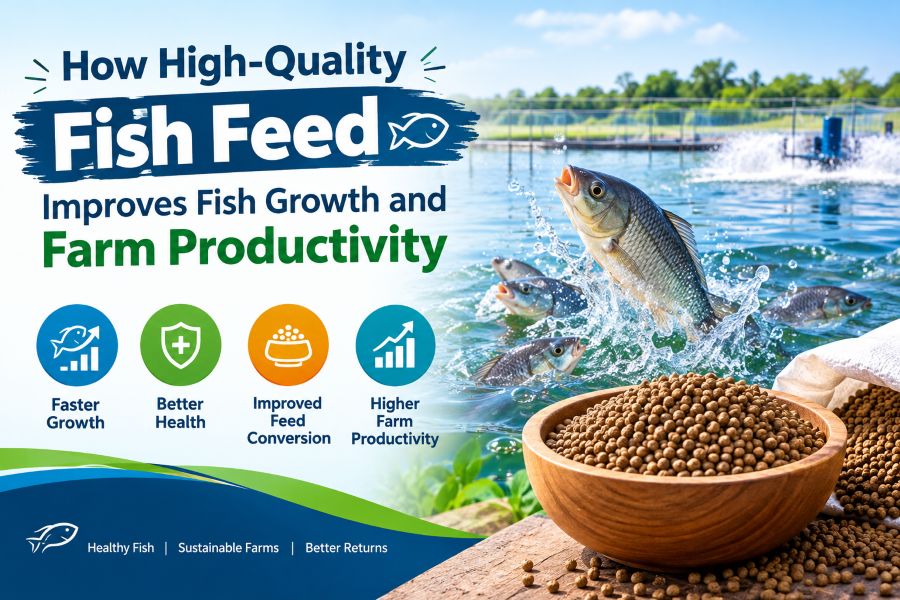
Fish farming is becoming an important part of modern aquaculture but successful fish production depends on more than stocking a pond with healthy fingerlings. Nutrition plays a role in determining fish growth, health, survival, feed efficiency and overall farm productivity. Among all the inputs used in aquaculture high-quality fish feed is one of the important.
A formulated fish feed provides essential nutrients in suitable proportions to support growth and health. Research and technical guidance from the Food and Agriculture Organization (FAO) emphasize that feed formulation, feed quality and feeding management are closely connected to fish performance and efficient feed utilization.
For fish farmers choosing the feed can therefore help create healthier fish more consistent growth, better use of feed and more efficient farm operations.
Why High-Quality Fish Feed Matters in Aquaculture
Fish require a combination of nutrients, including proteins, fats, carbohydrates, vitamins, minerals and other essential nutrients. The exact requirements vary according to species, size, life stage, farming system and environmental conditions.
A high-quality fish feed is formulated to provide these nutrients in amounts and forms. When fish receive nutrition they can use feed more effectively for body growth and normal physiological functions.
Feed quality also depends on factors beyond nutrient percentages. Ingredient quality, digestibility, processing, pellet size, water stability and buoyancy can influence how efficiently fish consume. Utilize the feed. FAO literature notes that processing can affect availability as well as characteristics such as texture, water stability and buoyancy.
This makes feed selection a decision for farmers who want to improve production efficiency.
- Supports Faster and Consistent Fish Growth
One of the visible benefits of good-quality fish feed is its contribution to healthy growth.
Fish need protein and energy to develop muscle and body tissues. A balanced diet helps provide the nutrients required during growth stages. When feed meets the needs of the cultured species fish can utilize nutrients more efficiently instead of receiving an unbalanced diet.
Different fish sizes may also require feed formulations or pellet sizes. Starter feed for fish for example may need different nutritional characteristics from feed intended for larger grow-out fish.
Providing the feed at the right growth stage can support more uniform development and help farmers manage their stock more effectively.
- Improves Feed Utilization and Feed Efficiency
Feed is one of the operating expenses in many aquaculture systems making efficient feed utilization extremely important.
Feed Conversion Ratio (FCR) is commonly used to assess how efficiently feed is converted into fish biomass. Several factors can influence FCR, including diet quality, fish size, water temperature, oxygen availability, feeding practices and the fishs ability to digest the feed.
High-quality feed can contribute to feed utilization when combined with appropriate feeding practices. The goal is not simply to provide feed but to provide an appropriate quantity of nutritionally suitable feed.
Farmers should therefore consider both feed quality and feed management when working to improve production efficiency.
- Helps Maintain Fish Health
Nutrition. Fish health are closely connected. Fish require nutrients not only for growth but also for normal physiological functions.
A balanced feed can help fish receive the nutrients needed throughout their production cycle. Formulated or nutritionally inadequate diets may fail to meet the requirements of growing fish.
Quality ingredients and appropriate formulation are therefore considerations when selecting commercial fish feed.
Farmers should also avoid relying on feed quantity. Feeding fish with a feed even in large amounts does not necessarily result in better growth. The nutritional value and digestibility of the diet are equally important.
- Reduces Feed Waste and Supports Better Water Quality
Feed that remains uneaten can become a problem in fish farming. Excess feed can contribute to accumulation in the culture environment and reduce overall feed efficiency.
FAO guidance highlights that overfeeding can increase feed wastage negatively affect feed efficiency. Contribute to environmental impacts.
Good-quality pellets with physical characteristics can help farmers manage feeding more effectively but feed management remains essential. Farmers should monitor fish feeding activity. Adjust quantities according to fish size, stocking density, water temperature, species and feeding response.
Avoiding overfeeding can help reduce waste while making better use of purchased feed.
- Improves Overall Farm Productivity
Farm productivity is not determined by fish growth. Farmers must consider feed costs, survival, growth consistency, water management, labor, harvesting and market requirements.
A high-quality fish feed can support several of these factors by providing nutrition and improving feed utilization when properly managed.
Better growth can help fish reach market size within the desired production cycle. Efficient feed utilization can help farmers manage feed expenditure. Reduced wastage can also contribute to farming conditions and more sustainable production.
FAO guidance notes that appropriate feeding strategies are important for optimizing feed use and improving the returns of commercial aquaculture operations.
- Choosing the Right Fish Feed for Growth Stages
Fish do not have identical nutritional requirements throughout their entire life cycle. Feed selection should take into account fish species, size, age, production system and growth stage.
Farmers should consider:
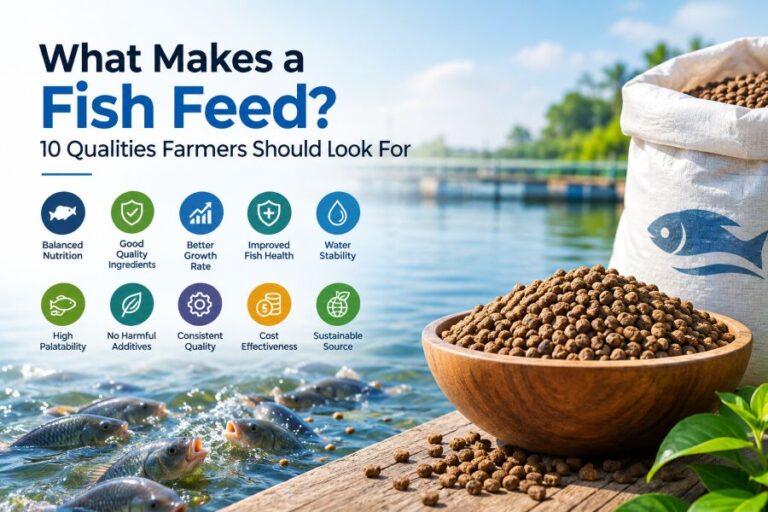
Protein and energy requirements
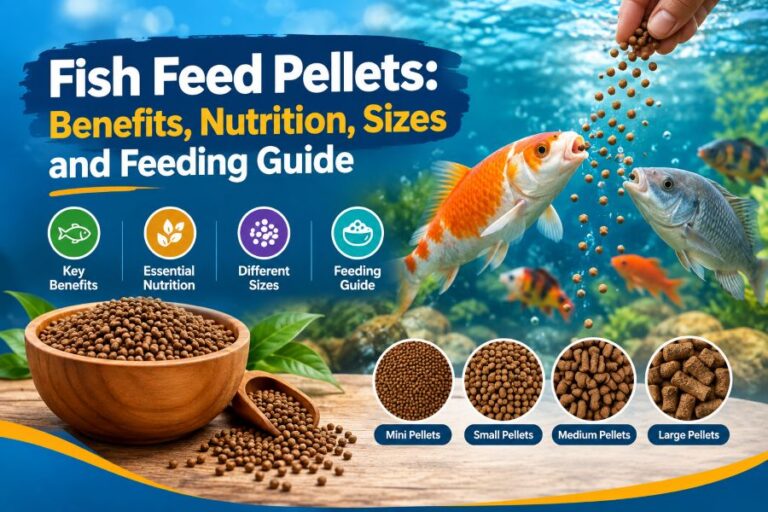
Appropriate pellet size
Feed digestibility
Water stability
Floating or sinking characteristics
Ingredient quality
Fish feeding behavior
Recommended feeding rate
Using a feed designed for the needs of the cultured fish can make feeding more systematic and efficient.
For commercial fish farming farmers should also follow the manufacturers feeding recommendations. Adjust feeding based on actual fish response and farm conditions.
- Combine Quality Feed With Proper Feeding Management
Even the best fish feed cannot deliver its potential when feeding practices are poor.
Farmers should establish feeding schedules and avoid both underfeeding and overfeeding. FAO guidance indicates that feeding rate, frequency, timing, ration size and species-specific feeding behavior can influence growth and feed efficiency.
Regularly observing fish during feeding can help farmers identify whether the ration is appropriate. Changes in appetite may indicate changes in water conditions, fish health, temperature or other production factors.
Therefore high-quality fish feed plus proper feeding management plus good water quality forms a foundation, for productive aquaculture.
How Happy Feeds Supports Fish Farming
Happy Feeds focuses on providing quality fish feed solutions designed to support aquaculture productivity. Manufactured fish feed can help farmers provide consistent nutrition to their fish while managing their feeding programs more effectively.
For farmers looking for fish feed it is important to choose products manufactured with suitable ingredients, appropriate formulations and consistent quality standards.
The right feed can become a part of a well-managed aquaculture operation helping farmers work toward healthy fish growth and efficient production.
Conclusion
High-quality fish feed plays a role in improving fish growth and farm productivity. A balanced and properly processed feed can support growth, feed utilization, fish health and efficient farm management.
However feed quality should always be combined with feeding practices, good water quality, appropriate stocking density and regular monitoring. Overfeeding can waste feed. Negatively affect the culture environment while underfeeding can limit growth.
For fish farmers investing in feed is therefore not simply an expense—it is an important part of managing a productive and sustainable aquaculture operation.
FAQs
- Why is high-quality fish feed important for fish farming?
High-quality fish feed provides nutrition that supports fish growth, health, feed utilization and overall farm productivity.
- Does fish feed affect fish growth rate?
Yes. Fish growth depends on factors, including species, genetics, water quality, stocking density, temperature and nutrition. Appropriate feed helps provide the nutrients required for growth.
- What nutrients should good fish feed contain?
Fish feed generally needs levels of protein, energy, fats, carbohydrates, vitamins, minerals and other essential nutrients. Requirements vary by fish species and growth stage.
- How can farmers reduce fish feed wastage?
Farmers can reduce wastage by selecting feed following recommended feeding rates monitoring feeding behavior and avoiding unnecessary overfeeding.
- How does quality fish feed improve farm productivity?
Suitable feed can support growth and efficient feed utilization. When combined with farm management this can contribute to more efficient and productive aquaculture operations.
Thanks for reading
……………………………………………………………………………………………………………………………………………….
Click here to read this: How to Choose the Right Floating Fish Feed
Visit our product page to see all products: Click here to visit
Need help choosing feed? Use our Free Feed Calculator
Visit: Dust Fish Feed Products